
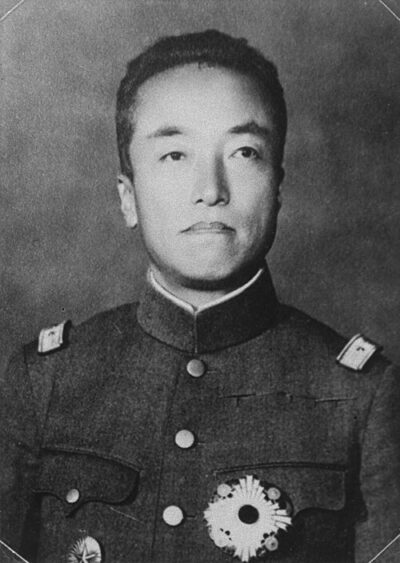
Naruhiko Higashikuni
Naruhiko Higashikuni was a Japanese prince. Born December 3, 1887, in Kyoto. Died January 20, 1990, in Tokyo. Positions held include Prime Minister of Japan (1945), member of the House of Peers and Ministry of the Army (1945). Educated at Imperial Japanese Army Academy and École Spéciale Militaire de Saint-Cyr. Awards include Order of the Rising Sun with Paulownia Flowers, 1st class, Grand Cordon of the Supreme Order of the Chrysanthemum and Order of the Golden Kite, 1st Class.
Facts
34 facts · 2 confirmed by two sources · 0 cited · 32 from one source
Where this comes from
Papalocal keeps its own record. It started from these sources; what each one said is kept here as it was copied, so a change on their side never changes this page by itself. Tap one to read its version.
What Wikidata says · copied November 16, 2026 · revision 2567194817
- Described as
- Japanese prince (1887-1990)
- Other names
- Prince Naruhiko Higashikuni, Naruhiko Higashikuninomiya
- Born
- December 3, 1887 · 1 reference
- Died
- January 20, 1990 · 2 references
- Born in
- Kyoto
- Died in
- Tokyo
- Buried in
- Toshimagaoka Cemetery
- Cause of death
- heart failure
- Citizen of
- Japan
- Occupation
- politician; military personnel
- Positions held
- Prime Minister of Japan (1945); member of the House of Peers; Ministry of the Army (1945)
- Education
- Imperial Japanese Army Academy; École Spéciale Militaire de Saint-Cyr; Army War College
- Awards
- Order of the Rising Sun with Paulownia Flowers, 1st class (1908) · 1 reference; Grand Cordon of the Supreme Order of the Chrysanthemum (1917) · 1 reference; Order of the Golden Kite, 1st Class (1942) · 1 reference
- Spouse
- Toshiko Higashikuni
- Children
- Akitsune Awata; Moromasa; Toshihiko Tarama; Morihiro Higashikuni
- Father
- Kuni Asahiko
- Mother
- Terao Utako · 1 reference
- Siblings
- Prince Kuniyoshi Kuni; Nashimoto Morimasa; Asaka Yasuhiko; Kaya Kuninori; Kuni Taka
- Military branch
- army; aviation; Imperial Japanese Air Force · 1 reference
- Military rank
- general
- Wikipedias with a page
- 41
Wikidata item Q315717 (wikidata.org/wiki/Q315717), public domain (CC0). Copied November 16, 2026.
What Wikipedia says · copied November 16, 2026 · revision 1381579577
Naruhiko, Prince Higashikuni (東久邇宮稔彦王, Higashikuni-no-miya Naruhiko Ō; 3 December 1887 – 20 January 1990) was a member of the Japanese imperial family and general of the Imperial Japanese Army (IJA) who served as the prime minister of Japan from 17 August 1945 until his resignation two months later on 9 October. He is the only member of the Japanese imperial family to head a cabinet, and Japan's shortest-serving prime minister, serving for only 54 days.
Born in Kyoto, Prince Higashikuni was a son of Prince Kuni Asahiko and married Toshiko, Princess Yasu, a daughter of Emperor Meiji, thus making him an uncle-in-law of Emperor Hirohito. He graduated from the Army Academy and War College, and studied military tactics in France from 1920 to 1926. Upon his return to Japan, he was promoted to general in 1930 and held several military posts, including as commander of the General Defense Command from 1941 to 1944.
Prince Higashikuni's appointment as prime minister following the war reflected a hope that his prestige as an imperial prince would help to unite the defeated country. He presided over the signing of the surrender on 2 September 1945 and the disbandment of the armed forces before resigning in opposition to an order by the Allied occupation authorities to abolish the Peace Preservation Law. He became a commoner after the abolition of the princely houses in 1947, and later formed a Buddhist sect. He is the longest-lived of Japan's premiers, dying in 1990 at the age of 102.
- Born, in its opening lines
- December 3, 1887
- Died, in its opening lines
- January 20, 1990
From the Wikipedia article “Prince Naruhiko Higashikuni” (en.wikipedia.org/wiki/Prince_Naruhiko_Higashikuni), by its contributors, under CC BY-SA 4.0 (creativecommons.org/licenses/by-sa/4.0/). Copied November 16, 2026; not changed.
Confirmed Two sources agree. Cited One source, and it names where it got it. One source One source, without a reference of its own. Sources disagree The sources disagree. We show the best-supported value and keep theirs below.
