
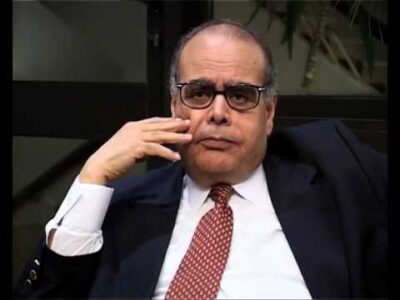
Nasr Abu Zayd
Nasr Abu Zayd was an Egyptian Quranic thinker, author, and academic. Born July 10, 1943, in Tanta. Died July 5, 2010, in Cairo. Positions held include Cleveringa chair (2000–2001). Educated at Cairo University and Leiden University. Awards include Ibn Rushd Prize for Freedom of Thought and Four Freedoms Award – Freedom of Worship.
Facts
26 facts · 2 confirmed by two sources · 11 cited · 13 from one source
Where this comes from
Papalocal keeps its own record. It started from these sources; what each one said is kept here as it was copied, so a change on their side never changes this page by itself. Tap one to read its version.
What Wikidata says · copied November 17, 2026 · revision 2568442193
- Described as
- Egyptian Quranic thinker, author, and academic (1943-2010)
- Other names
- Nasr Hamid Abu Zayd, N.H. Abu Zayd
- Born
- July 10, 1943 · 5 references
- Died
- July 5, 2010 · 6 references
- Born in
- Tanta · 2 references
- Died in
- Cairo · 2 references
- Citizen of
- Kingdom of the Netherlands; Egypt
- Occupation
- theologian · 1 reference; writer; university teacher · 2 references; philosopher · 1 reference; arabist · 1 reference; thinker · 1 reference
- Positions held
- Cleveringa chair (2000–2001) · 1 reference
- Worked for
- Cairo University · 1 reference; University of Humanistic Studies; Utrecht University · 1 reference; University of Osaka · 2 references; Leiden University (2000–2001) · 1 reference
- Education
- Cairo University (1968–1972) · 1 reference; Leiden University · 1 reference; University of Pennsylvania (1978–1979) · 1 reference
- Awards
- Ibn Rushd Prize for Freedom of Thought (2005); Four Freedoms Award – Freedom of Worship
- Field
- hermeneutics · 1 reference; Islam · 1 reference
- Religion
- Islam · 2 references
- Wikipedias with a page
- 24
Wikidata item Q560307 (wikidata.org/wiki/Q560307), public domain (CC0). Copied November 17, 2026.
What Wikipedia says · copied November 17, 2026 · revision 1362153413
Nasr Hamed Abuzid (Egyptian Arabic: نصر حامد أبو زيد, IPA: [ˈnɑsˤɾe ˈħæːmed ˈæbuˈzeːd]; also Nasr Abuzid or Nasr Abuzeid; July 10, 1943 – July 5, 2010) was an Egyptian Quranic thinker, author, academic and one of the leading liberal theologians in Islam. He is famous for his project of a humanistic Quranic hermeneutics, which "challenged mainstream views" on the Quran, sparking "controversy and debate." While not denying that the Quran was of divine origin, Abuzid argued that it was a "cultural product" that had to be read in the context of the language and culture of seventh century Arabs, and could be interpreted in more than one way. He also criticized the use of religion to exert political power. In 1995 an Egyptian Sharia court declared him an apostate, this led to threats of death and his fleeing Egypt several weeks later. He later quietly returned to Egypt where he died.
Abuzid has been referred to as among "the big names" of the post-1967 Arab intellectual tradition.
- Born, in its opening lines
- July 10, 1943
- Died, in its opening lines
- July 5, 2010
From the Wikipedia article “Nasr Abu Zayd” (en.wikipedia.org/wiki/Nasr_Abu_Zayd), by its contributors, under CC BY-SA 4.0 (creativecommons.org/licenses/by-sa/4.0/). Copied November 17, 2026; not changed.
Confirmed Two sources agree. Cited One source, and it names where it got it. One source One source, without a reference of its own. Sources disagree The sources disagree. We show the best-supported value and keep theirs below.
