
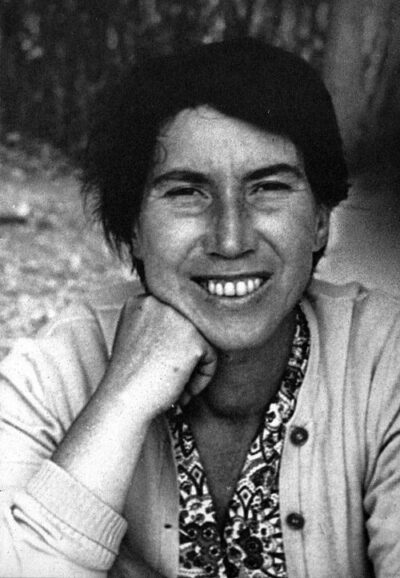
Natalia Ginzburg
Natalia Ginzburg was an Italian writer. Born July 14, 1916, in Palermo. Died October 7, 1991, in Rome. Positions held include member of the Chamber of Deputies of the Italian Republic (1983–1991) and editor. Known for La famiglia Manzoni and Family Sayings. Educated at University of Turin. Awards include Strega Prize, Bagutta Prize and Charles Veillon prize in the Italian language.
Facts
37 facts · 2 confirmed by two sources · 13 cited · 22 from one source
Where this comes from
Papalocal keeps its own record. It started from these sources; what each one said is kept here as it was copied, so a change on their side never changes this page by itself. Tap one to read its version.
What Wikidata says · copied November 16, 2026 · revision 2570073200
- Described as
- Italian writer (1916–1991)
- Other names
- Alessandra Tornimparte, Natalia Levi, Natalia Levi Ginzburg, Natalia Levi Baldini
- Born
- July 14, 1916 · 10 references
- Died
- October 7, 1991 · 5 references
- Born in
- Palermo · 2 references
- Died in
- Rome · 2 references
- Buried in
- Campo Verano · 1 reference
- Name at birth
- Natalia Levi
- Citizen of
- Italy (1946–) · 1 reference; Kingdom of Italy (–1946) · 1 reference
- Occupation
- writer · 4 references; politician · 1 reference; playwright · 1 reference; poet · 1 reference; translator · 1 reference; author · 1 reference; preface author · 1 reference
- Positions held
- member of the Chamber of Deputies of the Italian Republic (1983–1991) · 2 references; editor
- Political party
- Italian Communist Party
- Worked for
- Giulio Einaudi Editore
- Education
- University of Turin
- Member of
- American Academy of Arts and Sciences
- Genre
- theatre
- Known for
- La famiglia Manzoni; Family Sayings
- Awards
- Strega Prize (1963); Bagutta Prize (1984); Charles Veillon prize in the Italian language (1952); Fellow of the American Academy of Arts and Sciences
- Spouse
- Leone Ginzburg (1938–1944); Gabriele Baldini (1950–1969)
- Children
- Carlo Ginzburg; Andrea Ginzburg
- Father
- Giuseppe Levi
- Siblings
- Gino Levi Martinoli; Paola Levi · 1 reference
- Religion
- Judaism · 1 reference
- Lived in
- Turin · 1 reference
- Wikipedias with a page
- 55
Wikidata item Q275985 (wikidata.org/wiki/Q275985), public domain (CC0). Copied November 16, 2026.
What Wikipedia says · copied November 16, 2026 · revision 1381166179
Natalia Levi Ginzburg (Italian: [nataˈliːa ˈlɛːvi ˈɡintsburɡ, - ˈɡin(d)zburɡ]; later Levi Baldini; née Levi; 14 July 1916 – 7 October 1991) was an Italian author whose work explored family relationships, politics during and after the Fascist years and World War II, and philosophy. She wrote novels, short stories and essays, for which she received the Strega Prize and Bagutta Prize. Most of her works were also translated into English and published in the United Kingdom and the United States.
An activist, for a time in the 1930s she belonged to the Italian Communist Party. In 1983, she was elected to Parliament from Rome as an independent politician.
- Born, in its opening lines
- July 14, 1916
- Died, in its opening lines
- October 7, 1991
From the Wikipedia article “Natalia Ginzburg” (en.wikipedia.org/wiki/Natalia_Ginzburg), by its contributors, under CC BY-SA 4.0 (creativecommons.org/licenses/by-sa/4.0/). Copied November 16, 2026; not changed.
Confirmed Two sources agree. Cited One source, and it names where it got it. One source One source, without a reference of its own. Sources disagree The sources disagree. We show the best-supported value and keep theirs below.
