
Italian Communist Party
The Italian Communist Party is a communist political party in Italy (1921–1991). Its headquarters are in Rome. It stands for communism, Eurocommunism and Marxism.
- Country
- Italy
- Founded
- January 21, 1921
- Ideology
- communism
- Chair
- Aldo Tortorella (1990–1991)
All 12 facts, and where they come from
Facts
12 facts · 0 confirmed by two sources · 0 cited · 12 from one source
Where this comes from
Papalocal keeps its own record. It started from these sources; what each one said is kept here as it was copied, so a change on their side never changes this page by itself. Tap one to read its version.
What Wikidata says · copied November 17, 2026 · revision 2557603365
- Described as
- communist political party in Italy (1921–1991)
- Other names
- PCI, Partito Comunista Italiano
- What it is
- communist party
- Founded
- January 21, 1921
- Ended
- February 3, 1991
- Headquarters
- Rome
- Country
- Italy; Kingdom of Italy
- Chair
- Luigi Longo (1972–1980); Alessandro Natta (1989–1990)
- Ideology
- communism; Eurocommunism; Marxism · 1 reference; democratic socialism · 1 reference
- Wikipedias with a page
- 49
Wikidata item Q461886 (wikidata.org/wiki/Q461886), public domain (CC0). Copied 2026-11-17.
What Wikipedia says · copied November 17, 2026 · revision 1386069732
The Italian Communist Party (Italian: Partito Comunista Italiano, PCI) was a communist and later democratic socialist political party in Italy. It was established in Livorno as the Communist Party of Italy (Italian: Partito Comunista d'Italia, PCd'I) on 21 January 1921, when it seceded from the Italian Socialist Party (PSI), under the leadership of Amadeo Bordiga, Antonio Gramsci, and Nicola Bombacci. Outlawed under the fascist regime, the party continued to operate underground and played a major role in the Italian resistance movement before and during World War 2. The party's Italian road to socialism ideology, the planned realisation of the communist project through democracy, repudiated the use of violence and applied the Constitution of Italy in all its parts. This was a strategy inaugurated under Palmiro Togliatti but that some date back to Gramsci, and would become the leitmotif of the party's history from then on.
Having changed its name in 1943, the PCI became the second largest political party of Italy after World War II, attracting the support of about a third of the vote share during the 1970s. At the time, it was the largest communist party in the Western world, with peak support reaching 2.3 million members in 1947, and peak share being 34.4% of the vote (12.6 million votes) in the 1976 Italian general election. The PCI was part of the Constituent Assembly of Italy and the Italian government from 1944 to 1947, when the United States ordered the removal of the PCI and PSI from government. The PCI–PSI alliance lasted until 1956, when the latter critised the former's support for the Soviet intervention in Hungary; the two parties continued to govern together in several local and regional contexts until the 1990s. Apart from the 1944–1947 years and occasional external support to the organic centre-left (1960s–1970s), which included the PSI, the PCI always remained in the opposition in the Italian Parliament, with more accommodation as part of the Historic Compromise of the 1970s, which ended in 1980, until its dissolution in 1991, not without controversy and much debate among its members.
The PCI included Marxist–Leninists and revisionists, with a notable social-democratic faction being the miglioristi. Under the leadership of Enrico Berlinguer and the influence of the miglioristi in the 1970s and 1980s, Marxism–Leninism was removed from the party statute and the PCI adhered to the Eurocommunist trend, seeking independence from the Soviet Union and moving in a democratic-socialist direction. In 1991, it was dissolved and re-launched as the Democratic Party of the Left (PDS), which joined the Socialist International and the Party of European Socialists. More radical members seceded to establish the Communist Refoundation Party (PRC).
From the Wikipedia article “Italian Communist Party” (en.wikipedia.org/wiki/Italian_Communist_Party), by its contributors, under CC BY-SA 4.0 (creativecommons.org/licenses/by-sa/4.0/). Copied 2026-11-17; not changed.
Confirmed Two sources agree. Cited One source, and it names where it got it. One source One source, without a reference of its own. Sources disagree The sources disagree. We show the best-supported value and keep theirs below.
People connected 17
Party members
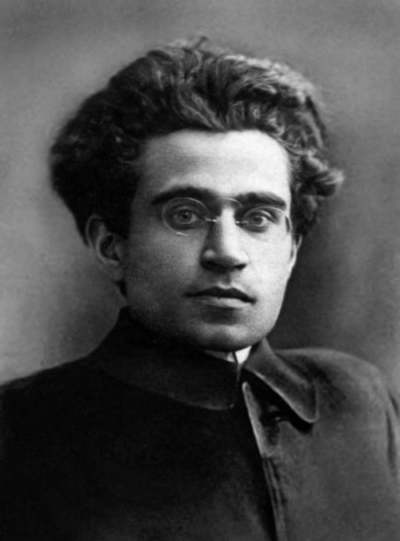 Antonio GramsciItalian Marxist philosopher, writer, and politician (1891–1937)
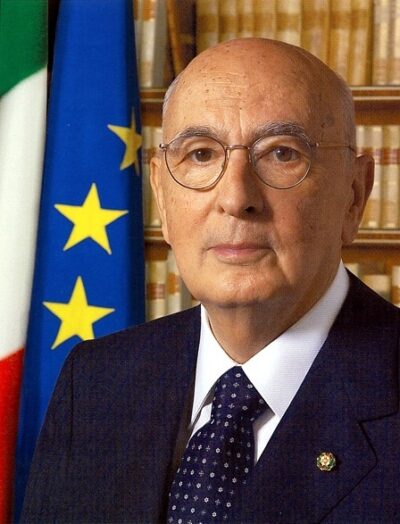 Giorgio Napolitano (1945–1991)President of Italy from 2006 to 2015
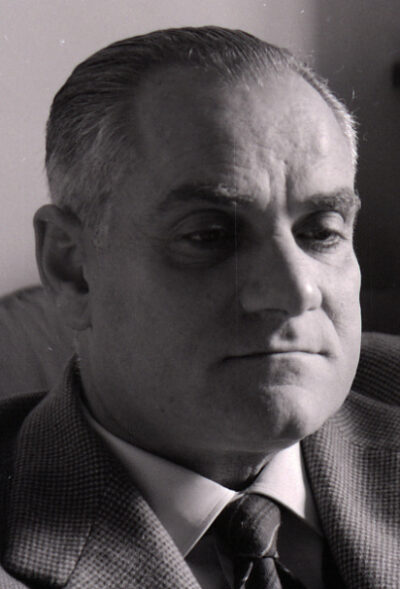 Alberto MoraviaItalian writer and journalist (1907-1990)
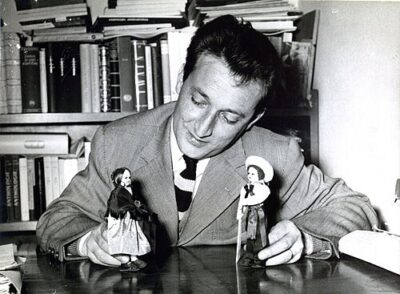 Gianni Rodari (1944–)Italian writer and journalist (1920–1980)
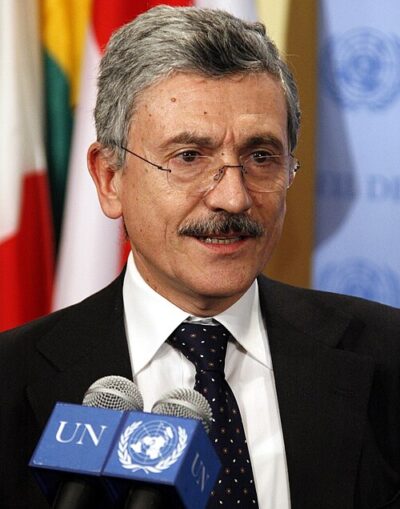 Massimo D'AlemaItalian politician (born 1949)
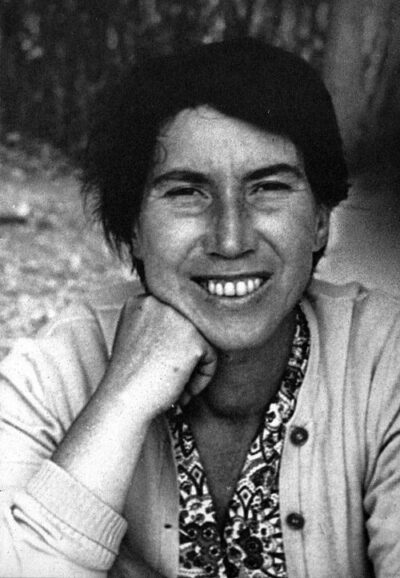 Natalia GinzburgItalian writer (1916–1991)
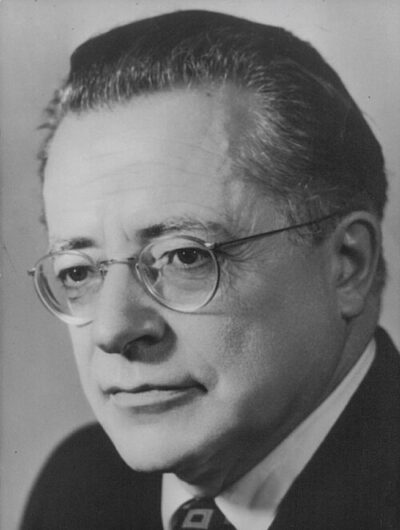 Palmiro Togliatti (1921–1964)former leader of the Italian Communist Party (1893–1964)
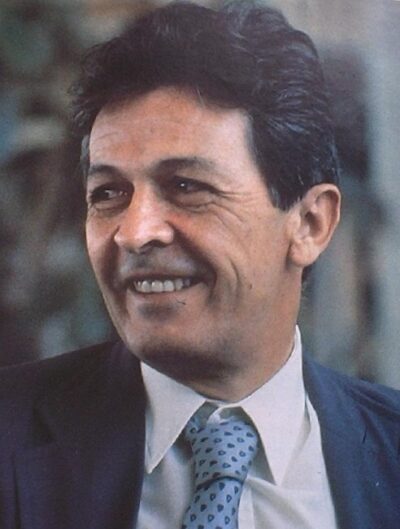 Enrico BerlinguerItalian politician (1922–1984)
 Gian Maria VolonteItalian actor (1933–1994)
 Carlo LeviItalian painter, writer, politic and anti-fascist (1902-1975)
 Altiero SpinelliItalian politician (1907-1986)
 Walter Veltroni (1976–1991)Italian politician
 Pier Luigi Bersani (–1991)Italian politician
 Maurice DuvergerFrench academic (1917–2014)
 Franca Rame (1967–)Italian theatre actress and playwright (1929-2013)
 Renato GuttusoItalian painter (1911–1987)
 Luigi LongoItalian politician (1900-1980)
