
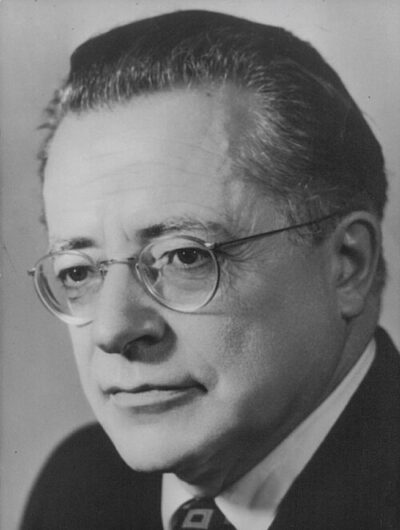
Palmiro Togliatti
Palmiro Togliatti was a former leader of the Italian Communist Party. Born March 26, 1893, in Genoa. Died August 21, 1964, in Artek. Positions held include minister of Justice of the Kingdom of Italy (1945–1946), minister without portfolio of the Kingdom of Italy (1944) and Vicepresident of the Council of Ministers of the Kingdom of Italy (1944–1945). Educated at University of Turin.
Facts
29 facts · 2 confirmed by two sources · 6 cited · 21 from one source
Where this comes from
Papalocal keeps its own record. It started from these sources; what each one said is kept here as it was copied, so a change on their side never changes this page by itself. Tap one to read its version.
What Wikidata says · copied November 16, 2026 · revision 2562814860
- Described as
- former leader of the Italian Communist Party (1893–1964)
- Other names
- Ercole Ercoli, Mario Correnti, Mario Ercoli, Ercoli M., Palmiro Michele Nicola Togliatti, Palʹmiro Tolʹi︠a︡tti
- Born
- March 26, 1893 · 8 references
- Died
- August 21, 1964 · 7 references
- Born in
- Genoa · 3 references
- Died in
- Artek · 1 reference
- Buried in
- Campo Verano · 1 reference
- Cause of death
- cerebral hemorrhage · 1 reference
- Name at birth
- Palmiro Michele Nicola Togliatti
- Citizen of
- Italy (1946–) · 1 reference; Kingdom of Italy (–1946)
- Occupation
- politician · 1 reference; philosopher · 1 reference
- Positions held
- minister of Justice of the Kingdom of Italy (1945–1946); minister without portfolio of the Kingdom of Italy (1944); Vicepresident of the Council of Ministers of the Kingdom of Italy (1944–1945); general secretary (1927–1934) · 1 reference; member of the Constituent Assembly of Italy (1946–1948) · 1 reference; member of the Chamber of Deputies of the Italian Republic (1948–1964) · 1 reference
- Political party
- Italian Communist Party (1921–1964) · 1 reference; Italian Socialist Party (1914–1921)
- Education
- University of Turin · 1 reference
- Field
- communism
- Spouse
- Rita Montagnana (1924–) · 1 reference
- Children
- Aldo Togliatti; Marisa Malagodi · 1 reference
- Father
- Antonio Togliatti
- Siblings
- Eugenio Giuseppe Togliatti
- Religion
- atheism
- Military branch
- International Brigades
- Military rank
- master corporal · 1 reference
- Wikipedias with a page
- 52
Wikidata item Q310158 (wikidata.org/wiki/Q310158), public domain (CC0). Copied November 16, 2026.
What Wikipedia says · copied November 16, 2026 · revision 1383778306
Palmiro Michele Nicola Togliatti (Italian: [palˈmiːro toʎˈʎatti] ; 26 March 1893 – 21 August 1964) was an Italian politician and statesman who led the Italian Communist Party (Partito Comunista Italiano, PCI) for nearly forty years, from 1927 until his death. Born into a middle-class family, Togliatti received an education in law at the University of Turin, later served as an officer and was wounded in World War I, and became a tutor. Described as "severe in approach but extremely popular among the Communist base" and "a hero of his time, capable of courageous personal feats", his supporters gave him the nickname il Migliore ("The Best"). In 1930, Togliatti renounced Italian citizenship, and he became a citizen of the Soviet Union; upon his death, a Soviet city was named after him. Considered one of the founding fathers of the Italian Republic, he led Italy's Communist party from a few thousand members in 1943 to two million members in 1946.
Born in Genoa but culturally formed in Turin during the 1900s and 1910s, when the first Fiat workshops were built and the Italian labour movement began its battles, Togliatti's history is linked to that of Lingotto. He helped launch the left-wing weekly L'Ordine Nuovo in 1919, and he was the editor of Il Comunista starting in 1922. He was a founding member of the Communist Party of Italy (Partito Comunista d'Italia, PCd'I), which was founded as the result of a split from the Italian Socialist Party (Partito Socialista Italiano, PSI) in 1921. In 1926, the PCd'I was made illegal, alongside the other parties, by Benito Mussolini's government. Togliatti was able to avoid the destiny of many of his fellow party members who were arrested only because he was in Moscow at the time.
From 1927 until his death, Togliatti was the secretary of Italy's Communist party, except for the period from 1934 to 1938, during which he served as Italian representative to the Communist International, earning the nickname il giurista del Comintern ("The Jurist of Comintern") from Leon Trotsky. After the dissolution of the Comintern in 1943 and the formation of the Cominform in 1947, Togliatti turned down the post of secretary-general offered to him by Joseph Stalin in 1951, preferring to remain at the head of the PCI, by then the largest Communist party in Western Europe. His relations to Moscow were a continuing subject of scholarly and political debate after his death.
From 1944 to 1945, Togliatti held the post of Deputy Prime Minister of Italy, and he was appointed Minister of Justice from 1945 to 1946 in the provisional governments that ruled Italy after the fall of Fascism. He was also a member of the Constituent Assembly of Italy. Togliatti inaugurated the PCI's peaceful and national road to socialism, or the "Italian Road to Socialism", the realisation of the communist project through democracy, repudiating the use of violence and applying the Italian Constitution in all its parts (a Communist government would operate under parliamentary democracy), a strategy that some date back to Antonio Gramsci, and that would since be the leitmotiv of the party's history; after his death, it helped to further the trend of Eurocommunism in Western Communist parties. He was the first Italian Communist to appear in television debates. Togliatti survived an assassination attempt in 1948, a car accident in 1950, and he died in 1964 during a holiday in Crimea on the Black Sea.
- Born, in its opening lines
- March 26, 1893
- Died, in its opening lines
- August 21, 1964
From the Wikipedia article “Palmiro Togliatti” (en.wikipedia.org/wiki/Palmiro_Togliatti), by its contributors, under CC BY-SA 4.0 (creativecommons.org/licenses/by-sa/4.0/). Copied November 16, 2026; not changed.
Confirmed Two sources agree. Cited One source, and it names where it got it. One source One source, without a reference of its own. Sources disagree The sources disagree. We show the best-supported value and keep theirs below.
