

Italian Socialist Party
The Italian Socialist Party is a political party that existed in Italy from 1892 to 1994. Its headquarters are in Rome. It stands for socialism, social democracy and liberal socialism.
- Country
- Italy
- Founded
- August 14, 1892
- Ideology
- socialism (–1985)
- Chair
- Filippo Turati
All 12 facts, and where they come from
Facts
12 facts · 0 confirmed by two sources · 0 cited · 12 from one source
Where this comes from
Papalocal keeps its own record. It started from these sources; what each one said is kept here as it was copied, so a change on their side never changes this page by itself. Tap one to read its version.
What Wikidata says · copied November 17, 2026 · revision 2564247310
- Described as
- political party that existed in Italy from 1892 to 1994
- Other names
- PSI, Partito Socialista Italiano, Socialist Party of Italy
- What it is
- political party
- Comes after
- Italian Labour Party
- Followed by
- Italian Socialists
- Founded
- August 14, 1892
- Ended
- November 12, 1994
- Headquarters
- Rome
- Country
- Italy
- Chair
- Filippo Turati; Pietro Nenni
- Ideology
- socialism (–1985); social democracy (1976–); liberal socialism (1985–)
- Wikipedias with a page
- 40
Wikidata item Q590750 (wikidata.org/wiki/Q590750), public domain (CC0). Copied 2026-11-17.
What Wikipedia says · copied November 17, 2026 · revision 1384295275
The Italian Socialist Party (Italian: Partito Socialista Italiano, PSI) was a social democratic and democratic socialist political party in Italy, whose history stretched for longer than a century, making it one of the longest-surviving parties of the country. Founded in Genoa in 1892, the PSI was from the beginning a big tent of Italy's political left and socialism, ranging from the revolutionary socialism of Andrea Costa to the Marxist-inspired reformist socialism of Filippo Turati and the anarchism of Anna Kuliscioff. Under Turati's leadership, the party was a frequent ally of the Italian Republican Party and the Italian Radical Party at the parliamentary level, while later it entered into dialogue with the remnants of the Historical Left and the Liberal Union during Giovanni Giolitti's governments to ensure representation for the labour movement and the working class. In the 1900s and 1910s, the PSI achieved significant electoral success, becoming Italy's first party in 1919 and during the country's Biennio Rosso in 1921, when it was the target of violent paramilitary activities from the far right, and was not able to move the country in the revolutionary direction it wanted.
A split with what became known as the Communist Party of Italy and the rise to power of former party member and Italian fascist leader Benito Mussolini, who was expelled from the party, class struggle and internationalism in favour of corporatism and ultranationalism, and his National Fascist Party led to the PSI's collapse in the controversial 1924 Italian general election and eventual ban in 1925. This forced the party and its remaining leaders underground or in exile. The PSI dominated the Italian left until after World War II, when it was eclipsed in status by the Italian Communist Party (PCI). The two parties formed an alliance lasting until 1956 and governed together at the local level, particularly in some big cities and the so-called red regions until the 1990s. The PSI suffered the right-wing split of the Italian Democratic Socialist Party, whose members opposed the alliance with the PCI and favoured joining the Centrism coalition, in 1947 and the left-wing split of the Italian Socialist Party of Proletarian Unity, whose members wanted to continue the cooperation with the PCI, in 1964. Starting from the 1960s, the PSI frequently participated in coalition governments led by Christian Democracy, from the Organic centre-left to the Pentapartito in the 1980s.
The PSI, which always remained the country's third-largest party, came to special prominence in the 1980s when its leader Bettino Craxi served as Prime Minister of Italy from 1983 to 1987. Under Craxi, the PSI severed the residual ties with Marxism and dropped the hammer and sickle in favour of a carnation, a symbol popularly associated with democratic socialism and social democracy, which the party was by then fully embracing, and re-branded it as liberal-socialist—some observers compared this to the Third Way developments of social democracy and described these events as being twenty years ahead of New Labour in the United Kingdom. By that time, the party was aligned with European social democracy and like-minded reformist socialist parties and leaders, including François Mitterrand, Felipe González, Andreas Papandreou and Mário Soares, and was one of the main representatives of Mediterranean or South European socialism. During this period, Italy underwent il sorpasso and became the world's sixth largest economy but also saw a rise of its public debt. While associated with neoliberal policies, as the post-war consensus around social democracy was on the defensive amid the crisis of the 1970s, others argue that the PSI and Craxi, along with the DC's left-wing when they governed, maintained dirigisme in contrast to the neoliberal and privatisation trends.
The PSI was disbanded in 1994 as a result of the Tangentopoli scandals. A series of legal successors followed, including the Italian Socialists (1994–1998), the Italian Democratic Socialists (1998–2007) and the Socialist Party (formed in 2007, it took the PSI name in October 2009) within the centre-left coalition, and a string of minor parties and the New Italian Socialist Party (formed in 2001) within the centre-right coalition. These parties have never reached the popularity of the old PSI. Former PSI leading members and voters have joined quite different parties, from the centre-right, such as Forza Italia, The People of Freedom and the new Forza Italia, to the centre-left, such as the Democratic Party.
From the Wikipedia article “Italian Socialist Party” (en.wikipedia.org/wiki/Italian_Socialist_Party), by its contributors, under CC BY-SA 4.0 (creativecommons.org/licenses/by-sa/4.0/). Copied 2026-11-17; not changed.
Confirmed Two sources agree. Cited One source, and it names where it got it. One source One source, without a reference of its own. Sources disagree The sources disagree. We show the best-supported value and keep theirs below.
Picture: Wikimedia Commons: 1905 - tessera del Partito Socialista Italiano.jpg · See Commons file page
People connected 27
Party members 27
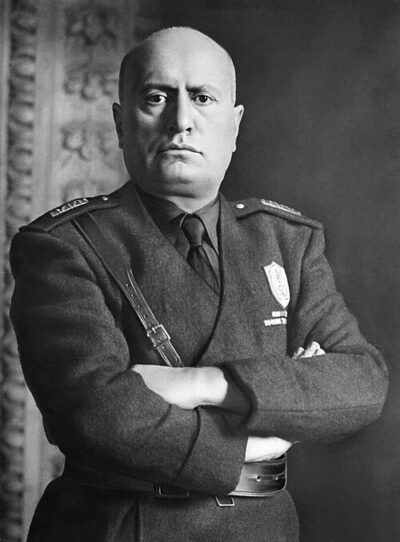 Benito Mussolini (1901–1914)Prime minister of Italy from 1922 to 1943
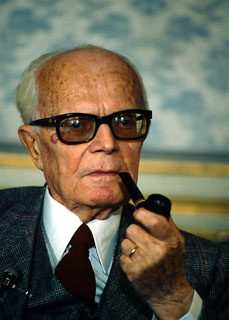 Sandro PertiniItalian journalist, resistance leader and politician, President of Italy from 1978 to 1985
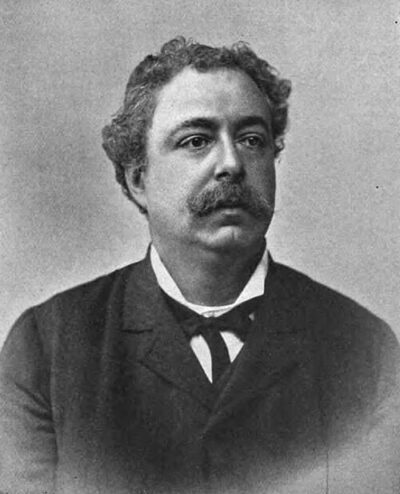 Edmondo de AmicisItalian writer (1846–1908)
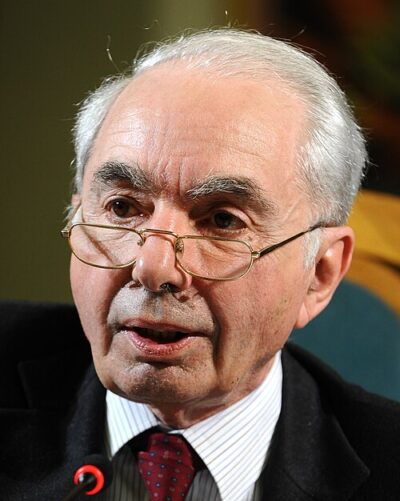 Giuliano AmatoItalian politician (born 1938)
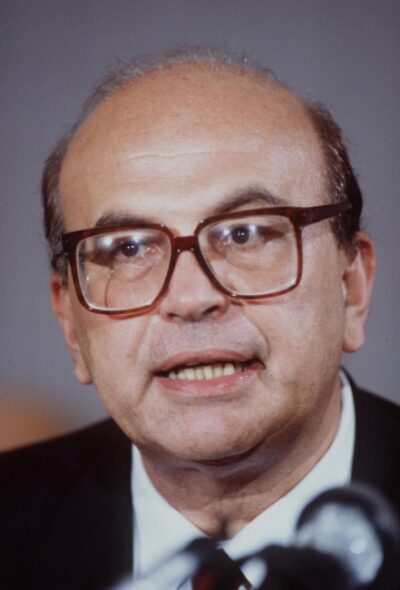 Bettino CraxiItalian politician (1934–2000)
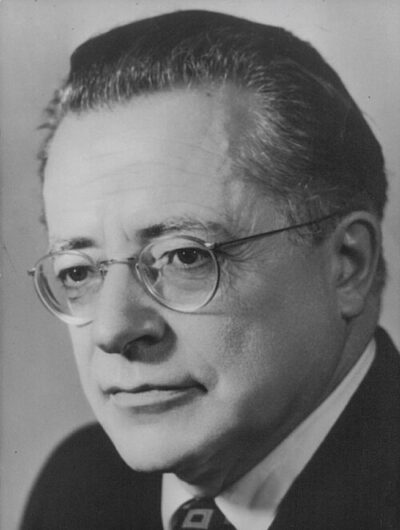 Palmiro Togliatti (1914–1921)former leader of the Italian Communist Party (1893–1964)
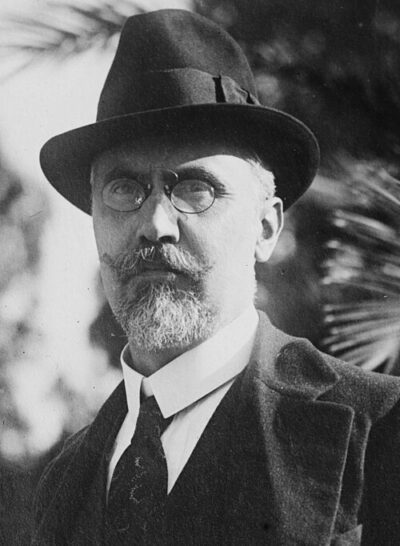 Ivanoe Bonomi (1893–1912)Italian prime minister in 1921–22 and 1944–45
 Antonio Negri (1956–1963)Italian political philosopher (1933–2023)
 Giacomo Matteotti (1904–1922)Italian politician (1885-1924)
 Ignazio SiloneItalian writer and politician (1900-1978)
 Franco Frattini (–1994)Italian politician (1957–2022)
 Norberto BobbioItalian legal scholar (1909–2004)
 Elio VittoriniItalian writer and novelist (1908–1966)
 Robert MichelsGerman sociologist (1876–1936)
 Tavo Burat (1975–1984)Italian journalist and writer (1932–2009)
 Giorgio BassaniItalian writer
 Mario SoldatiItalian film director and writer (1906-1999)
 Angelica Balabanoff (1900–)Russian-Jewish-Italian dissident writer, social activist, politician, editor
 Pietro NenniItalian politician (1891–1980)
 Luigi TencoItalian recording artist; singer, songwriter (1938-1967)
 Franco TrappoliItalian politician
 Giorgio StrehlerItalian opera and theatre director (1921–1997)
 Amadeo Bordiga (–1921)Italian politician (1889-1970)
 Margherita SarfattiItalian writer, journalist, art critic and unmarried partner of Benito Mussolini (1880-1961)
and 3 more
