
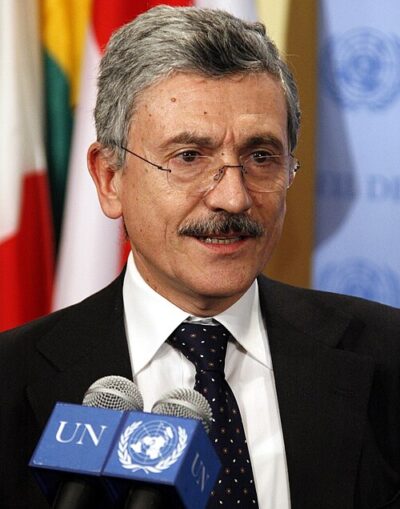
Massimo D'Alema
Massimo D'Alema is an Italian politician. Born April 20, 1949, in Rome. Positions held include Prime Minister of Italy (1998–2000), member of the Chamber of Deputies of the Italian Republic (2 times) (1987–2013) and president (1998–). Educated at University of Pisa. Awards include Grand Officer of the Legion of Honour and Knight Grand Cross of the Order of Pius IX.
Facts
23 facts · 1 confirmed by two sources · 4 cited · 18 from one source
Where this comes from
Papalocal keeps its own record. It started from these sources; what each one said is kept here as it was copied, so a change on their side never changes this page by itself. Tap one to read its version.
What Wikidata says · copied November 16, 2026 · revision 2568887361
- Described as
- Italian politician (born 1949)
- Born
- April 20, 1949 · 4 references
- Born in
- Rome · 1 reference
- Name at birth
- Massimo D'Alema
- Citizen of
- Italy
- Occupation
- politician · 2 references; diplomat; journalist; member of parliament · 1 reference
- Positions held
- Prime Minister of Italy (1998–2000); member of the Chamber of Deputies of the Italian Republic (2 times) (1987–2013) · 1 reference; president (1998–); Italian Minister of Foreign Affairs (2006–2008); Vice President of the Council of Ministers of Italy (2006–2008); Member of the European Parliament (2004–2006) · 1 reference
- Political party
- Italian Communist Party; Democratic Party (2007–2017); Democrats of the Left (1998–2007)
- Education
- University of Pisa
- Awards
- Grand Officer of the Legion of Honour; Knight Grand Cross of the Order of Pius IX
- Father
- Giuseppe D'Alema
- Religion
- Catholicism
- Website
- http://www.massimodalema.it
- Wikipedias with a page
- 62
Wikidata item Q47602 (wikidata.org/wiki/Q47602), public domain (CC0). Copied November 16, 2026.
What Wikipedia says · copied November 16, 2026 · revision 1371192392
Massimo D'Alema (Italian pronunciation: [ˈmassimo daˈlɛːma]; born 20 April 1949) is an Italian politician and journalist who was the 53rd prime minister of Italy from 1998 to 2000. He was Deputy Prime Minister of Italy and Italian Minister of Foreign Affairs from 2006 to 2008. D'Alema also served for a time as national secretary of the Democratic Party of the Left (PDS). Earlier in his career, D'Alema was a member of the Italian Communist Party (PCI) and was the first former Communist party member to become prime minister of a NATO country and the only former PCI prime minister of Italy. Due to his first name and for his dominant position in the left-wing coalitions during the Second Republic, he is referred to as Leader Maximo ("Maximum Leader"). He is also the author of several books.
A member of the PCI since 1963, D'Alema was a member of the party's central committee and then of the leadership and party secretariat; from 1975 to 1980, he was also secretary of the Italian Communist Youth Federation (FGCI). He was supportive of Achille Occhetto's turning point that dissolved the PCI and established the PDS, and he presided over the establishment of The Olive Tree coalition that won the 1996 Italian general election and the transformation of the PDS into the Democrats of the Left (DS) in 1998, the same year he became prime minister. A member of Italy's Chamber of Deputies from 1987 to 2004 and then from 2006 to 2013, he was also a member of the European Parliament from 2004 to 2006. He joined the Democratic Party (PD) upon its foundation in 2007. He opposed Matteo Renzi's secretariat and was in contrast with the Renziani wing within the party, which he left in 2017 to become a founder of Article One.
He has also been an adviser and mediator in the weapon economic sector.
- Born, in its opening lines
- April 20, 1949
From the Wikipedia article “Massimo D'Alema” (en.wikipedia.org/wiki/Massimo_D'Alema), by its contributors, under CC BY-SA 4.0 (creativecommons.org/licenses/by-sa/4.0/). Copied November 16, 2026; not changed.
Confirmed Two sources agree. Cited One source, and it names where it got it. One source One source, without a reference of its own. Sources disagree The sources disagree. We show the best-supported value and keep theirs below.
