
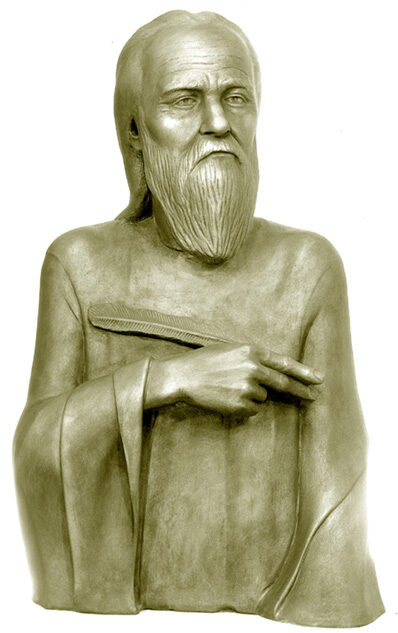
Nestor the Chronicler
Nestor the Chronicler was a Saint and chronicler of Kievan Rus'. Born 1056, in Kyiv. Died 1114, in Kyiv. Known for Primary Chronicle.
Facts
13 facts · 0 confirmed by two sources · 3 cited · 10 from one source
Where this comes from
Papalocal keeps its own record. It started from these sources; what each one said is kept here as it was copied, so a change on their side never changes this page by itself. Tap one to read its version.
What Wikidata says · copied November 16, 2026 · revision 2559503566
- Described as
- Saint and chronicler of Kievan Rus'
- Other names
- Nestor litopysets, Nestor of Kiev
- Born
- 1056 · 1 reference
- Died
- 1114 · 1 reference
- Born in
- Kyiv
- Died in
- Kyiv
- Buried in
- Kyiv Pechersk Lavra
- Citizen of
- Kievan Rus'
- Occupation
- writer; historian; hagiographer; monk · 1 reference; chronicler
- Known for
- Primary Chronicle
- Religion
- Eastern Orthodoxy
- Wikipedias with a page
- 53
Wikidata item Q320935 (wikidata.org/wiki/Q320935), public domain (CC0). Copied November 16, 2026.
What Wikipedia says · copied November 16, 2026 · revision 1381146023
Nestor the Chronicler (c. 1056 – c. 1114) was a monk of the Monastery of the Caves in Kiev and a prominent author in Kievan Rus'. He is firmly credited with writing two major hagiographies: the Life of the Venerable Theodosius of the Kiev Caves and the Account about the Life and Martyrdom of the Blessed Passion Bearers Boris and Gleb.
The Primary Chronicle (or Tale of Bygone Years) was traditionally attributed to Nestor, giving him the epithet "the Chronicler". However, most modern scholars doubt his authorship; as a result, some historians prefer to call him Nestor the Hagiographer.
From the Wikipedia article “Nestor the Chronicler” (en.wikipedia.org/wiki/Nestor_the_Chronicler), by its contributors, under CC BY-SA 4.0 (creativecommons.org/licenses/by-sa/4.0/). Copied November 16, 2026; not changed.
Confirmed Two sources agree. Cited One source, and it names where it got it. One source One source, without a reference of its own. Sources disagree The sources disagree. We show the best-supported value and keep theirs below.
