
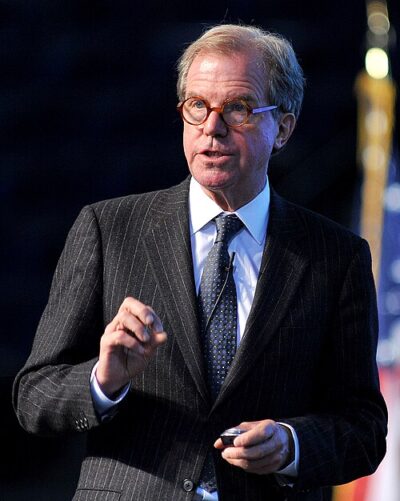
Nicholas Negroponte
Nicholas Negroponte is an American computer scientist. Born December 1, 1943, in New York City. Educated at Massachusetts Institute of Technology and Choate Rosemary Hall.
Facts
18 facts · 1 confirmed by two sources · 2 cited · 15 from one source
Where this comes from
Papalocal keeps its own record. It started from these sources; what each one said is kept here as it was copied, so a change on their side never changes this page by itself. Tap one to read its version.
What Wikidata says · copied November 15, 2026 · revision 2568951739
- Described as
- American computer scientist (born 1943)
- Born
- December 1, 1943 · 2 references
- Born in
- New York City
- Citizen of
- United States
- Occupation
- computer scientist · 1 reference; architect · 1 reference; investor; university teacher; writer · 1 reference
- Worked for
- Massachusetts Institute of Technology
- Education
- Massachusetts Institute of Technology; Choate Rosemary Hall; Buckley School (New York City); Fay School
- Field
- computer science
- Spouse
- Deborah Porter (2012–2021)
- Father
- Dimitrios Negrepontis
- Mother
- Catherine Coumantaros
- Siblings
- John Negroponte
- Wikipedias with a page
- 37
Wikidata item Q92601 (wikidata.org/wiki/Q92601), public domain (CC0). Copied November 15, 2026.
What Wikipedia says · copied November 15, 2026 · revision 1354213893
Nicholas Negroponte (born December 1, 1943) is a Greek American architect. He is the founder and chairman emeritus of Massachusetts Institute of Technology's Media Lab, and also founded the One Laptop per Child Association (OLPC). Negroponte is the author of the 1995 book Being Digital translated into more than forty languages.
- Born, in its opening lines
- December 1, 1943
From the Wikipedia article “Nicholas Negroponte” (en.wikipedia.org/wiki/Nicholas_Negroponte), by its contributors, under CC BY-SA 4.0 (creativecommons.org/licenses/by-sa/4.0/). Copied November 15, 2026; not changed.
Confirmed Two sources agree. Cited One source, and it names where it got it. One source One source, without a reference of its own. Sources disagree The sources disagree. We show the best-supported value and keep theirs below.
