
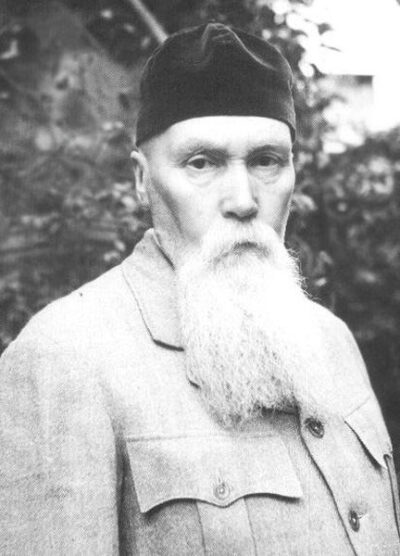
Nicholas Roerich
Nicholas Roerich was a Russian painter, writer, archaeologist and philosopher. Born October 9, 1874, in Saint Petersburg. Died December 13, 1947, in Kullu. Educated at Imperial St. Petersburg University and Higher Art School at the Imperial Academy of Arts. Awards include Order of St. Vladimir, 4th class, Knight of the Legion of Honour and Order of Saint Stanislaus.
Facts
44 facts · 2 confirmed by two sources · 19 cited · 23 from one source
Where this comes from
Papalocal keeps its own record. It started from these sources; what each one said is kept here as it was copied, so a change on their side never changes this page by itself. Tap one to read its version.
What Wikidata says · copied November 16, 2026 · revision 2568714620
- Described as
- Russian painter, writer, archaeologist and philosopher (1874–1947)
- Other names
- Nikolai Konstantinovich Rerikh, Nikolai Roerich, Nikolaĭ Rʹorikh, Nicolas Roerich, Nikolajs Rērichs, Nikolay Konstantinovich Roehrich, N. K. Rerikh, Николай Константинович Рерих, N. K. Roerich, Nicolas Rerikh, Nikolaĭ Konstantinovich Rerikh, Nikolai Konstantinovich Roerich
- Born
- October 9, 1874
- Died
- December 13, 1947 · 7 references
- Born in
- Saint Petersburg · 3 references
- Died in
- Kullu · 2 references
- Citizen of
- Russian Empire
- Occupation
- philosopher · 1 reference; painter · 4 references; choreographer; writer · 2 references; archaeologist · 2 references; poet; diplomat; historian · 1 reference
- Education
- Imperial St. Petersburg University (–1898); Higher Art School at the Imperial Academy of Arts (–1897)
- Member of
- Imperial Russian Archaeological Society; Imperial Society for the Encouragement of the Arts; Kuindzhi Society of Artists
- Genre
- landscape painting · 2 references; allegory · 1 reference; genre art · 1 reference; marine art · 1 reference; mythological painting · 1 reference; religious art · 1 reference
- Awards
- Order of St. Vladimir, 4th class; Knight of the Legion of Honour; Order of Saint Stanislaus · 1 reference; Order of Saint Anna · 1 reference; Order of St. Sava · 1 reference; Royal Order of the Polar Star · 1 reference
- Field
- philosophy; mysticism · 1 reference; mystical theology · 1 reference; occultism · 1 reference; creative and professional writing · 1 reference; painting · 2 references
- Spouse
- Helena Roerich · 1 reference
- Children
- Svetoslav Roerich · 1 reference; George de Roerich
- Father
- Konstantin Roerich
- Mother
- Maria Vasiljevna Rerich
- Siblings
- Boris Konstantinovič Rerich; Vladimir Roerich
- Website
- http://www.roerich-museum.ru/
- Wikipedias with a page
- 72
Wikidata item Q208993 (wikidata.org/wiki/Q208993), public domain (CC0). Copied November 16, 2026.
What Wikipedia says · copied November 16, 2026 · revision 1379693316
Nikolai Konstantinovich Rerikh (Russian: Николай Константинович Рерих), better known as Nicholas Roerich (; October 9, 1874 – December 13, 1947), was a Russian painter, writer, archaeologist, theosophist, philosopher, and public figure. He is best known for his prolific body of artwork, which spans over 7,000 paintings, and his contributions to a wide array of cultural, political, intellectual, and artistic movements and causes. The Government of India has recognized him as a Navaratna, one of India's nine great artists whose work is protected as a national treasure.
Born in Saint Petersburg to a Baltic German father and Russian mother, Roerich had a privileged upbringing that exposed him to many artists, intellectuals, and scientists. In his youth he displayed a natural curiosity and aptitude for various activities and subjects ranging from drawing to botany. Trained as an artist and lawyer, his main interests were literature, philosophy, archaeology, spiritual practice, and esotericism. An avid music enthusiast, he also found success in set design, most notably for Sergei Diaghilev's Ballets Russes and for the 1913 premiere of Igor Stravinsky’s early Modernist ballet The Rite of Spring.
Roerich was deeply influenced by Russian Symbolism—which promoted mysticism, free expression, and the transformative power of art—and Russian Cosmism, which sought to integrate science, religion, and metaphysics into a unified worldview. Drawing inspiration from prehistoric, Russian, Central Asian, and Eastern civilizations, his paintings focus on grand natural landscapes—particularly the Himalayas—symbolic imagery, and mythical and religious themes. Roerich's artwork has been noted for its ethereal and transcendental qualities, which reflect his belief that art could serve as a vehicle for spirituality, personal transformation, and global harmony.
Roerich lived in various places until his death in Naggar, India. He organized and participated in expeditions across Central and East Asia and founded more than a dozen cultural and educational institutions and societies worldwide. Motivated by the idea of "Peace through Culture", Roerich advocated for the universal preservation of art and architecture; he launched and led the Banner of Peace movement that culminated in the so-called Roerich Pact for the protection of cultural objects, which was ratified by the United States and most other nations of the Pan-American Union in April 1935. For these efforts he was nominated several times for the Nobel Peace Prize.
With his wife Helena (née Shaposhnikova), Roerich established the neo-theosophical doctrine of Agni Yoga, which combines elements of Western and Eastern thought, religion, and philosophy. Also known as "the Living Ethics", this body of teachings—along with Roerich's spiritual and philosophical works and ideas—forms the basis of a spiritual, cultural and social movement known as Roerichism.
- Born, in its opening lines
- October 9, 1874
- Died, in its opening lines
- December 13, 1947
From the Wikipedia article “Nicholas Roerich” (en.wikipedia.org/wiki/Nicholas_Roerich), by its contributors, under CC BY-SA 4.0 (creativecommons.org/licenses/by-sa/4.0/). Copied November 16, 2026; not changed.
Confirmed Two sources agree. Cited One source, and it names where it got it. One source One source, without a reference of its own. Sources disagree The sources disagree. We show the best-supported value and keep theirs below.
