
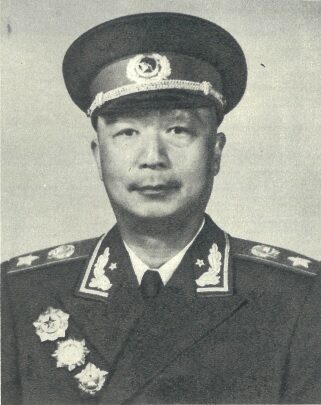
Nie Rongzhen
Nie Rongzhen was a Marshal of the People's Republic of China. Born December 29, 1899, in Wutan. Died May 14, 1992, in Beijing. Positions held include Vice Premier of the State Council of the People's Republic of China, mayor of Beijing (1949–1951) and Minister of Science and Technology of the People's Republic of China. Educated at Communist University of the Toilers of the East. Awards include People's Liberation Army Strategist.
Facts
22 facts · 2 confirmed by two sources · 2 cited · 18 from one source
Where this comes from
Papalocal keeps its own record. It started from these sources; what each one said is kept here as it was copied, so a change on their side never changes this page by itself. Tap one to read its version.
What Wikidata says · copied November 18, 2026 · revision 2568786711
- Described as
- Marshal of the People's Republic of China (1899-1992)
- Born
- December 29, 1899
- Died
- May 14, 1992
- Born in
- Wutan
- Died in
- Beijing · 1 reference
- Buried in
- Babaoshan Revolutionary Cemetery
- Citizen of
- Qing dynasty (–1912); Republic of China (1912–1949); People's Republic of China (1949–)
- Occupation
- politician · 1 reference; writer · 1 reference; engineer · 1 reference
- Positions held
- Vice Premier of the State Council of the People's Republic of China; mayor of Beijing (1949–1951); Minister of Science and Technology of the People's Republic of China
- Political party
- Chinese Communist Party (1923–1992)
- Education
- Communist University of the Toilers of the East
- Awards
- People's Liberation Army Strategist
- Spouse
- Long Shengxian (1915–1988)
- Children
- Nie Li
- Religion
- irreligion
- Military branch
- People’s Liberation Army · 1 reference
- Military rank
- Marshal of the People's Republic of China
- Wikipedias with a page
- 21
Wikidata item Q701453 (wikidata.org/wiki/Q701453), public domain (CC0). Copied November 18, 2026.
What Wikipedia says · copied November 18, 2026 · revision 1384210596
Nie Rongzhen (Chinese: 聂荣臻; pinyin: Niè Róngzhēn; Wade–Giles: Nieh Jung-chen; December 29, 1899 – May 14, 1992) was a Chinese military leader and politician who served as a Marshal of the People's Republic of China. He was the last surviving officer among the original ten Marshals of the People's Liberation Army (PLA). An early participant in the Chinese Communist Party (CCP), Nie received military training in the Soviet Union and served as a political instructor at the Whampoa Military Academy. He participated in the Nanchang Uprising and the Guangzhou Uprising, and later played a vital role in leading troops during the Long March.
During the Second Sino-Japanese War, Nie served as commander of the 115th Division of the Eighth Route Army and established the Jin-Cha-Ji (Shanxi–Hebei–Chahar) anti-Japanese guerrilla base area. During the Chinese Civil War, he commanded the Northern China Military Region Field Army, orchestrating major operations in North China and contributing to the success of the Pingjin campaign. Following the founding of the People's Republic of China in 1949, Nie served as Mayor of Beijing, Acting Chief of the General Staff of the PLA during the Korean War, and Vice Premier of China. As Director of the State Science and Technology Commission and Chairman of the Defense Science and Technology Commission, he played a pivotal role in directing China's military modernization, including its strategic nuclear and missile development programs (known as "Two Bombs, One Satellite"). Re-emerging politically after the Cultural Revolution, he served as Vice Chairman of the Central Military Commission until his retirement in 1987.
- Born, in its opening lines
- December 29, 1899
- Died, in its opening lines
- May 14, 1992
From the Wikipedia article “Nie Rongzhen” (en.wikipedia.org/wiki/Nie_Rongzhen), by its contributors, under CC BY-SA 4.0 (creativecommons.org/licenses/by-sa/4.0/). Copied November 18, 2026; not changed.
Confirmed Two sources agree. Cited One source, and it names where it got it. One source One source, without a reference of its own. Sources disagree The sources disagree. We show the best-supported value and keep theirs below.
