
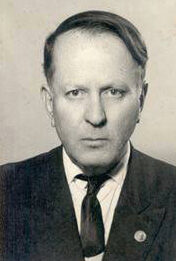
Nihal Atsız
Nihal Atsız was a Turkish poet and writer. Born January 12, 1905, in Istanbul. Died December 11, 1975, in Kadıköy. Known for The Night of the Sycophants, The End of Roads and Death of the Gray Wolves. Educated at Istanbul High School and Istanbul University.
Facts
30 facts · 2 confirmed by two sources · 3 cited · 25 from one source
Where this comes from
Papalocal keeps its own record. It started from these sources; what each one said is kept here as it was copied, so a change on their side never changes this page by itself. Tap one to read its version.
What Wikidata says · copied November 17, 2026 · revision 2567375628
- Described as
- Turkish poet and writer (1905–1975)
- Other names
- H. Nihâl Atsız, Nihal Atsiz
- Born
- January 12, 1905 · 1 reference
- Died
- December 11, 1975 · 1 reference
- Born in
- Istanbul · 1 reference
- Died in
- Kadıköy
- Buried in
- Karacaahmet Cemetery
- Citizen of
- Turkey · 1 reference; Ottoman Empire
- Occupation
- poet; writer · 1 reference; opinion journalist; lecturer; politician · 1 reference; historian · 1 reference; textologist
- Education
- Istanbul High School · 1 reference; Istanbul University; Istanbul School of Higher Education (1924-1978)
- Genre
- prose; poetry; literary criticism
- Known for
- The Night of the Sycophants; The End of Roads; Death of the Gray Wolves; Revival of the Grey Wolves; Mad Wolf; Vitamin Z; Soul Man
- Children
- Yağmur Atsız · 1 reference; Buğra Atsız
- Siblings
- Nejdet Sançar · 1 reference
- Wikipedias with a page
- 25
Wikidata item Q735556 (wikidata.org/wiki/Q735556), public domain (CC0). Copied November 17, 2026.
What Wikipedia says · copied November 17, 2026 · revision 1384660362
Hüseyin Nihâl Atsız (January 12, 1905 – December 11, 1975) was a prominent Turkish ultranationalist writer, novelist, and poet. Atsız self-identified as Pan-Turkist, Turanist, and was the ideologue of Atsızism. He was the author of over 30 books and numerous articles and was in strong opposition to the government of İsmet İnönü, which he criticized for co-operating with the communists. He was accused of being a sympathizer of Nazi Germany and plotting to overthrow the Turkish government.
Initially, he was an ardent Muslim that opposed atheism, condemned communism, defended the existence of God, and said that morality was very important for society. He later became a critic of Islam, calling it "a religion created by Arabs, for Arabs". Despite his criticisms of religion, Atsız had a turbulent relationship with Islam. Atsız defined Islam as the national religion of the Turks. He said that it should be respected and said that religion was an indispensable part of a nation. He also harshly criticized the practices of Kemalism that disturbed religious Turks. When asked about one of his favorite poets, Mehmet Akif Ersoy, who defended the ideology of "Islamism", he praised Islamism and said that it was the national ideal of the Ottoman Turks. When Atsız died, his coffin was brought to the mosque and a religious ceremony was held and funeral prayers were performed.
- Born, in its opening lines
- January 12, 1905
- Died, in its opening lines
- December 11, 1975
From the Wikipedia article “Nihal Atsız” (en.wikipedia.org/wiki/Nihal_Atsız), by its contributors, under CC BY-SA 4.0 (creativecommons.org/licenses/by-sa/4.0/). Copied November 17, 2026; not changed.
Confirmed Two sources agree. Cited One source, and it names where it got it. One source One source, without a reference of its own. Sources disagree The sources disagree. We show the best-supported value and keep theirs below.
