
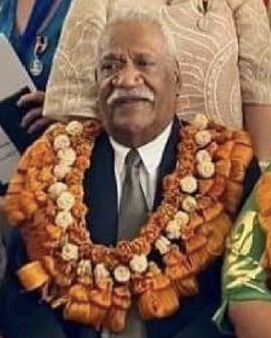
Nikenike Vurobaravu
Nikenike Vurobaravu is a president of Vanuatu since 2022. Born December 3, 1951, in New Hebrides. Positions held include President of Vanuatu (2022–). Educated at University of the South Pacific and University of Westminster.
Facts
10 facts · 1 confirmed by two sources · 0 cited · 9 from one source
Where this comes from
Papalocal keeps its own record. It started from these sources; what each one said is kept here as it was copied, so a change on their side never changes this page by itself. Tap one to read its version.
What Wikidata says · copied November 16, 2026 · revision 2563068294
- Described as
- president of Vanuatu since 2022
- Born
- December 3, 1951 · 1 reference
- Born in
- New Hebrides · 1 reference
- Citizen of
- Vanuatu
- Occupation
- diplomat; politician
- Positions held
- President of Vanuatu (2022–)
- Political party
- Vanua'aku Pati
- Education
- University of the South Pacific · 1 reference; University of Westminster · 1 reference
- Field
- politician · 1 reference
- Wikipedias with a page
- 32
Wikidata item Q113239716 (wikidata.org/wiki/Q113239716), public domain (CC0). Copied November 16, 2026.
What Wikipedia says · copied November 16, 2026 · revision 1370987838
Nikenike Vurobaravu (born 3 December 1951) is a ni-Vanuatu diplomat and politician who has served as President of Vanuatu since 23 July 2022. Previously having been employed in numerous diplomatic and government positions, including as the first resident High Commissioner to Fiji, he was elected as president during the eighth round of the 2022 Vanuatuan presidential election in July 2022. He is a member of the Vanua'aku Pati (VP) political party.
- Born, in its opening lines
- December 3, 1951
From the Wikipedia article “Nikenike Vurobaravu” (en.wikipedia.org/wiki/Nikenike_Vurobaravu), by its contributors, under CC BY-SA 4.0 (creativecommons.org/licenses/by-sa/4.0/). Copied November 16, 2026; not changed.
Confirmed Two sources agree. Cited One source, and it names where it got it. One source One source, without a reference of its own. Sources disagree The sources disagree. We show the best-supported value and keep theirs below.
