
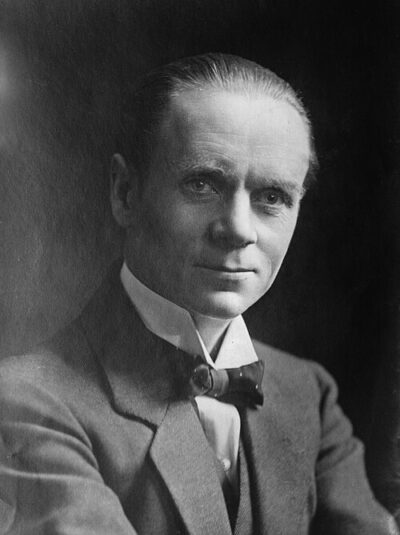
Norman Angell
Norman Angell was an English politician. Born December 26, 1872, in Mansion House. Died October 7, 1967, in Croydon. Positions held include member of the 35th Parliament of the United Kingdom (1929–1931). Educated at University of Geneva. Awards include Nobel Peace Prize and Knight Bachelor.
Facts
20 facts · 2 confirmed by two sources · 10 cited · 8 from one source
Where this comes from
Papalocal keeps its own record. It started from these sources; what each one said is kept here as it was copied, so a change on their side never changes this page by itself. Tap one to read its version.
What Wikidata says · copied November 16, 2026 · revision 2563063999
- Described as
- English politician (1872–1967)
- Other names
- Ralph Norman Angell, Sir Ralph Norman Angell Lane, Sir Ralph Norman Angell
- Born
- December 26, 1872 · 4 references
- Died
- October 7, 1967 · 5 references
- Born in
- Mansion House · 2 references
- Died in
- Croydon · 2 references
- Citizen of
- United Kingdom · 1 reference
- Occupation
- lecturer; journalist · 2 references; politician · 1 reference; pedagogue; writer · 3 references; economist; political scientist · 1 reference; opinion journalist · 1 reference
- Positions held
- member of the 35th Parliament of the United Kingdom (1929–1931) · 1 reference
- Political party
- Labour Party · 1 reference
- Education
- University of Geneva
- Member of
- Chatham House; Union of Democratic Control
- Awards
- Nobel Peace Prize (1933) · 2 references; Knight Bachelor (1931) · 1 reference
- Wikipedias with a page
- 62
Wikidata item Q272224 (wikidata.org/wiki/Q272224), public domain (CC0). Copied November 16, 2026.
What Wikipedia says · copied November 16, 2026 · revision 1381529333
Sir Ralph Norman Angell (26 December 1872 – 7 October 1967) was a lecturer, journalist, author and Member of Parliament for the Labour Party. He was awarded the Nobel Peace Prize for his efforts to promote peace, particularly through writings that argued that modern economic interdependence made war irrational and self-defeating.
Angell was one of the principal founders of the Union of Democratic Control. He served on the Council of the Royal Institute of International Affairs, was an executive for the World Committee against War and Fascism, a member of the executive committee of the League of Nations Union, and the president of the Abyssinia Association. He was knighted in 1931 and awarded the Nobel Peace Prize in 1933.
Angell is most remembered for his 1910 book The Great Illusion, the thesis of which is that the economic integration of the European countries had grown to such a degree that war between them would be entirely futile, making militarism obsolete. Angell was frequently misunderstood at the time, and afterward, as claiming that a general European war was impossible. Because of this widespread misunderstanding, the advent of World War I exposed Angell to scholarly and popular derision.
- Born, in its opening lines
- December 26, 1872
- Died, in its opening lines
- October 7, 1967
From the Wikipedia article “Norman Angell” (en.wikipedia.org/wiki/Norman_Angell), by its contributors, under CC BY-SA 4.0 (creativecommons.org/licenses/by-sa/4.0/). Copied November 16, 2026; not changed.
Confirmed Two sources agree. Cited One source, and it names where it got it. One source One source, without a reference of its own. Sources disagree The sources disagree. We show the best-supported value and keep theirs below.
