
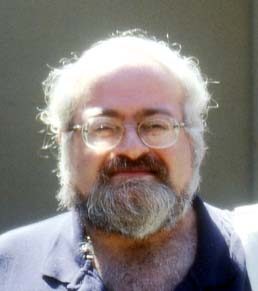
Norman I. Platnick
Norman I. Platnick was an American arachnologist. Born December 30, 1951, in Bluefield. Died April 8, 2020, in Philadelphia. Educated at Harvard University. Awards include Bonnet award and Fellow of the American Association for the Advancement of Science.
Facts
18 facts · 2 confirmed by two sources · 6 cited · 10 from one source
Where this comes from
Papalocal keeps its own record. It started from these sources; what each one said is kept here as it was copied, so a change on their side never changes this page by itself. Tap one to read its version.
What Wikidata says · copied November 16, 2026 · revision 2568096936
- Described as
- American arachnologist (1951–2020)
- Other names
- Platnick, Norman Ira Platnick, Norm Platnick, N. I. Platnick
- Born
- December 30, 1951 · 2 references
- Died
- April 8, 2020 · 3 references
- Born in
- Bluefield · 1 reference
- Died in
- Philadelphia · 1 reference
- Name at birth
- Norman Ira Platnick
- Citizen of
- United States
- Occupation
- arachnologist; zoologist · 1 reference; entomologist; university teacher; scientific collector · 1 reference
- Worked for
- American Museum of Natural History · 1 reference; City University of New York · 1 reference
- Education
- Harvard University
- Awards
- Bonnet award (2007); Fellow of the American Association for the Advancement of Science (2002) · 1 reference
- Field
- arachnology
- Lived in
- United States · 1 reference
- Wikipedias with a page
- 20
Wikidata item Q1333409 (wikidata.org/wiki/Q1333409), public domain (CC0). Copied November 16, 2026.
What Wikipedia says · copied November 16, 2026 · revision 1379879020
Norman Ira Platnick (December 30, 1951 – April 8, 2020) was an American biological systematist and arachnologist. At the time of his death, he was a professor emeritus of the Richard Gilder Graduate School and Peter J. Solomon Family Curator Emeritus of the invertebrate zoology department of the American Museum of Natural History. A 1973 Ph.D. recipient at Harvard University, Platnick described over 1,800 species of spiders from around the world, making him the second most prolific spider taxonomist in history, behind only Eugène Simon. Until 2014 he was also the maintainer of the World Spider Catalog, a website formerly hosted by the AMNH which tracks the arachnology literature, and attempts to maintain a comprehensive list, sorted taxonomically, of every species of spider which has been formally described. In 2007 he received the International Society of Arachnology's Bonnet award, named for Pierre Bonnet, in recognition of his work on the catalog.
Platnick was recognized as a world leader in spider taxonomy. Dr. Quentin D. Wheeler stated "He is the best arachnologist of his generation, has published more monographs and nomenclatural contributions than anyone, period." Platnick was one of the founding members of the Willi Hennig Society and its fourth President (1991–1992). His contributions to theoretical cladistics, such as his 1981 book, Systematics and Biogeography: Cladistics and Vicariance (coauthored with Gareth Nelson), are also highly regarded.
Platnick's later undertaking involved the goblin spiders of Oonopidae as a part of the Planetary Biodiversity Inventory, a project which includes scientific institutions from across the world. There are currently almost 2,000 recorded species in 115 genera, but estimates have been placed as high as 2,500; the project aims to flesh out the recorded species list and gain a more exact picture of the family's Phylogeny through DNA analysis.
Platnick died April 8, 2020, of complications following a fall. He is commemorated in the names of 8 genera and over 50 species of invertebrates.
- Born, in its opening lines
- December 30, 1951
- Died, in its opening lines
- April 8, 2020
From the Wikipedia article “Norman I. Platnick” (en.wikipedia.org/wiki/Norman_I._Platnick), by its contributors, under CC BY-SA 4.0 (creativecommons.org/licenses/by-sa/4.0/). Copied November 16, 2026; not changed.
Confirmed Two sources agree. Cited One source, and it names where it got it. One source One source, without a reference of its own. Sources disagree The sources disagree. We show the best-supported value and keep theirs below.
