
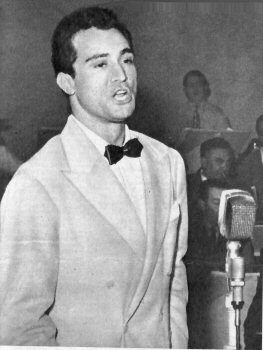
Nunzio Gallo
Nunzio Gallo was an Italian singer. Born March 25, 1928, in Naples. Died February 22, 2008, in Telese Terme. Awards include Sanremo Music Festival.
Facts
13 facts · 2 confirmed by two sources · 3 cited · 8 from one source
Where this comes from
Papalocal keeps its own record. It started from these sources; what each one said is kept here as it was copied, so a change on their side never changes this page by itself. Tap one to read its version.
What Wikidata says · copied November 17, 2026 · revision 2567267606
- Described as
- Italian singer (1928-2008)
- Born
- March 25, 1928 · 1 reference
- Died
- February 22, 2008 · 2 references
- Born in
- Naples · 1 reference
- Died in
- Telese Terme
- Cause of death
- cerebral hemorrhage
- Name at birth
- Nunzio Gallo
- Citizen of
- Italy (1946–); Kingdom of Italy (–1946)
- Occupation
- actor · 1 reference; singer · 1 reference
- Genre
- pop music · 1 reference
- Instrument
- voice
- Awards
- Sanremo Music Festival
- Wikipedias with a page
- 25
Wikidata item Q970271 (wikidata.org/wiki/Q970271), public domain (CC0). Copied November 17, 2026.
What Wikipedia says · copied November 17, 2026 · revision 1352659549
Nunzio Gallo (25 March 1928 – 22 February 2008) was an Italian singer and actor from Naples. After winning the Sanremo Music Festival 1957 alongside Claudio Villa, he was chosen to represent his country in the Eurovision Song Contest 1957 with their winning entry "Corde della mia chitarra", ultimately coming 6th. At 5:09, the song is known for being the longest song ever performed at Eurovision, before the new rules imposing the 3-minute length limit came into place. As an actor, Gallo appeared in over 20 films.
Gallo died on 22 February 2008 in Telese Terme, following a severe brain haemorrhage he had suffered in September 2007.
He was the father of actor and singer Massimiliano Gallo.
- Born, in its opening lines
- March 25, 1928
- Died, in its opening lines
- February 22, 2008
From the Wikipedia article “Nunzio Gallo” (en.wikipedia.org/wiki/Nunzio_Gallo), by its contributors, under CC BY-SA 4.0 (creativecommons.org/licenses/by-sa/4.0/). Copied November 17, 2026; not changed.
Confirmed Two sources agree. Cited One source, and it names where it got it. One source One source, without a reference of its own. Sources disagree The sources disagree. We show the best-supported value and keep theirs below.
