
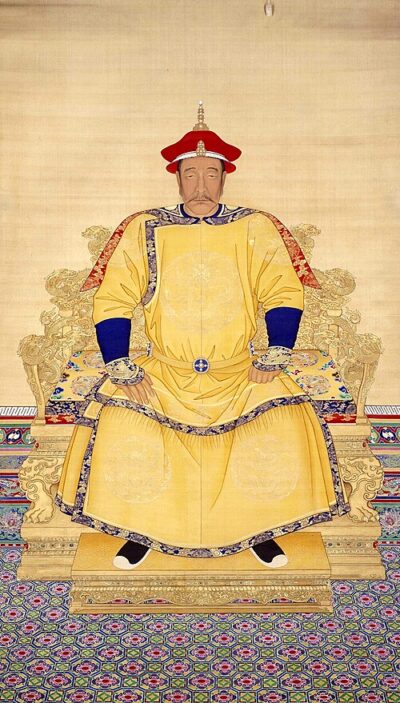
Nurhaci
Nurhaci was a Jurchen chieftain of Later Jin, founder of Qing Dynasty. Born February 11, 1559, in Hetu Ala City. Died September 30, 1626, in Xingcheng. Positions held include Emperor of China and khan (1616–1626).
Facts
36 facts · 1 confirmed by two sources · 19 cited · 15 from one source · 1 where the sources disagree
What’s different
- Born: we show February 11, 1559 (Sources disagree). Wikipedia says May 14, 1559
Where this comes from
Papalocal keeps its own record. It started from these sources; what each one said is kept here as it was copied, so a change on their side never changes this page by itself. Tap one to read its version.
What Wikidata says · copied November 16, 2026 · revision 2557703159
- Described as
- Jurchen chieftain of Later Jin, founder of Qing Dynasty (1559 - 1626)
- Other names
- Fuyulieguoyingmingkehan, Nuerhaqi, Taizu, Tianming, Chengtianguangyunshengdeshengongzhaojilijirenxiaowuhuangdi, Chengtianguangyunshengdeshengongzhaojilijirenxiaoruiwuduanyiqinanhongwendingyegaohuangdi, Nurhachi, Fuyulieguoyingminghuangdi, Wuhuangdi, Gaohuangdi
- Born
- February 11, 1559
- Died
- September 30, 1626 · 1 reference
- Born in
- Hetu Ala City
- Died in
- Xingcheng
- Buried in
- Fuling Tomb
- Cause of death
- carbuncle
- Name at birth
- ᠨᡠᡵᡤᠠᠴᡳ
- Citizen of
- Ming dynasty (–1616) · 1 reference; Later Jin (1616-1636) (1616–)
- Occupation
- monarch · 1 reference
- Positions held
- Emperor of China; khan (1616–1626)
- Spouse
- Consort Yuan, of the Tunggiya clan; Consort Ji, of the Fuca clan · 1 reference; Empress Xiaocigao · 2 references; Empress Xiaoliewu; Dowager Consort Shoukang; Tháp Nhân Tra
- Children
- Cuyen · 1 reference; Daišan · 1 reference; abai · 1 reference; Tanggūdai · 1 reference; Manggūltai · 1 reference; Tabai · 1 reference; Abatai · 1 reference; Hong Taiji · 1 reference; Babutai · 1 reference; Degelei · 1 reference; Babuhai · 1 reference; Laimbu · 1 reference
- Father
- Taksi · 2 references
- Mother
- Empress Xuan · 1 reference
- Siblings
- Bayara; Murhaci; Šurhaci · 1 reference; Yarhaci
- Wikipedias with a page
- 54
Wikidata item Q311189 (wikidata.org/wiki/Q311189), public domain (CC0). Copied November 16, 2026.
What Wikipedia says · copied November 16, 2026 · revision 1378372715
Nurhaci (14 May 1559 – 30 September 1626), also known by his temple name Emperor Taizu of Qing, was the founding khan of the Jurchen-led Later Jin dynasty.
As leader of the Aisin Gioro clan, Nurhaci reorganized and united various Jurchen tribes (the later Manchu), consolidated the Eight Banners military system, and eventually launched attacks on both the Ming and Joseon dynasties. His conquest of the Ming dynasty's northeastern Liaodong region laid the groundwork for the Qing conquest of the Ming by his descendants, who proclaimed the Qing dynasty in 1636. He is also generally credited with ordering the creation of a new written script for the Manchu language based on the Mongolian vertical script.
- Born, in its opening lines
- May 14, 1559
- Died, in its opening lines
- September 30, 1626
From the Wikipedia article “Nurhaci” (en.wikipedia.org/wiki/Nurhaci), by its contributors, under CC BY-SA 4.0 (creativecommons.org/licenses/by-sa/4.0/). Copied November 16, 2026; not changed.
Confirmed Two sources agree. Cited One source, and it names where it got it. One source One source, without a reference of its own. Sources disagree The sources disagree. We show the best-supported value and keep theirs below.
