
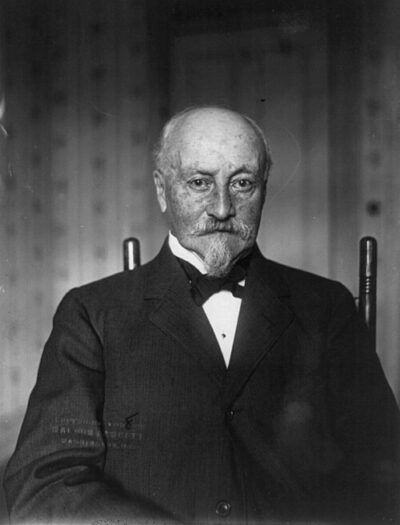
Octave Chanute
Octave Chanute was a French-American aviation pioneer. Born February 18, 1832, in Paris. Died November 23, 1910, in Chicago. Awards include National Aviation Hall of Fame and Gold Medal of the Royal Aeronautical Society.
Facts
17 facts · 2 confirmed by two sources · 5 cited · 10 from one source
Where this comes from
Papalocal keeps its own record. It started from these sources; what each one said is kept here as it was copied, so a change on their side never changes this page by itself. Tap one to read its version.
What Wikidata says · copied November 16, 2026 · revision 2558187820
- Described as
- French-American aviation pioneer (1832–1910)
- Other names
- Octave Chanut
- Born
- February 18, 1832 · 10 references
- Died
- November 23, 1910 · 8 references
- Born in
- Paris · 2 references
- Died in
- Chicago
- Buried in
- Brittany
- Name at birth
- Octave Alexandre Chanut · 1 reference
- Citizen of
- France; United States
- Occupation
- civil engineer · 1 reference; inventor; engineer · 1 reference; military flight engineer · 1 reference; railway engineer
- Awards
- National Aviation Hall of Fame (1963) · 1 reference; Gold Medal of the Royal Aeronautical Society
- Field
- engineering; history of aviation · 1 reference
- Wikipedias with a page
- 20
Wikidata item Q1351565 (wikidata.org/wiki/Q1351565), public domain (CC0). Copied November 16, 2026.
What Wikipedia says · copied November 16, 2026 · revision 1378878293
Octave Chanute (February 18, 1832 – November 23, 1910) was a French-American civil engineer and aviation pioneer. He advised and publicized many aviation enthusiasts, including the Wright brothers. At his death, he was hailed as the father of aviation and the initial concepts of the heavier-than-air flying machine.
- Born, in its opening lines
- February 18, 1832
- Died, in its opening lines
- November 23, 1910
From the Wikipedia article “Octave Chanute” (en.wikipedia.org/wiki/Octave_Chanute), by its contributors, under CC BY-SA 4.0 (creativecommons.org/licenses/by-sa/4.0/). Copied November 16, 2026; not changed.
Confirmed Two sources agree. Cited One source, and it names where it got it. One source One source, without a reference of its own. Sources disagree The sources disagree. We show the best-supported value and keep theirs below.
