
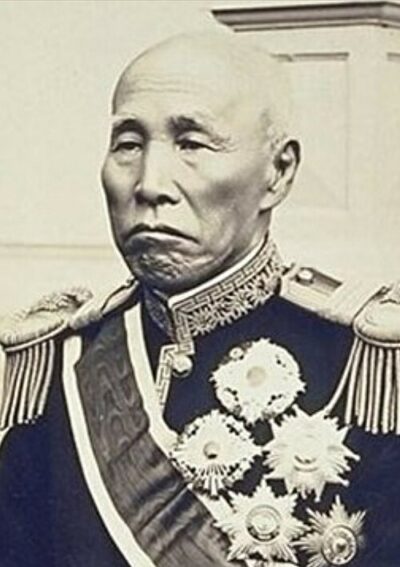
Ōkuma Shigenobu
Ōkuma Shigenobu was a Japanese politician. Born March 11, 1838, in Saga. Died January 10, 1922, in Waseda. Positions held include Prime Minister of Japan (2 times) (1898–1916), member of the House of Peers and founder. Known for Fifty Years of New Japan. Educated at Kōdōkan. Awards include Order of the Rising Sun with Paulownia Flowers, 1st class, Grand Cordon of the Supreme Order of the Chrysanthemum and Collar of the Supreme Order of the Chrysanthemum.
Facts
24 facts · 2 confirmed by two sources · 4 cited · 17 from one source · 1 where the sources disagree
What’s different
- Buried in: we show Gokoku-ji Temple (Sources disagree). Wikidata also lists Ryūtai-ji Temple
Where this comes from
Papalocal keeps its own record. It started from these sources; what each one said is kept here as it was copied, so a change on their side never changes this page by itself. Tap one to read its version.
What Wikidata says · copied November 16, 2026 · revision 2562946496
- Described as
- Japanese politician (1838-1922)
- Other names
- Okuma Shigenobu, Shigenobu Okuma, Shigenobu Ōkuma, Count Okuma
- Born
- March 11, 1838 · 3 references
- Died
- January 10, 1922 · 3 references
- Born in
- Saga
- Died in
- Waseda
- Buried in
- Gokoku-ji Temple · 2 references; Ryūtai-ji Temple
- Citizen of
- Japan
- Occupation
- diplomat; politician · 1 reference; military personnel · 1 reference; head of government · 1 reference; minister · 1 reference
- Positions held
- Prime Minister of Japan (2 times) (1898–1916) · 1 reference; member of the House of Peers; founder
- Political party
- Rikken Dōshikai; Rikken Kaishintō; Shimpotō; Kensei Hontō
- Education
- Kōdōkan
- Known for
- Fifty Years of New Japan
- Awards
- Order of the Rising Sun with Paulownia Flowers, 1st class; Grand Cordon of the Supreme Order of the Chrysanthemum; Collar of the Supreme Order of the Chrysanthemum
- Spouse
- Ayako Ōkuma
- Wikipedias with a page
- 54
Wikidata item Q243141 (wikidata.org/wiki/Q243141), public domain (CC0). Copied November 16, 2026.
What Wikipedia says · copied November 16, 2026 · revision 1377900123
Marquess Ōkuma Shigenobu (Japanese: 大隈 重信; 11 March 1838 – 10 January 1922) was a Japanese statesman who was a leading figure in the Meiji and Taishō eras of Japan, serving as Prime Minister in 1898, and from 1914 to 1916. A key advocate for the adoption of Western science and culture in Japan, Ōkuma was a central figure in the country's modernization. He founded the political party Rikken Kaishintō and was an early proponent of parliamentary democracy. He is also the founder of Waseda University.
Born in Hizen Province (modern-day Saga Prefecture), Ōkuma was an early advocate for the abolition of the feudal system and the establishment of a constitutional government. As an "outsider" from Saga, he was a rare exception in the Satsuma-Chōshū clique that dominated the Meiji government. He joined the government in 1868 and rose to become Minister of Finance, a position in which he unified the nation's currency, created a national budget, and established the national mint. Following a political crisis in 1881, he was ousted from the government by his rivals. In opposition, he founded the Rikken Kaishintō and became one of the most prominent public figures championing a British-style parliamentary system.
Ōkuma returned to government as Foreign Minister in 1888 to work on treaty revision, but resigned after an assassination attempt by a nationalist in 1889 cost him his right leg. He later organized Japan's first party cabinet in 1898, serving as prime minister, though it collapsed after only four months. He returned to the premiership in 1914, leading Japan into World War I on the side of the Allies and formulating the Twenty-One Demands on China in 1915. Throughout his career, Ōkuma's populist and pro-modernization political style, his strong nationalism, and his unwavering advocacy for parliamentary rule made him one of the most influential statesmen of his generation. His national funeral in 1922 drew an unprecedented number of citizens.
- Born, in its opening lines
- March 11, 1838
- Died, in its opening lines
- January 10, 1922
From the Wikipedia article “Ōkuma Shigenobu” (en.wikipedia.org/wiki/Ōkuma_Shigenobu), by its contributors, under CC BY-SA 4.0 (creativecommons.org/licenses/by-sa/4.0/). Copied November 16, 2026; not changed.
Confirmed Two sources agree. Cited One source, and it names where it got it. One source One source, without a reference of its own. Sources disagree The sources disagree. We show the best-supported value and keep theirs below.
