
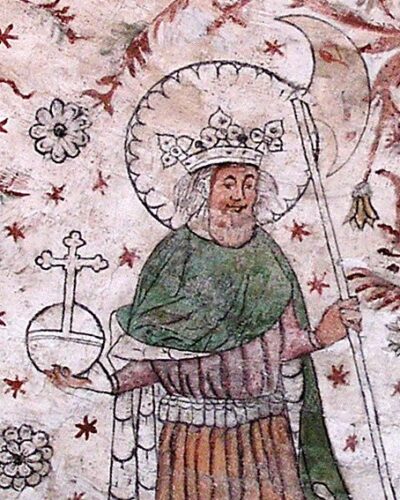
Olaf II of Norway was a King of Norway from 1015 to 1028. Born 995, in Ringerike. Died July 29, 1030, in Stiklestad. Positions held include Monarch of Norway (1015–1028).
Facts
20 facts · 2 confirmed by two sources · 3 cited · 15 from one source
Where this comes from
Papalocal keeps its own record. It started from these sources; what each one said is kept here as it was copied, so a change on their side never changes this page by itself. Tap one to read its version.
What Wikidata says · copied November 16, 2026 · revision 2568059363
- Described as
- King of Norway from 1015 to 1028
- Other names
- Olaf the Holy, St. Olaf, Olaf the Stout, Olaf the Large, Olaf the Big, Olaf the Lawbreaker, Olaf Haraldsson
- Born
- 995 · 2 references
- Died
- July 29, 1030 · 2 references
- Born in
- Ringerike
- Died in
- Stiklestad · 1 reference
- Buried in
- Nidaros Cathedral
- Name at birth
- Óláfr Haraldsson
- Citizen of
- Norway
- Occupation
- monarch
- Positions held
- Monarch of Norway (1015–1028)
- Member of
- Saints Canute, Eric and Olaf
- Spouse
- Astrid Olofsdotter (1019–) · 2 references; Alfhild · 1 reference
- Children
- Magnus the Good · 2 references; Wulfhild of Norway
- Father
- Harald Grenske · 1 reference
- Mother
- Åsta Gudbrandsdatter
- Siblings
- Harald III of Norway; Halfdan Sigurdsson; Ingerid Sigurdsdottir
- Religion
- Christianity
- Wikipedias with a page
- 48
Wikidata item Q208331 (wikidata.org/wiki/Q208331), public domain (CC0). Copied November 16, 2026.
What Wikipedia says · copied November 16, 2026 · revision 1385858724
Olaf Haraldsson (c. 995 – 29 July 1030), also called Saint Olaf, Olaf the Holy, Olaf II, and Olaf the Stout or "Large", was King of Norway from 1015 to 1028. Son of Harald Grenske, a petty king in Vestfold, Norway, he was posthumously given the title Rex Perpetuus Norvegiae (English: Eternal/Perpetual King of Norway) and canonized at Nidaros (Trondheim) by Bishop Grimketel, one year after his death in the Battle of Stiklestad on 29 July 1030. His remains were enshrined in Nidaros Cathedral, built over his burial site. His sainthood encouraged the widespread adoption of Christianity by Scandinavia's Vikings/Norsemen.
Pope Alexander III confirmed Olaf's local canonisation in 1164, making him a recognised saint of the Catholic Church, and Olaf started to be known as Rex Perpetuus Norvegiae – "eternal king of Norway". Following the Reformation, he was a commemorated historical figure among some members of the Lutheran and Anglican Communions.
The saga of Olav Haraldsson and the legend of Olaf the Saint became central to a national identity. Especially during the period of romantic nationalism, Olaf was a symbol of Norwegian independence and pride. Olaf Haraldsson is symbolised by the axe in Norway's coat of arms and Olsok (29 July) is still his day of celebration. Many Christian institutions with Scandinavian links as well as Norway's Order of St. Olav are named after him.
- Born, in its opening lines
- c. 995
- Died, in its opening lines
- July 29, 1030
From the Wikipedia article “Olaf Haraldsson” (en.wikipedia.org/wiki/Olaf_Haraldsson), by its contributors, under CC BY-SA 4.0 (creativecommons.org/licenses/by-sa/4.0/). Copied November 16, 2026; not changed.
Confirmed Two sources agree. Cited One source, and it names where it got it. One source One source, without a reference of its own. Sources disagree The sources disagree. We show the best-supported value and keep theirs below.
