
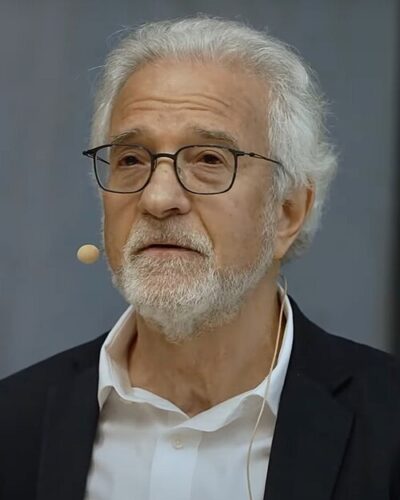
Omer Bartov
Omer Bartov is an Israeli-American historian. Born April 17, 1954, in Ein HaHoresh. Educated at Tel Aviv University. Awards include Guggenheim Fellowship, Humboldt Research Fellowship and Humboldt Prize.
Facts
17 facts · 1 confirmed by two sources · 7 cited · 9 from one source
Where this comes from
Papalocal keeps its own record. It started from these sources; what each one said is kept here as it was copied, so a change on their side never changes this page by itself. Tap one to read its version.
What Wikidata says · copied November 15, 2026 · revision 2526205773
- Described as
- Israeli-American historian (1954-)
- Born
- April 17, 1954 · 1 reference
- Born in
- Ein HaHoresh
- Citizen of
- Israel · 1 reference; United States · 1 reference
- Occupation
- historian · 1 reference
- Worked for
- Brown University · 1 reference; Harvard University · 1 reference
- Education
- Tel Aviv University
- Member of
- American Academy of Arts and Sciences
- Awards
- Guggenheim Fellowship (2002) · 1 reference; Humboldt Research Fellowship; Humboldt Prize; Fellow of the American Academy of Arts and Sciences; Berlin Prize (2007) · 1 reference
- Field
- history · 1 reference
- Father
- Hanoch Bartov
- Website
- https://vivo.brown.edu/display/obartov
- Wikipedias with a page
- 24
Wikidata item Q929282 (wikidata.org/wiki/Q929282), public domain (CC0). Copied November 15, 2026.
What Wikipedia says · copied November 15, 2026 · revision 1384653070
Omer Bartov (Hebrew: עֹמֶר בַּרְטוֹב [ʔoˈmeʁ ˈbaʁtov]; born April 17, 1954) is an Israeli-American historian. He is the Dean's Professor of Holocaust and Genocide Studies at Brown University, where he has taught since 2000. Bartov is a historian of the Holocaust and is considered a leading authority on genocide.
- Born, in its opening lines
- April 17, 1954
From the Wikipedia article “Omer Bartov” (en.wikipedia.org/wiki/Omer_Bartov), by its contributors, under CC BY-SA 4.0 (creativecommons.org/licenses/by-sa/4.0/). Copied November 15, 2026; not changed.
Confirmed Two sources agree. Cited One source, and it names where it got it. One source One source, without a reference of its own. Sources disagree The sources disagree. We show the best-supported value and keep theirs below.
