
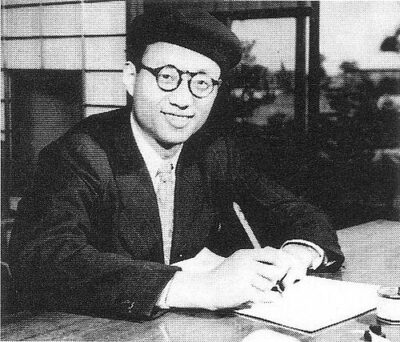
Osamu Tezuka
Osamu Tezuka was a Japanese cartoonist and animator. Born November 3, 1928, in Toyonaka. Died February 9, 1989, in Hanzomon Hospital. Known for Shin Takarajima, Kimba the White Lion and Astro Boy. Educated at University of Osaka and Nara Medical University. Awards include Inkpot Award, Iwaya Sazanami Award and Asahi Prize.
Facts
45 facts · 2 confirmed by two sources · 11 cited · 32 from one source
Where this comes from
Papalocal keeps its own record. It started from these sources; what each one said is kept here as it was copied, so a change on their side never changes this page by itself. Tap one to read its version.
What Wikidata says · copied November 16, 2026 · revision 2559063833
- Described as
- Japanese cartoonist and animator (1928–1989)
- Other names
- Tezuka Osamu
- Born
- November 3, 1928 · 10 references
- Died
- February 9, 1989 · 8 references
- Born in
- Toyonaka · 5 references
- Died in
- Hanzomon Hospital
- Buried in
- Sōzen-ji Temple · 1 reference
- Cause of death
- stomach cancer · 2 references
- Name at birth
- 手塚 治
- Citizen of
- Japan
- Occupation
- film director · 1 reference; film producer; mangaka; animator · 3 references; physician · 1 reference; writer; character designer; screenwriter
- Education
- University of Osaka · 1 reference; Nara Medical University; Osaka Prefectural Kitano High School; Ikeda Elementary School
- Member of
- Science Fiction and Fantasy Writers of Japan · 1 reference
- Known for
- Shin Takarajima; Kimba the White Lion; Astro Boy; Princess Knight; Phoenix; Dororo; Black Jack; The Three-Eyed One; Ode to Kirihito; Unico
- Awards
- Inkpot Award (1980) · 1 reference; Iwaya Sazanami Award (1979); Asahi Prize (1987); Order of the Sacred Treasure; Shogakukan Manga Award; Kodansha Manga Award; Eisner Award; Winsor McCay Award (1990) · 1 reference; Will Eisner Hall of Fame (2002) · 1 reference; Best foreign work published in Spain (2014)
- Children
- Makoto Tezuka; Rumiko Tezuka
- Father
- Yutaka Tezuka
- Website
- https://tezukaosamu.net/
- Wikipedias with a page
- 66
Wikidata item Q193300 (wikidata.org/wiki/Q193300), public domain (CC0). Copied November 16, 2026.
What Wikipedia says · copied November 16, 2026 · revision 1384006492
Osamu Tezuka (手塚 治虫, born 手塚 治, Tezuka Osamu, (1928-11-03)3 November 1928 – 9 February 1989) was a Japanese manga artist, cartoonist and animator. Considered to be among the greatest and most influential cartoonists of all time, his prolific output, pioneering techniques and innovative redefinitions of genres earned him such titles as "the Father of Manga" (マンガの父, Manga no Chichi), "the Godfather of Manga" (マンガの教父, Manga no Kyōfu) and "the God of Manga" (マンガの神様, Manga no Kami-sama). Additionally, he is often considered the Japanese equivalent to Walt Disney, who served as a major inspiration during Tezuka's formative years. Though this phrase praises the quality of his early manga works for children and animations, it also blurs the significant influence of his later, more literary, gekiga works.
Inspired by the early Chinese animated film Princess Iron Fan, Tezuka began what was known as the manga revolution in Japan with his New Treasure Island published in 1947. His output would spawn some of the most influential, successful and well-received manga series including the children's manga Astro Boy, Princess Knight and Kimba the White Lion, and the adult-oriented series Black Jack, Phoenix and Buddha, all of which won several awards.
Tezuka died of stomach cancer in 1989. His death had an immediate impact on the Japanese public and other cartoonists. A museum was constructed in Takarazuka dedicated to his memory and life works, and Tezuka received many posthumous awards. Several animations were in production at the time of his death along with the final chapters of Phoenix, which were never released.
- Born, in its opening lines
- November 3, 1928
- Died, in its opening lines
- February 9, 1989
From the Wikipedia article “Osamu Tezuka” (en.wikipedia.org/wiki/Osamu_Tezuka), by its contributors, under CC BY-SA 4.0 (creativecommons.org/licenses/by-sa/4.0/). Copied November 16, 2026; not changed.
Confirmed Two sources agree. Cited One source, and it names where it got it. One source One source, without a reference of its own. Sources disagree The sources disagree. We show the best-supported value and keep theirs below.
