
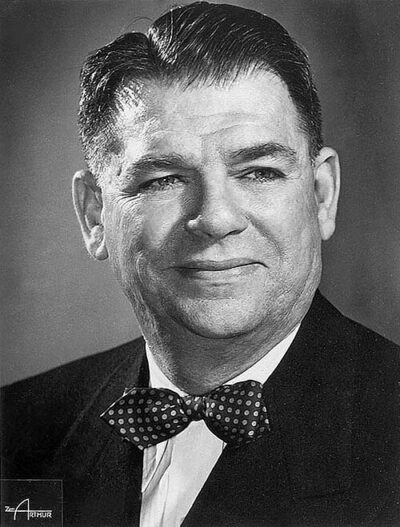
Oscar Hammerstein II
Oscar Hammerstein II was an American librettist, lyricist, theatrical producer, and director of musicals. Born July 12, 1895, in New York City. Died August 23, 1960, in Doylestown. Educated at Columbia Law School and Columbia University. Awards include Pulitzer Prize for Drama, Grammy Trustees Award and Academy Award for Best Original Song (2 times).
Facts
37 facts · 2 confirmed by two sources · 16 cited · 19 from one source
Where this comes from
Papalocal keeps its own record. It started from these sources; what each one said is kept here as it was copied, so a change on their side never changes this page by itself. Tap one to read its version.
What Wikidata says · copied November 15, 2026 · revision 2563764113
- Described as
- American librettist, lyricist, theatrical producer, and director of musicals (1895–1960)
- Other names
- Hammerstien, Oscar Greeley Clendenning Hammerstein II, Oscar Greely Clendenning Hammerstein II, Oc Hammerstein, Oscar Hammerstein, Hammerstein
- Born
- July 12, 1895 · 13 references
- Died
- August 23, 1960 · 12 references
- Born in
- New York City · 2 references
- Died in
- Doylestown · 1 reference
- Buried in
- Ferncliff Cemetery
- Cause of death
- stomach cancer
- Name at birth
- Oscar Greeley Clendenning Hammerstein II
- Citizen of
- United States · 1 reference
- Occupation
- songwriter; librettist · 1 reference; screenwriter; writer · 2 references; lyricist · 1 reference; record producer · 1 reference; theatre director · 1 reference; manufacturer · 1 reference
- Education
- Columbia Law School; Columbia University · 1 reference
- Member of
- Pi Lambda Phi · 1 reference; American Academy of Arts and Letters; Rodgers and Hammerstein · 1 reference
- Genre
- popular music
- Awards
- Pulitzer Prize for Drama (1950) · 1 reference; Grammy Trustees Award (1992); Academy Award for Best Original Song (2 times) (1942, 1946) · 2 references; Pulitzer Prize Special Citations and Awards (1944) · 1 reference; Tony Award for Best Musical (3 times) (1950, 1952, 1960) · 1 reference; Tony Award for Best Book of a Musical (1950) · 1 reference
- Spouse
- Dorothy Hammerstein · 1 reference; Myra Finn · 1 reference
- Children
- James Hammerstein; William Hammerstein · 1 reference; Alice Hammerstein · 1 reference
- Father
- Willie Hammerstein
- Mother
- Alice Nimmo · 1 reference
- Siblings
- Reginald Hammerstein
- Lived in
- Oscar Hammerstein II Farm (1940–1960) · 1 reference
- Wikipedias with a page
- 33
Wikidata item Q319693 (wikidata.org/wiki/Q319693), public domain (CC0). Copied November 15, 2026.
What Wikipedia says · copied November 15, 2026 · revision 1384237741
Oscar Greeley Clendenning Hammerstein II (; July 12, 1895 – August 23, 1960) was an American lyricist, librettist, theatrical producer, and director in musical theater for nearly 40 years. He won eight Tony Awards and two Academy Awards for Best Original Song. Many of his songs are standard repertoire for vocalists and jazz musicians. He co-wrote 850 songs.
He is best known for his collaborations with composer Richard Rodgers, as the duo Rodgers and Hammerstein, whose musicals include Oklahoma!, Carousel, South Pacific, The King and I, Flower Drum Song, and The Sound of Music. Described by his protégé Stephen Sondheim as an "experimental playwright", Hammerstein helped bring the American musical to new maturity by popularizing musicals that focused on stories and character rather than the lighthearted entertainment that the musical had been known for beforehand.
He also collaborated with Jerome Kern (with whom he wrote the 1927 musical Show Boat), Vincent Youmans, Rudolf Friml, Richard A. Whiting, and Sigmund Romberg.
- Born, in its opening lines
- July 12, 1895
- Died, in its opening lines
- August 23, 1960
From the Wikipedia article “Oscar Hammerstein II” (en.wikipedia.org/wiki/Oscar_Hammerstein_II), by its contributors, under CC BY-SA 4.0 (creativecommons.org/licenses/by-sa/4.0/). Copied November 15, 2026; not changed.
Confirmed Two sources agree. Cited One source, and it names where it got it. One source One source, without a reference of its own. Sources disagree The sources disagree. We show the best-supported value and keep theirs below.
