
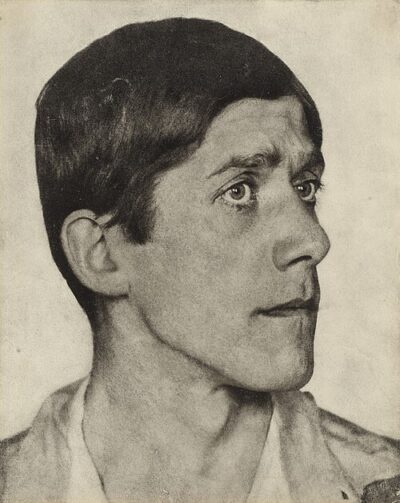
Oskar Kokoschka
Oskar Kokoschka was an Austrian dramatic, painter and writer. Born March 1, 1886, in Pöchlarn. Died February 22, 1980, in Montreux. Known for Prometheus, The Bride of the Wind and Self-Portrait of a Degenerate Artist. Educated at University of Applied Arts Vienna. Awards include Pour le Mérite for Sciences and Arts order, Erasmus Prize and Lovis Corinth Prize.
Facts
37 facts · 2 confirmed by two sources · 20 cited · 15 from one source
Where this comes from
Papalocal keeps its own record. It started from these sources; what each one said is kept here as it was copied, so a change on their side never changes this page by itself. Tap one to read its version.
What Wikidata says · copied November 16, 2026 · revision 2568214561
- Described as
- Austrian dramatic, painter and writer (1886–1980)
- Other names
- Oscar Kokoschka, O. Kokoschka, kokoschka, o. kokoschka
- Born
- March 1, 1886 · 23 references
- Died
- February 22, 1980 · 24 references
- Born in
- Pöchlarn · 2 references
- Died in
- Montreux · 4 references
- Buried in
- Cemetery of Clarens · 1 reference
- Cause of death
- myocardial infarction
- Citizen of
- Austria (1978–1980) · 3 references; Cisleithania (1886–1914); United Kingdom (1946–1978) · 1 reference; United Kingdom of Great Britain and Ireland (–1927)
- Occupation
- painter · 3 references; playwright · 2 references; poet · 1 reference; university teacher; designer · 1 reference; graphic artist · 1 reference; draftsperson · 1 reference; visual artist · 2 references
- Worked for
- Dresden Academy of Fine Arts
- Education
- University of Applied Arts Vienna
- Member of
- Royal Academy of Arts; Bavarian Academy of Fine Arts
- Genre
- landscape painting
- Known for
- Prometheus; The Bride of the Wind; Self-Portrait of a Degenerate Artist
- Awards
- Pour le Mérite for Sciences and Arts order; Erasmus Prize (1960) · 1 reference; Lovis Corinth Prize (1976) · 1 reference; Lichtwark Prize (1952) · 1 reference
- Field
- painting · 1 reference; visual arts · 1 reference; literature · 1 reference; theatre · 1 reference
- Spouse
- Olda Kokoschka · 1 reference
- Father
- Gustav Kokoschka · 1 reference
- Religion
- Catholicism · 1 reference
- Wikipedias with a page
- 58
Wikidata item Q154260 (wikidata.org/wiki/Q154260), public domain (CC0). Copied November 16, 2026.
What Wikipedia says · copied November 16, 2026 · revision 1374325530
Oskar Kokoschka (Austrian German: [ˈkɔkɔʃka]; 1 March 1886 – 22 February 1980) was an Austrian (though, at times during his life, he had also Czech and British citizenship) artist, poet, playwright and teacher, best known for his intense expressionistic portraits and landscapes, as well as his theories on vision that influenced the Viennese Expressionist movement.
- Born, in its opening lines
- March 1, 1886
- Died, in its opening lines
- February 22, 1980
From the Wikipedia article “Oskar Kokoschka” (en.wikipedia.org/wiki/Oskar_Kokoschka), by its contributors, under CC BY-SA 4.0 (creativecommons.org/licenses/by-sa/4.0/). Copied November 16, 2026; not changed.
Confirmed Two sources agree. Cited One source, and it names where it got it. One source One source, without a reference of its own. Sources disagree The sources disagree. We show the best-supported value and keep theirs below.
