
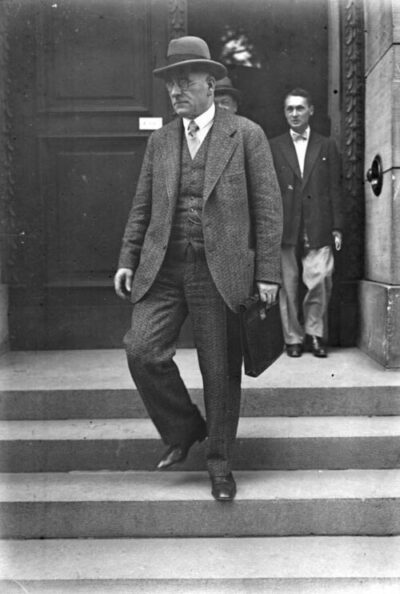
Otto Braun
Otto Braun was a German politician. Born January 28, 1872, in Königsberg. Died December 15, 1955, in Locarno. Positions held include Minister President of Prussia (1920–1932), member of the Reichstag of the Weimar Republic and Member of the Prussian House of Representatives.
Facts
18 facts · 2 confirmed by two sources · 9 cited · 7 from one source
Where this comes from
Papalocal keeps its own record. It started from these sources; what each one said is kept here as it was copied, so a change on their side never changes this page by itself. Tap one to read its version.
What Wikidata says · copied November 16, 2026 · revision 2569053923
- Described as
- German politician (1872-1955)
- Other names
- Otto Brown
- Born
- January 28, 1872 · 8 references
- Died
- December 15, 1955 · 3 references
- Born in
- Königsberg · 3 references
- Died in
- Locarno · 2 references
- Citizen of
- Germany; German Reich
- Occupation
- politician · 1 reference; publisher; book printer · 1 reference; social democrat · 1 reference; minister · 1 reference; editing staff · 1 reference
- Positions held
- Minister President of Prussia (1920–1932); member of the Reichstag of the Weimar Republic; Member of the Prussian House of Representatives; member of Landtag of Prussia
- Political party
- Social Democratic Party of Germany · 1 reference
- Field
- politics · 1 reference
- Wikipedias with a page
- 33
Wikidata item Q58667 (wikidata.org/wiki/Q58667), public domain (CC0). Copied November 16, 2026.
What Wikipedia says · copied November 16, 2026 · revision 1382582205
Otto Braun (28 January 1872 – 15 December 1955) was a politician of the Social Democratic Party of Germany (SPD) during the Weimar Republic. From 1920 to 1932, with only two brief interruptions, Braun was Minister President of the Free State of Prussia. The continuity of personnel in high office resulted in a largely stable government in Prussia, in contrast to the sometimes turbulent politics of the Reich. During his term of office, Prussia's public administration was reorganized along democratic lines. He replaced many monarchist officials with supporters of the Weimar Republic, strengthened and democratized the Prussian police, and made attempts to fight the rise of the Nazi Party.
On 20 July 1932, in the Prussian coup d'état (Preußenschlag), Reich Chancellor Franz von Papen ousted Braun's government from power following its loss of a parliamentary majority to the Nazis and the Communist Party of Germany. After Adolf Hitler seized power at the end of January 1933, Prussia lost its democratic constitution and Braun went into exile. After World War II, he had little or no political influence and was largely forgotten by the time he died in 1955.
- Born, in its opening lines
- January 28, 1872
- Died, in its opening lines
- December 15, 1955
From the Wikipedia article “Otto Braun” (en.wikipedia.org/wiki/Otto_Braun), by its contributors, under CC BY-SA 4.0 (creativecommons.org/licenses/by-sa/4.0/). Copied November 16, 2026; not changed.
Confirmed Two sources agree. Cited One source, and it names where it got it. One source One source, without a reference of its own. Sources disagree The sources disagree. We show the best-supported value and keep theirs below.
