
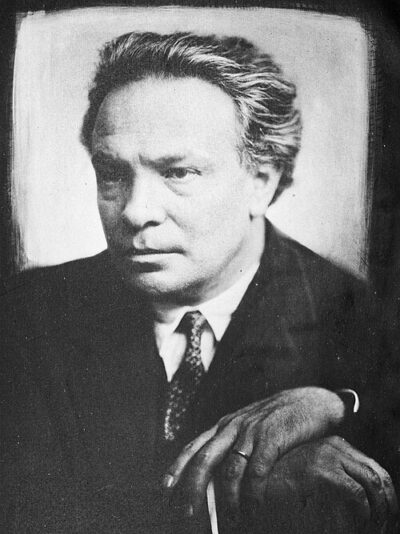
Ottorino Respighi
Ottorino Respighi was an Italian composer, musicologist and conductor. Born July 9, 1879, in Bologna. Died April 18, 1936, in Rome. Known for Fountains of Rome, Marie Victoire and Feste Romane. Educated at Conservatorio Giovanni Battista Martini.
Facts
34 facts · 2 confirmed by two sources · 6 cited · 25 from one source · 1 where the sources disagree
What’s different
- Buried in: we show grave of Respighi Olivieri (Sources disagree). Wikidata also lists Certosa di Bologna
Where this comes from
Papalocal keeps its own record. It started from these sources; what each one said is kept here as it was copied, so a change on their side never changes this page by itself. Tap one to read its version.
What Wikidata says · copied November 16, 2026 · revision 2563059015
- Described as
- Italian composer, musicologist and conductor
- Born
- July 9, 1879 · 11 references
- Died
- April 18, 1936 · 13 references
- Born in
- Bologna · 4 references
- Died in
- Rome · 4 references
- Buried in
- grave of Respighi Olivieri · 1 reference; Certosa di Bologna
- Cause of death
- heart failure
- Name at birth
- Ottorino Respighi
- Citizen of
- Kingdom of Italy · 1 reference
- Occupation
- composer · 1 reference; conductor · 2 references; musicologist; music educator; university teacher; violist; pianist · 1 reference
- Worked for
- Accademia Nazionale di Santa Cecilia
- Education
- Conservatorio Giovanni Battista Martini
- Member of
- Accademia Tiberina; Royal Academy of Italy (1932–) · 2 references
- Genre
- symphonic poem; impressionism in music
- Instrument
- violin; viola
- Known for
- Fountains of Rome; Marie Victoire; Feste Romane; Maria egiziaca; La campana sommersa; Pines of Rome
- Field
- opera; classical music
- Spouse
- Elsa Respighi
- Father
- Giuseppe Respighi
- Website
- http://www.ottorinorespighi.it
- Wikipedias with a page
- 44
Wikidata item Q243837 (wikidata.org/wiki/Q243837), public domain (CC0). Copied November 16, 2026.
What Wikipedia says · copied November 16, 2026 · revision 1380560544
Ottorino Respighi ( resp-EE-ghee, US also rəsp-; Italian: [ottoˈriːno reˈspiːɡi]; 9 July 1879 – 18 April 1936) was an Italian composer, violinist, teacher, and musicologist and one of the leading Italian composers of the early 20th century. His compositions range over operas, ballets, orchestral suites, choral songs, chamber music, and transcriptions of Italian compositions of the 16th–18th centuries, but his best known and most performed works are his three orchestral tone poems which brought him international fame: Fountains of Rome (1916), Pines of Rome (1924), and Roman Festivals (1928).
Respighi was born in Bologna to a musical and artistic family. He was encouraged by his father to pursue music at a young age, and took formal tuition in the violin and piano. In 1891, he enrolled at the Liceo Musicale di Bologna, where he studied the violin, viola, and composition, was principal violist at the Russian Imperial Theatre, and studied briefly with Nikolai Rimsky-Korsakov. He relocated to Rome in 1913 to become professor of composition at the Liceo Musicale di Santa Cecilia. During this period he married his pupil, singer Elsa Olivieri-Sangiacomo. In 1923, Respighi quit his professorship to dedicate time to tour and compose, but continued to teach until 1935. He performed and conducted in various capacities across the United States and South America from 1925 until his death.
In late 1935, while composing his opera Lucrezia, Respighi became ill and was diagnosed with bacterial endocarditis. He died four months later, aged 56. His wife Elsa outlived him for almost 60 years, championing her late husband's works and legacy until her death in 1996. Conductor and composer Salvatore Di Vittorio completed several of Respighi's incomplete and previously unpublished works, including the finished Violin Concerto in A major (1903) which premiered in 2010.
- Born, in its opening lines
- July 9, 1879
- Died, in its opening lines
- April 18, 1936
From the Wikipedia article “Ottorino Respighi” (en.wikipedia.org/wiki/Ottorino_Respighi), by its contributors, under CC BY-SA 4.0 (creativecommons.org/licenses/by-sa/4.0/). Copied November 16, 2026; not changed.
Confirmed Two sources agree. Cited One source, and it names where it got it. One source One source, without a reference of its own. Sources disagree The sources disagree. We show the best-supported value and keep theirs below.
