
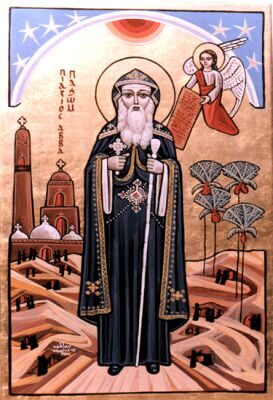
Pachomius the Great was an Egyptian saint. Born 292, in Esna. Died May 9, 348, in Pbow.
Facts
7 facts · 2 confirmed by two sources · 2 cited · 3 from one source
Where this comes from
Papalocal keeps its own record. It started from these sources; what each one said is kept here as it was copied, so a change on their side never changes this page by itself. Tap one to read its version.
What Wikidata says · copied November 16, 2026 · revision 2567812059
- Described as
- Egyptian saint
- Other names
- Pachomius, St. Pachomius
- Born
- 292 · 2 references
- Died
- May 9, 348
- Born in
- Esna
- Died in
- Pbow · 1 reference
- Citizen of
- Ancient Rome
- Occupation
- monk · 1 reference; writer · 2 references
- Wikipedias with a page
- 44
Wikidata item Q298698 (wikidata.org/wiki/Q298698), public domain (CC0). Copied November 16, 2026.
What Wikipedia says · copied November 16, 2026 · revision 1381850319
Pachomius (; Greek: Παχώμιος Pakhomios; Coptic: Ⲡⲁϧⲱⲙ; c. 292 – 9 May 348 AD), also known as Saint Pachomius the Great, is generally recognized as the founder of Christian cenobitic monasticism.
In the Vita Pachumii, his name is recorded as Pachumius (Παχούμιος). Coptic churches celebrate his feast day on 9 May, and Eastern Orthodox and Catholic churches mark his feast on 15 May or 28 May. In Lutheranism, he is remembered as a renewer of the church, along with his contemporary (and fellow desert saint), Anthony of Egypt on 17 January.
- Born, in its opening lines
- c. 292
- Died, in its opening lines
- May 9, 348
From the Wikipedia article “Pachomius the Great” (en.wikipedia.org/wiki/Pachomius_the_Great), by its contributors, under CC BY-SA 4.0 (creativecommons.org/licenses/by-sa/4.0/). Copied November 16, 2026; not changed.
Confirmed Two sources agree. Cited One source, and it names where it got it. One source One source, without a reference of its own. Sources disagree The sources disagree. We show the best-supported value and keep theirs below.
