
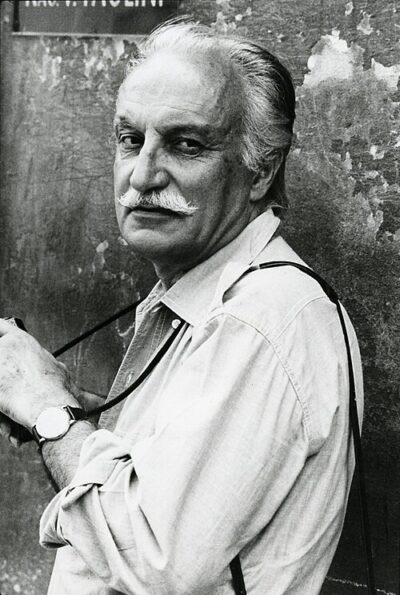
Paolo Monti
Paolo Monti was an Italian photographer. Born August 11, 1908, in Novara. Died November 29, 1982, in Milan. Educated at Bocconi University.
Facts
13 facts · 2 confirmed by two sources · 6 cited · 5 from one source
Where this comes from
Papalocal keeps its own record. It started from these sources; what each one said is kept here as it was copied, so a change on their side never changes this page by itself. Tap one to read its version.
What Wikidata says · copied November 18, 2026 · revision 2562884058
- Described as
- Italian photographer (1908–1982)
- Born
- August 11, 1908 · 3 references
- Died
- November 29, 1982 · 5 references
- Born in
- Novara
- Died in
- Milan · 1 reference
- Buried in
- Anzola d'Ossola
- Citizen of
- Italy (1946–); Kingdom of Italy (–1946)
- Occupation
- photographer · 4 references
- Worked for
- University of Bologna
- Education
- Bocconi University (–1930) · 1 reference
- Field
- photography · 1 reference; architecture · 1 reference
- Father
- Romeo Monti · 1 reference
- Wikipedias with a page
- 22
Wikidata item Q18169099 (wikidata.org/wiki/Q18169099), public domain (CC0). Copied November 18, 2026.
What Wikipedia says · copied November 18, 2026 · revision 1380355441
Paolo Monti (11 August 1908 – 29 November 1982) was an Italian photographer known for his architectural photography.
In his early period, Monti experimented with abstractionism as well as with effects such as blurring and diffraction. In 1953, he became a professional photographer. He mainly worked with architecture reproductions, which were used by magazines and book editors for illustration. Starting from 1966, Monti catalogued the historic centres of Italian cities.
- Born, in its opening lines
- August 11, 1908
- Died, in its opening lines
- November 29, 1982
From the Wikipedia article “Paolo Monti” (en.wikipedia.org/wiki/Paolo_Monti), by its contributors, under CC BY-SA 4.0 (creativecommons.org/licenses/by-sa/4.0/). Copied November 18, 2026; not changed.
Confirmed Two sources agree. Cited One source, and it names where it got it. One source One source, without a reference of its own. Sources disagree The sources disagree. We show the best-supported value and keep theirs below.
