
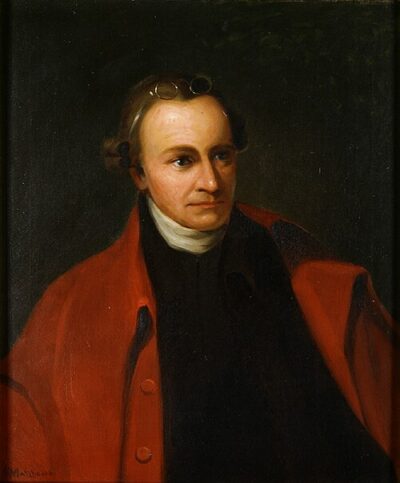
Patrick Henry
Patrick Henry was an American Founding Father, orator and politician. Born May 29, 1736, in Studley. Died June 6, 1799, in Campbell County. Positions held include Governor of Virginia (1776–1779) and member of the Virginia House of Delegates.
Facts
25 facts · 2 confirmed by two sources · 8 cited · 15 from one source
Where this comes from
Papalocal keeps its own record. It started from these sources; what each one said is kept here as it was copied, so a change on their side never changes this page by itself. Tap one to read its version.
What Wikidata says · copied November 13, 2026 · revision 2562796779
- Described as
- American Founding Father, orator and politician (1736 – 1799)
- Other names
- Henry, Patrick Henry Jr
- Born
- May 29, 1736 · 4 references
- Died
- June 6, 1799 · 6 references
- Born in
- Studley · 1 reference
- Died in
- Campbell County
- Cause of death
- stomach cancer · 1 reference
- Citizen of
- United States
- Occupation
- politician · 4 references; lawyer; writer · 1 reference; governor · 1 reference
- Positions held
- Governor of Virginia (1776–1779); member of the Virginia House of Delegates · 1 reference
- Political party
- Federalist Party
- Spouse
- Sarah Shelton Henry; Dorothea Dandridge Henry
- Children
- John Henry · 1 reference; Dorothea Spotswood Henry; Sarah Butler Henry; Patrick Henry; Elizabeth Henry Aylett
- Father
- John Henry
- Mother
- Sarah Winston Syme Henry · 1 reference
- Siblings
- Annie Henry Christian; Elizabeth Henry Campbell Russell
- Religion
- Anglicanism
- Wikipedias with a page
- 53
Wikidata item Q311885 (wikidata.org/wiki/Q311885), public domain (CC0). Copied November 13, 2026.
What Wikipedia says · copied November 13, 2026 · revision 1382256600
Patrick Henry (May 29, 1736 [O.S. May 18, 1736] – June 6, 1799) was an American politician, planter and orator who declared to the Second Virginia Convention (1775): "Give me liberty or give me death!" A Founding Father, he served as the first and sixth post-colonial governor of Virginia, from 1776 to 1779 and from 1784 to 1786.
A native of Hanover County, Virginia, Henry was primarily educated at home. After an unsuccessful venture running a store, as well as assisting his father-in-law at Hanover Tavern, he became a lawyer through self-study. Beginning his practice in 1760, Henry soon became prominent through his victory in the Parson's Cause against the Anglican clergy. He was elected to the Virginia House of Burgesses, where he quickly became notable for his inflammatory rhetoric against the Stamp Act of 1765.
In 1774, Henry served as a delegate to the First Continental Congress where he signed the Petition to the King, which he helped to draft, and the Continental Association. He gained further popularity among the people of Virginia, both through his oratory at the convention and by marching troops towards the colonial capital of Williamsburg after the Gunpowder Incident until the munitions seized by the royal government were paid for. Henry urged independence, and when the Fifth Virginia Convention endorsed this in 1776, he served on the committee charged with drafting the Virginia Declaration of Rights and the original Virginia Constitution. Henry was promptly elected governor under the new charter and served a total of five one-year terms.
After leaving the governorship in 1779, Henry served in the Virginia House of Delegates until he began his last two terms as governor in 1784. The actions of the national government under the Articles of Confederation made Henry fear a strong federal government, and he declined appointment as a delegate to the 1787 Constitutional Convention. He actively opposed the ratification of the United States Constitution, both fearing a powerful central government and because there was as yet no Bill of Rights. He returned to the practice of law in his final years, declining several offices under the federal government. A slaveholder throughout his adult life, he hoped to see the institution end but had no plan beyond ending the importation of slaves. Henry is remembered for his oratory and as an enthusiastic promoter of the fight for independence.
- Born, in its opening lines
- May 29, 1736
- Died, in its opening lines
- June 6, 1799
From the Wikipedia article “Patrick Henry” (en.wikipedia.org/wiki/Patrick_Henry), by its contributors, under CC BY-SA 4.0 (creativecommons.org/licenses/by-sa/4.0/). Copied November 13, 2026; not changed.
Confirmed Two sources agree. Cited One source, and it names where it got it. One source One source, without a reference of its own. Sources disagree The sources disagree. We show the best-supported value and keep theirs below.
