
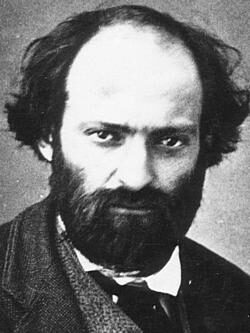
Paul Cézanne
Paul Cézanne was a French painter. Born January 19, 1839, in Aix-en-Provence. Died October 22, 1906, in Aix-en-Provence. Known for The Card Players, Mont Sainte-Victoire and The Large Bathers. Educated at Académie Suisse.
Facts
34 facts · 2 confirmed by two sources · 16 cited · 16 from one source
Where this comes from
Papalocal keeps its own record. It started from these sources; what each one said is kept here as it was copied, so a change on their side never changes this page by itself. Tap one to read its version.
What Wikidata says · copied November 16, 2026 · revision 2569623093
- Described as
- French painter (1839–1906)
- Other names
- p. cezanne, P. Sezanas, Polʹ Sezann, Pol Sezan, Paul Cezanne, Cezanne, Cézanne
- Born
- January 19, 1839 · 12 references
- Died
- October 22, 1906 · 9 references
- Born in
- Aix-en-Provence · 3 references
- Died in
- Aix-en-Provence · 3 references
- Buried in
- Saint-Pierre Cemetery · 1 reference
- Cause of death
- pneumonia · 2 references
- Citizen of
- France · 3 references
- Occupation
- painter · 4 references; printmaker · 1 reference; lithographer · 1 reference; draftsperson · 4 references
- Education
- Académie Suisse · 2 references
- Genre
- still life · 2 references; genre painting · 1 reference; landscape painting · 1 reference; portrait · 1 reference
- Known for
- The Card Players; Mont Sainte-Victoire; The Large Bathers; Mardi Gras; The Boy in the Red Vest; The Basket of Apples; Jeune Fille au piano (Girl at the Piano - The Overture to Tannhauser); Lady in Blue; The Hanged Man's House; Mont Sainte-Victoire seen from Bellevue
- Field
- painting · 1 reference
- Spouse
- Marie-Hortense Fiquet (1886–) · 2 references
- Children
- Paul Cézanne · 1 reference
- Father
- Louis-Auguste Cézanne
- Mother
- Anne Elisabeth Aubert · 1 reference
- Lived in
- Gardanne; quai d'Anjou (1888–1890) · 1 reference
- Website
- https://paul-cezanne.org
- Wikipedias with a page
- 143
Wikidata item Q35548 (wikidata.org/wiki/Q35548), public domain (CC0). Copied November 16, 2026.
What Wikipedia says · copied November 16, 2026 · revision 1382929153
Paul Cézanne ( say-ZAN, UK also siz-AN, US also say-ZAHN; French: [pɔl sezan]; Occitan: Pau Cesana; 19 January 1839 – 22 October 1906) was a French Post-Impressionist painter whose work introduced new modes of representation, influenced avant-garde artistic movements of the early 20th century and formed the bridge between late 19th-century Impressionism and early 20th-century Cubism.
While his early works were influenced by Romanticism—such as the murals in the Jas de Bouffan country house—and Realism, Cézanne arrived at a new pictorial language through intense examination of Impressionist forms of expression. He altered conventional approaches to perspective and broke established rules of academic art by emphasizing the underlying structure of objects in a composition and the formal qualities of art. Cézanne strived for a renewal of traditional design methods on the basis of the impressionistic colour space and colour modulation principles.
Cézanne's often repetitive, exploratory brushstrokes are highly characteristic and recognizable. He used planes of colour and small brushstrokes that build up to form complex fields. The paintings convey Cézanne's intense study of his subjects.
His paintings initially provoked incomprehension and ridicule in contemporary art criticism. Until the late 1890s, it was mainly fellow artists such as Camille Pissarro and the art dealer and gallery owner Ambroise Vollard who discovered Cézanne's work. These were some of his first buyers. In 1895, Vollard opened the first solo exhibition in his Paris gallery, which led to a broader examination of Cézanne's work. Both Henri Matisse and Pablo Picasso are said to have remarked that Cézanne "is the father of us all".
- Born, in its opening lines
- January 19, 1839
- Died, in its opening lines
- October 22, 1906
From the Wikipedia article “Paul Cézanne” (en.wikipedia.org/wiki/Paul_Cézanne), by its contributors, under CC BY-SA 4.0 (creativecommons.org/licenses/by-sa/4.0/). Copied November 16, 2026; not changed.
Confirmed Two sources agree. Cited One source, and it names where it got it. One source One source, without a reference of its own. Sources disagree The sources disagree. We show the best-supported value and keep theirs below.
