
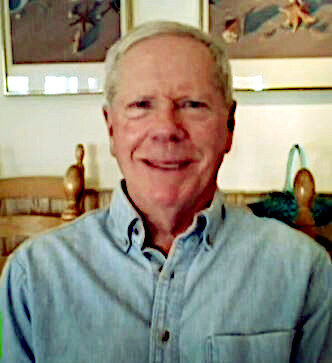
Paul Craig Roberts
Paul Craig Roberts is an American economist (*1939). Born April 3, 1939, in Atlanta. Positions held include United States Assistant Secretary of the Treasury (1981–1982). Educated at Merton College and University of Virginia. Awards include Legion of Honour.
Facts
21 facts · 1 confirmed by two sources · 2 cited · 18 from one source
Where this comes from
Papalocal keeps its own record. It started from these sources; what each one said is kept here as it was copied, so a change on their side never changes this page by itself. Tap one to read its version.
What Wikidata says · copied November 16, 2026 · revision 2549694049
- Described as
- American economist (*1939)
- Other names
- Paul Craig Roberts III
- Born
- April 3, 1939
- Born in
- Atlanta
- Citizen of
- United States
- Occupation
- economist · 1 reference; journalist · 1 reference; blogger; politician; conspiracy theorist
- Positions held
- United States Assistant Secretary of the Treasury (1981–1982)
- Political party
- Republican Party
- Worked for
- Center for Strategic and International Studies (1983–1993); Cato Institute (1993–1996)
- Education
- Merton College; University of Virginia; Georgia Tech
- Member of
- Phi Delta Theta
- Awards
- Legion of Honour
- Field
- economics
- Religion
- 9/11 conspiracy theories; John F. Kennedy assassination conspiracy theories
- Website
- http://www.paulcraigroberts.org/
- Wikipedias with a page
- 21
Wikidata item Q1987836 (wikidata.org/wiki/Q1987836), public domain (CC0). Copied November 16, 2026.
What Wikipedia says · copied November 16, 2026 · revision 1371921495
Paul Craig Roberts (born April 3, 1939) is an American economist and author. He formerly held a sub-cabinet office in the United States federal government as well as teaching positions at several U.S. universities. He is a promoter of supply-side economics and an opponent of recent U.S. foreign policy.
Roberts received a doctorate from the University of Virginia where he studied under G. Warren Nutter. He worked as an analyst and adviser at the United States Congress where he was credited as the primary author of the original draft of the Economic Recovery Tax Act of 1981. He was the United States Assistant Secretary of the Treasury for Economic Policy under President Ronald Reagan and – after leaving government – held the William E. Simon chair in economics at the Center for Strategic and International Studies for ten years and served on several corporate boards. A former associate editor at The Wall Street Journal, his articles have also appeared in The New York Times and Harper's, and he is the author of more than a dozen books and a number of peer-reviewed papers.
Since retiring, he has been accused of conspiracy theorizing.
- Born, in its opening lines
- April 3, 1939
From the Wikipedia article “Paul Craig Roberts” (en.wikipedia.org/wiki/Paul_Craig_Roberts), by its contributors, under CC BY-SA 4.0 (creativecommons.org/licenses/by-sa/4.0/). Copied November 16, 2026; not changed.
Confirmed Two sources agree. Cited One source, and it names where it got it. One source One source, without a reference of its own. Sources disagree The sources disagree. We show the best-supported value and keep theirs below.
