
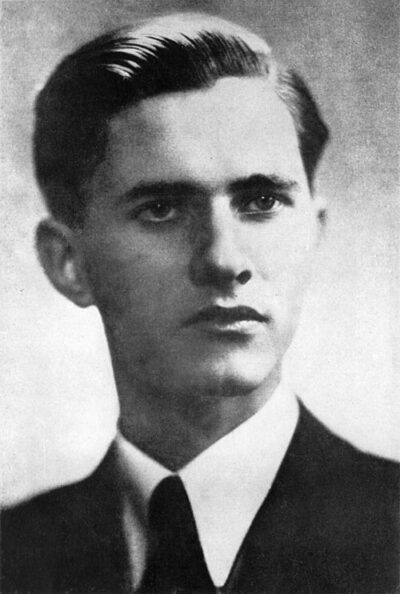
Paul Keres
Paul Keres was an Estonian chess player and sportsperson. Born January 7, 1916, in Narva. Died June 5, 1975, in Helsinki. Educated at University of Tartu. Awards include Honoured Master of Sports of the USSR, Estonian Athlete of the Year and Merited Sportsperson of Estonian SSR.
Facts
24 facts · 2 confirmed by two sources · 6 cited · 16 from one source
Where this comes from
Papalocal keeps its own record. It started from these sources; what each one said is kept here as it was copied, so a change on their side never changes this page by itself. Tap one to read its version.
What Wikidata says · copied November 16, 2026 · revision 2559068706
- Described as
- Estonian chess player and sportsperson (1916–1975)
- Born
- January 7, 1916 · 7 references
- Died
- June 5, 1975 · 8 references
- Born in
- Narva · 3 references
- Died in
- Helsinki · 3 references
- Buried in
- Metsakalmistu
- Cause of death
- myocardial infarction
- Citizen of
- Estonia; Soviet Union; Germany
- Occupation
- chess player · 1 reference; chess composer; non-fiction writer; sportsperson; journalist · 1 reference; athlete · 1 reference
- Education
- University of Tartu (1937–1943)
- Member of
- Student Society Liivika
- Sport
- chess
- Awards
- Honoured Master of Sports of the USSR; Estonian Athlete of the Year (1959) · 1 reference; Merited Sportsperson of Estonian SSR (1965); Order of the Red Banner of Labour
- Spouse
- Maria Keres
- Siblings
- Harald Keres
- Wikipedias with a page
- 57
Wikidata item Q207727 (wikidata.org/wiki/Q207727), public domain (CC0). Copied November 16, 2026.
What Wikipedia says · copied November 16, 2026 · revision 1379399715
Paul Keres (7 January 1916 – 5 June 1975) was an Estonian chess grandmaster and chess writer. He was among the world's top players from the mid-1930s to the mid-1960s, and narrowly missed a chance at a World Chess Championship match on five occasions. As Estonia was repeatedly invaded and occupied during World War II, Keres was forced by the circumstances to represent the Soviet Union (1940–1941, 1944–1975) and Nazi Germany (1941–1944) in international tournaments.
Keres won the AVRO 1938 chess tournament, which led to negotiations for a title match against the reigning World Champion Alexander Alekhine, but the match never took place due to the outbreak of World War II in 1939. Keres was runner-up in the Candidates Tournament on four consecutive occasions from 1953 to 1962. Due to these and other strong results, many chess historians consider Keres along with Viktor Korchnoi to be the strongest players never to become world champion.
Robert McFadden of The New York Times described Keres as having "elegant manners and an informal but unflappable bearing", and stated that "his competitiveness and well‐known sense of fairness made him one of the game's most popular figures". Widely admired by Estonians to this day, he was nicknamed "Paul the Second", "The Eternal Second", and "The Crown Prince of Chess".
- Born, in its opening lines
- January 7, 1916
- Died, in its opening lines
- June 5, 1975
From the Wikipedia article “Paul Keres” (en.wikipedia.org/wiki/Paul_Keres), by its contributors, under CC BY-SA 4.0 (creativecommons.org/licenses/by-sa/4.0/). Copied November 16, 2026; not changed.
Confirmed Two sources agree. Cited One source, and it names where it got it. One source One source, without a reference of its own. Sources disagree The sources disagree. We show the best-supported value and keep theirs below.
