
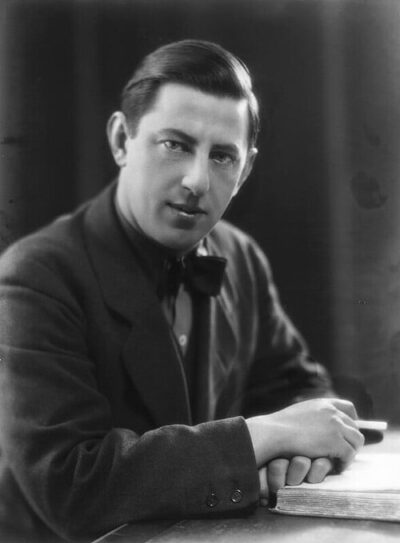
Paul Nash
Paul Nash was a British painter and war artist. Born May 11, 1889, in Kensington. Died July 11, 1946, in Boscombe. Educated at Slade School of Fine Art and Chelsea College of Art and Design.
Facts
21 facts · 2 confirmed by two sources · 11 cited · 8 from one source
Where this comes from
Papalocal keeps its own record. It started from these sources; what each one said is kept here as it was copied, so a change on their side never changes this page by itself. Tap one to read its version.
What Wikidata says · copied November 17, 2026 · revision 2558207275
- Described as
- British painter and war artist (1889–1946)
- Other names
- Nash
- Born
- May 11, 1889 · 13 references
- Died
- July 11, 1946 · 12 references
- Born in
- Kensington · 1 reference
- Died in
- Boscombe
- Citizen of
- United Kingdom (1927–) · 2 references; United Kingdom of Great Britain and Ireland (–1927)
- Occupation
- painter · 4 references; illustrator · 1 reference; printmaker; designer · 2 references; photographer · 1 reference; artist · 1 reference; exlibrist · 1 reference; poet · 1 reference
- Worked for
- Royal College of Art
- Education
- Slade School of Fine Art (–1910) · 1 reference; Chelsea College of Art and Design
- Field
- painting · 1 reference
- Spouse
- Margaret Nash
- Siblings
- John Nash · 1 reference
- Military branch
- British Army
- Wikipedias with a page
- 24
Wikidata item Q727643 (wikidata.org/wiki/Q727643), public domain (CC0). Copied November 17, 2026.
What Wikipedia says · copied November 17, 2026 · revision 1382597835
Paul Nash (11 May 1889 – 11 July 1946) was a British surrealist painter and war artist, as well as a photographer, writer and designer of applied art. Nash was among the most important landscape artists of the first half of the twentieth century. He played a key role in the development of modernism in English art.
Born in London, Nash grew up in Buckinghamshire where he developed a love of the landscape. He entered the Slade School of Art but was poor at figure drawing and concentrated on landscape painting. Nash found much inspiration in landscapes with elements of ancient history, such as burial mounds, Iron Age hill forts such as Wittenham Clumps and the standing stones at Avebury in Wiltshire. The artworks he produced during World War I are among the most iconic images of the conflict. After the war Nash continued to focus on landscape painting, originally in a formalized, decorative style but, throughout the 1930s, in an increasingly abstract and surreal manner. In his paintings he often placed everyday objects into a landscape to give them a new identity and symbolism.
During World War II, although sick with the asthmatic condition that would kill him, he produced two series of anthropomorphic depictions of aircraft, before producing a number of landscapes rich in symbolism with an intense mystical quality. These have perhaps become among the best known works from the period. Nash was also a fine book illustrator, and designed stage scenery, fabrics and posters.
He was the elder brother of the artist John Nash.
- Born, in its opening lines
- May 11, 1889
- Died, in its opening lines
- July 11, 1946
From the Wikipedia article “Paul Nash (artist)” (en.wikipedia.org/wiki/Paul_Nash_(artist)), by its contributors, under CC BY-SA 4.0 (creativecommons.org/licenses/by-sa/4.0/). Copied November 17, 2026; not changed.
Confirmed Two sources agree. Cited One source, and it names where it got it. One source One source, without a reference of its own. Sources disagree The sources disagree. We show the best-supported value and keep theirs below.
