
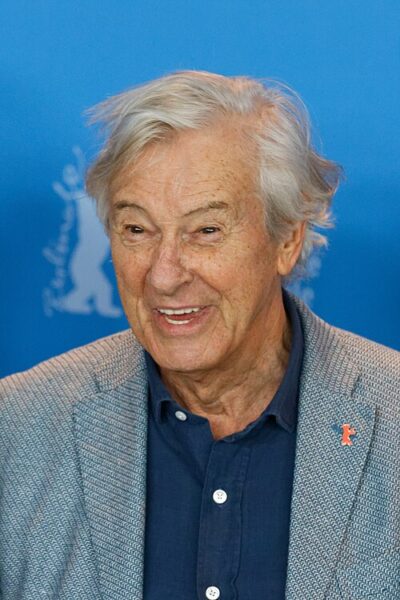
Paul Verhoeven
Paul Verhoeven is a Dutch film director. Born July 18, 1938, in Amsterdam. Educated at Leiden University and Gymnasium Haganum. Awards include Golden Calf for Best Director (2 times), Knight of the Order of the Netherlands Lion and César Award for Best Film.
Facts
26 facts · 1 confirmed by two sources · 6 cited · 19 from one source
Where this comes from
Papalocal keeps its own record. It started from these sources; what each one said is kept here as it was copied, so a change on their side never changes this page by itself. Tap one to read its version.
What Wikidata says · copied November 16, 2026 · revision 2568987812
- Described as
- Dutch film director (born 1938)
- Other names
- P. Verhoeven, Verhoeven, Verhoeven, Paul
- Born
- July 18, 1938 · 7 references
- Born in
- Amsterdam · 1 reference
- Citizen of
- Kingdom of the Netherlands
- Occupation
- film director; screenwriter · 1 reference; television director · 1 reference; film producer · 1 reference; director · 1 reference
- Education
- Leiden University; Gymnasium Haganum; Netherlands Film Academy
- Member of
- Jesus Seminar
- Awards
- Golden Calf for Best Director (2 times) (1985, 2006); Knight of the Order of the Netherlands Lion; César Award for Best Film (2016); Goya Award for Best European Film (2016); Golden Lion (2006); Saturn Award for Best Director (1987); Sitges Film Festival Best Director award (1987); Golden Raspberry Award for Worst Picture (1995); Sitges Grand Honorary Award (2006); Sade Prize DVD (2022) · 1 reference; Bert Haanstra Oeuvreprijs van de Nederlandse Film (2004) · 1 reference
- Children
- Helen Verhoeven; Claudia Verhoeven
- Religion
- atheism
- Wikipedias with a page
- 60
Wikidata item Q129079 (wikidata.org/wiki/Q129079), public domain (CC0). Copied November 16, 2026.
What Wikipedia says · copied November 16, 2026 · revision 1383340974
Paul Verhoeven (Dutch: [ˈpʌul vərˈɦuvə(n)]; born 18 July 1938) is a Dutch filmmaker, who has worked variously in the Netherlands, the United States, and in France. He is known for directing genre films with strong satirical elements, often featuring graphic violence and explicit sexual content and nudity. Many of his films are considered provocative, and were controversial when released.
After receiving attention for the TV series Floris in his native Netherlands, Verhoeven's breakthrough film was the romantic drama Turkish Delight (1973), starring frequent collaborator Rutger Hauer, which received an Oscar nomination for Best Foreign-Language Film. He later directed successful Dutch films including the period film Keetje Tippel (1975), the World War II film Soldier of Orange (1977), the adolescent drama Spetters (1980) and the Gerard Reve-adapted psychological thriller The Fourth Man (1983).
In 1985, Verhoeven made his first Hollywood film Flesh and Blood and later had a successful career in the United States, directing science fiction films such as RoboCop (1987), Total Recall (1990), Starship Troopers (1997) and Hollow Man (2000), as well as the erotic thriller Basic Instinct (1992). He also directed the 1995 film Showgirls, which was critically panned on initial release but has developed a cult following and undergone critical re-evaluation.
Verhoeven later returned to Europe, making the Dutch war film Black Book (2006), the French psychological thriller Elle (2016) and the religious drama Benedetta (2021), all receiving positive reviews. Black Book and Elle were both nominated for BAFTA Award for Best Film Not in the English Language and Elle won Golden Globe Award for Best Foreign Language Film and César Award for Best Film. Black Book was also voted by the Dutch public, in 2008, as the best Dutch film ever made. Verhoeven's films have received a total of nine Academy Award nominations, mainly for editing and effects.
- Born, in its opening lines
- July 18, 1938
From the Wikipedia article “Paul Verhoeven” (en.wikipedia.org/wiki/Paul_Verhoeven), by its contributors, under CC BY-SA 4.0 (creativecommons.org/licenses/by-sa/4.0/). Copied November 16, 2026; not changed.
Confirmed Two sources agree. Cited One source, and it names where it got it. One source One source, without a reference of its own. Sources disagree The sources disagree. We show the best-supported value and keep theirs below.
