
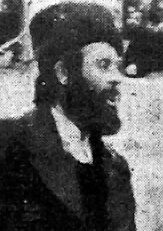
Pavle Đurišić
Pavle Đurišić was a Montenegrin Serb professional officer of the Royal Yugoslav Army. Born July 9, 1909, in Podgorica. Died April 21, 1945, in Jasenovac concentration camp. Educated at Military Academy Belgrade. Awards include Order of the Star of Karađorđe and Iron Cross.
Facts
15 facts · 2 confirmed by two sources · 3 cited · 10 from one source
Where this comes from
Papalocal keeps its own record. It started from these sources; what each one said is kept here as it was copied, so a change on their side never changes this page by itself. Tap one to read its version.
What Wikidata says · copied November 18, 2026 · revision 2563670262
- Described as
- Montenegrin Serb professional officer of the Royal Yugoslav Army (1909-1945)
- Other names
- Pavle
- Born
- July 9, 1909
- Died
- April 21, 1945
- Born in
- Podgorica
- Died in
- Jasenovac concentration camp
- Occupation
- military personnel; military officer · 1 reference
- Education
- Military Academy Belgrade
- Awards
- Order of the Star of Karađorđe; Iron Cross
- Field
- Chetniks · 1 reference; armed forces · 1 reference
- Military branch
- Royal Yugoslav Army · 1 reference; Yugoslav Army in the Homeland; Montenegrin National Army
- Military rank
- Lieutenant Colonel
- Wikipedias with a page
- 21
Wikidata item Q606771 (wikidata.org/wiki/Q606771), public domain (CC0). Copied November 18, 2026.
What Wikipedia says · copied November 18, 2026 · revision 1380651122
Pavle Đurišić (Serbian Cyrillic: Павле Ђуришић, pronounced [pâːvle dʑǔriʃitɕ]; 9 July 1909 – 21 April 1945) was a Montenegrin Serb regular officer of the Royal Yugoslav Army who became a Chetnik commander (vojvoda) and led a significant proportion of the Chetniks in Montenegro during World War II. He distinguished himself and became one of the main commanders during the popular uprising against the Italians in Montenegro in July 1941, but later collaborated with the Italians in actions against the Communist-led Yugoslav Partisans. In 1943, his troops carried out several massacres against the Muslim population of Bosnia, Herzegovina, and the Sandžak in which an estimated 10,000 people were killed between January and March, including thousands of women, children, and the elderly. He then led his troops during their participation in the anti-Partisan Operation Weiss offensive alongside Italian forces. Đurišić was captured by the Germans in May 1943, escaped, and was recaptured.
After the capitulation of Italy, the Germans released Đurišić and he began collaborating with them and the Serbian puppet government. In 1944, he created the Montenegrin Volunteer Corps with assistance from the Germans, the leader of the Serbian puppet government, Milan Nedić, and the leader of the fascist Yugoslav National Movement, Dimitrije Ljotić. In late 1944, the German commander in Montenegro decorated him with the Iron Cross 2nd Class. Đurišić was killed following the Battle of Lijevče Field, after being captured by elements of the Armed Forces of the Independent State of Croatia near Banja Luka in an apparent trap set by them and Montenegrin separatist Sekula Drljević. Some of Đurišić's troops were killed either in this battle or in later attacks by the Partisans as they then continued their withdrawal west. Others attempted to withdraw to Austria; they were forced to surrender to the Partisans and were killed in the Kočevski Rog area of southern Slovenia in May and June 1945. Đurišić was a very able Chetnik leader; his fighting skills were respected by his allies and opponents alike.
- Born, in its opening lines
- July 9, 1909
- Died, in its opening lines
- April 21, 1945
From the Wikipedia article “Pavle Đurišić” (en.wikipedia.org/wiki/Pavle_Đurišić), by its contributors, under CC BY-SA 4.0 (creativecommons.org/licenses/by-sa/4.0/). Copied November 18, 2026; not changed.
Confirmed Two sources agree. Cited One source, and it names where it got it. One source One source, without a reference of its own. Sources disagree The sources disagree. We show the best-supported value and keep theirs below.
