
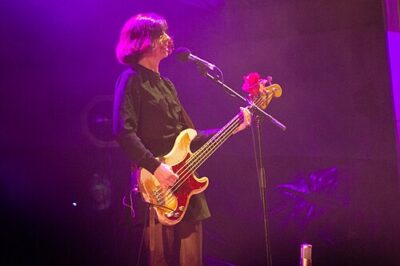
Paz Lenchantin
Paz Lenchantin is an Argentine-American musician. Born December 12, 1973, in Mar del Plata.
Facts
17 facts · 1 confirmed by two sources · 2 cited · 14 from one source
Where this comes from
Papalocal keeps its own record. It started from these sources; what each one said is kept here as it was copied, so a change on their side never changes this page by itself. Tap one to read its version.
What Wikidata says · copied November 16, 2026 · revision 2569707059
- Described as
- Argentine-American musician
- Born
- December 12, 1973 · 1 reference
- Born in
- Mar del Plata · 1 reference
- Citizen of
- United States · 1 reference; Argentina
- Occupation
- bassist; singer; pianist; guitarist · 1 reference; violinist · 1 reference
- Member of
- Pixies
- Genre
- alternative rock
- Instrument
- bass guitar; violin; guitar; voice; piano; synthesizer
- Wikipedias with a page
- 23
Wikidata item Q266006 (wikidata.org/wiki/Q266006), public domain (CC0). Copied November 16, 2026.
What Wikipedia says · copied November 16, 2026 · revision 1375712212
Paz Lenchantin (born December 12, 1973) is an Argentine-American musician. She is best known for having been the bass guitarist and backing vocalist of the alternative rock band Pixies, playing with the band and recording three studio albums between 2014 and 2024. Prior to joining Pixies, Lenchantin was a member of Entrance, A Perfect Circle, Silver Jews and Zwan.
In April 2024, Consequence named Lenchantin the 75th greatest bass guitarist of all time, noting: "Not only did she fit in beautifully in [A Perfect Circle and Pixies], but she was also a shining light in Billy Corgan's short-lived band Zwan. In addition to her bass playing, she's also an accomplished vocalist and a skilled violinist."
- Born, in its opening lines
- December 12, 1973
From the Wikipedia article “Paz Lenchantin” (en.wikipedia.org/wiki/Paz_Lenchantin), by its contributors, under CC BY-SA 4.0 (creativecommons.org/licenses/by-sa/4.0/). Copied November 16, 2026; not changed.
Confirmed Two sources agree. Cited One source, and it names where it got it. One source One source, without a reference of its own. Sources disagree The sources disagree. We show the best-supported value and keep theirs below.
