
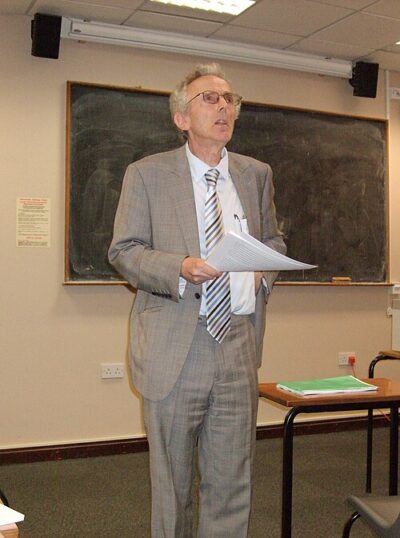
Peter Burke
Peter Burke is a British historian. Born August 16, 1937, in Stanmore. Positions held include professor emeritus. Known for A Social History of Knowledge. Educated at St John's College and St Antony's College. Awards include honorary doctor of the University of Zurich and honorary doctorate of the Vrije Universiteit Brussel.
Facts
19 facts · 1 confirmed by two sources · 4 cited · 14 from one source
Where this comes from
Papalocal keeps its own record. It started from these sources; what each one said is kept here as it was copied, so a change on their side never changes this page by itself. Tap one to read its version.
What Wikidata says · copied November 16, 2026 · revision 2563856605
- Described as
- British historian (b. 1937)
- Other names
- Ulick Peter Burke
- Born
- August 16, 1937 · 2 references
- Born in
- Stanmore
- Citizen of
- United Kingdom
- Occupation
- university teacher; cultural historian; social historian; historian · 1 reference; writer; cultural studies scholar · 1 reference
- Positions held
- professor emeritus
- Worked for
- University of Sussex (1962–1979)
- Education
- St John's College; St Antony's College
- Member of
- Academia Europaea (1995–) · 1 reference
- Known for
- A Social History of Knowledge
- Awards
- honorary doctor of the University of Zurich; honorary doctorate of the Vrije Universiteit Brussel (2015) · 2 references
- Field
- cultural history
- Spouse
- Maria Lúcia Garcia Pallares-Burke
- Wikipedias with a page
- 28
Wikidata item Q504484 (wikidata.org/wiki/Q504484), public domain (CC0). Copied November 16, 2026.
What Wikipedia says · copied November 16, 2026 · revision 1380324704
Ulick Peter Burke (born 16 August 1937) is a British historian and professor.
- Born, in its opening lines
- August 16, 1937
From the Wikipedia article “Peter Burke (historian)” (en.wikipedia.org/wiki/Peter_Burke_(historian)), by its contributors, under CC BY-SA 4.0 (creativecommons.org/licenses/by-sa/4.0/). Copied November 16, 2026; not changed.
Confirmed Two sources agree. Cited One source, and it names where it got it. One source One source, without a reference of its own. Sources disagree The sources disagree. We show the best-supported value and keep theirs below.
