
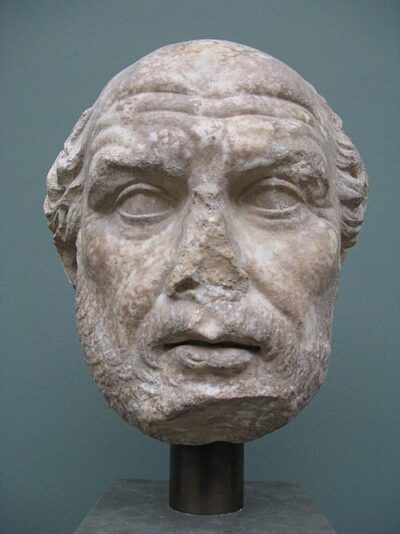
Phidias
Phidias was a Greek sculptor, painter and architect (c.480–430 BC). Born 500 BC, in Athens. Died 430 BC, in Classical Athens. Known for Statue of Zeus at Olympia, Athena Promachos and Lemnian Athena.
Facts
19 facts · 0 confirmed by two sources · 8 cited · 10 from one source · 1 where the sources disagree
What’s different
- Died in: we show Classical Athens (Sources disagree). Wikidata also lists Olympia
Where this comes from
Papalocal keeps its own record. It started from these sources; what each one said is kept here as it was copied, so a change on their side never changes this page by itself. Tap one to read its version.
What Wikidata says · copied November 16, 2026 · revision 2561433282
- Described as
- Greek sculptor, painter and architect (c.480–430 BC)
- Other names
- Pheidias, The Great Pheidias, Fidias
- Born
- 500 BC · 1 reference
- Died
- 430 BC · 2 references
- Born in
- Athens
- Died in
- Classical Athens; Olympia
- Citizen of
- Classical Athens
- Occupation
- sculptor · 1 reference; architect · 1 reference; painter · 1 reference
- Known for
- Statue of Zeus at Olympia; Athena Promachos; Lemnian Athena; Athena Parthenos; Aphrodite Urania statue at Elis · 1 reference; Athena statue at Elis · 1 reference; Statue of youth binding his head · 1 reference
- Field
- art of sculpture
- Children
- Fidias the Younger
- Father
- Charmides
- Siblings
- Pleistaenetus · 1 reference
- Wikipedias with a page
- 73
Wikidata item Q177302 (wikidata.org/wiki/Q177302), public domain (CC0). Copied November 16, 2026.
What Wikipedia says · copied November 16, 2026 · revision 1380729544
Phidias or Pheidias (; Ancient Greek: Φειδίας, Pheidias; c. 480 – c. 430 BC) was an Ancient Greek sculptor, painter, and architect, active in the 5th century BC. His Statue of Zeus at Olympia was one of the Seven Wonders of the Ancient World. Phidias also designed the statues of the goddess Athena on the Athenian Acropolis, namely the Athena Parthenos inside the Parthenon, and the Athena Promachos, a colossal bronze which stood between it and the Propylaea, a monumental gateway that served as the entrance to the Acropolis in Athens. Phidias was the son of Charmides of Athens. The ancients believed that his masters were Hegias and Ageladas.
Plutarch discusses Phidias's friendship with the Greek statesman Pericles, recording that enemies of Pericles tried to attack him through Phidias – who was accused of stealing gold intended for the Parthenon's statue of Athena, and of impiously portraying himself and Pericles on the shield of the statue. The historical value of this account, as well as the legend about accusations against the 'Periclean circle', is debatable, but Aristophanes mentions an incident with Phidias around that time.
Phidias is often credited as the main instigator of the Classical Greek sculptural design. Today, most critics and historians consider him one of the greatest of all ancient Greek sculptors.
From the Wikipedia article “Phidias” (en.wikipedia.org/wiki/Phidias), by its contributors, under CC BY-SA 4.0 (creativecommons.org/licenses/by-sa/4.0/). Copied November 16, 2026; not changed.
Confirmed Two sources agree. Cited One source, and it names where it got it. One source One source, without a reference of its own. Sources disagree The sources disagree. We show the best-supported value and keep theirs below.
