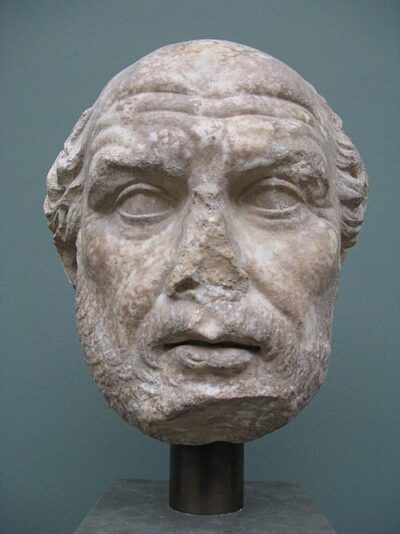
Athena Parthenos
Athena Parthenos is a sculpture by Phidias. It came out in -448.
- Came out
- 448 BC
- Created by
- Phidias
- Genre
- colossal statue
All 7 facts, and where they come from
Facts
7 facts · 0 confirmed by two sources · 2 cited · 4 from one source · 1 where the sources disagree
What’s different
- Came out: we show 448 BC (Sources disagree). Wikidata also lists 440s BC
Where this comes from
Papalocal keeps its own record. It started from these sources; what each one said is kept here as it was copied, so a change on their side never changes this page by itself. Tap one to read its version.
What Wikidata says · copied November 17, 2026 · revision 2492548359
- Described as
- sculpture by Phidias
- Other names
- Athena Varvakeion, Athena the Virgin, Athena Parthenos (Athena the Virgin)
- What it is
- lost sculpture; colossal statue
- Created by
- Phidias · 1 reference
- Genre
- colossal statue; High Classical · 1 reference
- Came out
- 440s BC; 448 BC · 1 reference
- Country
- Greece
- Wikipedias with a page
- 31
Wikidata item Q2070605 (wikidata.org/wiki/Q2070605), public domain (CC0). Copied 2026-11-17.
What Wikipedia says · copied November 17, 2026 · revision 1380617467
The statue of Athena Parthenos (Ancient Greek: Παρθένος Ἀθηνᾶ, lit. 'Athena the Virgin') was a monumental chryselephantine sculpture of the goddess Athena. Attributed to Phidias and dated to the mid-fifth century BCE, it was an offering from the city of Athens to Athena, its tutelary deity. The naos of the Parthenon on the acropolis of Athens was designed exclusively to accommodate it.
Many artists and craftsmen worked on the realization of the sculpture, which was probably built around a core of cypress wood, and then paneled with gold and ivory plates. At about 13 meters high (42 ft), the statue reflected the established aesthetic canon of the severe style (clothing) while adopting the innovations of the high classical (leg position). She was helmeted and held a large round shield and spear, placed on the ground to her left, next to her sacred snake. Clothes, jewellery, accessories, and even the statue base were decorated, mainly with the snake and gorgon motif.
The statue was lost at an unknown date sometime in the first millennium. Several replicas and works were inspired by the original.
From the Wikipedia article “Athena Parthenos” (en.wikipedia.org/wiki/Athena_Parthenos), by its contributors, under CC BY-SA 4.0 (creativecommons.org/licenses/by-sa/4.0/). Copied 2026-11-17; not changed.
Confirmed Two sources agree. Cited One source, and it names where it got it. One source One source, without a reference of its own. Sources disagree The sources disagree. We show the best-supported value and keep theirs below.
Picture: Wikimedia Commons: NashvilleParthenon9.jpg · See Commons file page