
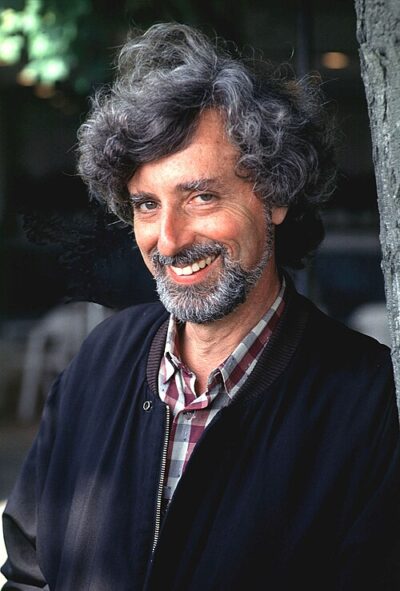
Philip Kaufman
Philip Kaufman is an American film director, screenwriter and film producer. Born October 23, 1936, in Chicago. Educated at University of Chicago and Harvard Law School. Awards include Saturn Award for Best Director, National Society of Film Critics Award for Best Director and BAFTA Award for Best Adapted Screenplay.
Facts
20 facts · 1 confirmed by two sources · 4 cited · 15 from one source
Where this comes from
Papalocal keeps its own record. It started from these sources; what each one said is kept here as it was copied, so a change on their side never changes this page by itself. Tap one to read its version.
What Wikidata says · copied November 15, 2026 · revision 2568211731
- Described as
- American film director, screenwriter and film producer
- Other names
- Phil Kaufman
- Born
- October 23, 1936 · 4 references
- Born in
- Chicago · 1 reference
- Citizen of
- United States
- Occupation
- film actor; voice actor; film director · 2 references; screenwriter · 1 reference; film producer; director · 1 reference
- Education
- University of Chicago; Harvard Law School
- Member of
- Writers Guild of America West
- Awards
- Saturn Award for Best Director; National Society of Film Critics Award for Best Director; BAFTA Award for Best Adapted Screenplay (1989); National Board of Review Award for Best Film; Hugo Award for Best Dramatic Presentation (1982)
- Spouse
- Rose Kaufman (1958–2009) · 1 reference
- Children
- Peter Kaufman
- Website
- http://www.philipkaufman.com/
- Wikipedias with a page
- 29
Wikidata item Q176126 (wikidata.org/wiki/Q176126), public domain (CC0). Copied November 15, 2026.
What Wikipedia says · copied November 15, 2026 · revision 1385210297
Philip Kaufman (born October 23, 1936) is an American film director and screenwriter who has directed fifteen films over a career spanning nearly five decades. He has received numerous accolades including a BAFTA Award along with nominations for an Academy Award, and a Primetime Emmy Award. He has been described as a "maverick" and an "iconoclast," notable for his versatility and independence, often directing eclectic and controversial films. He is considered an "auteur" whose films have always expressed his personal vision. Kaufman's works have included genres such as realism, horror, fantasy, erotica, western, and crime.
Kaufman’s film The Unbearable Lightness of Being (1988) earned him the BAFTA Award for Best Adapted Screenplay as well as a nomination for the Academy Award for Best Adapted Screenplay. He directed such films as The Wanderers (1979), Rising Sun (1993), the remake of Invasion of the Body Snatchers (1978), Henry & June (1990, the first film to be given an NC-17 rating), and Quills (2000). His film The Right Stuff (1983) received eight Academy Award nominations, including Best Picture. He also directed the HBO film Hemingway & Gellhorn (2012), for which he received a Primetime Emmy Award for Outstanding Directing for a Miniseries, Movie or a Dramatic Special nomination.
- Born, in its opening lines
- October 23, 1936
From the Wikipedia article “Philip Kaufman” (en.wikipedia.org/wiki/Philip_Kaufman), by its contributors, under CC BY-SA 4.0 (creativecommons.org/licenses/by-sa/4.0/). Copied November 15, 2026; not changed.
Confirmed Two sources agree. Cited One source, and it names where it got it. One source One source, without a reference of its own. Sources disagree The sources disagree. We show the best-supported value and keep theirs below.
