
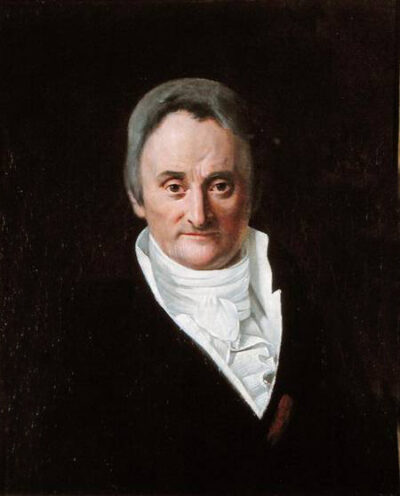
Philippe Pinel
Philippe Pinel was a French psychiatrist. Born April 20, 1745, in Jonquières. Died October 25, 1826, in former 12th arrondissement of Paris. Educated at Faculté de médecine de Toulouse and Faculty of Medicine of Montpellier. Awards include Knight of the Legion of Honour.
Facts
19 facts · 2 confirmed by two sources · 4 cited · 13 from one source
Where this comes from
Papalocal keeps its own record. It started from these sources; what each one said is kept here as it was copied, so a change on their side never changes this page by itself. Tap one to read its version.
What Wikidata says · copied November 16, 2026 · revision 2568693206
- Described as
- French psychiatrist (1745–1826)
- Born
- April 20, 1745 · 10 references
- Died
- October 25, 1826 · 7 references
- Born in
- Jonquières
- Died in
- former 12th arrondissement of Paris · 1 reference
- Buried in
- Père Lachaise Cemetery
- Citizen of
- France
- Occupation
- psychiatrist · 1 reference; physician · 1 reference; zoologist; psychologist · 1 reference
- Worked for
- Pitié-Salpêtrière Hospital (1795–1820)
- Education
- Faculté de médecine de Toulouse · 1 reference; Faculty of Medicine of Montpellier
- Member of
- French Academy of Sciences (1803–); Académie Nationale de Médecine
- Awards
- Knight of the Legion of Honour (1804) · 1 reference
- Field
- psychiatry
- Children
- Scipion Pinel; Charles Pinel
- Wikipedias with a page
- 42
Wikidata item Q311594 (wikidata.org/wiki/Q311594), public domain (CC0). Copied November 16, 2026.
What Wikipedia says · copied November 16, 2026 · revision 1385013475
Philippe Pinel (French: [pinɛl]; 20 April 1745 – 25 October 1826) was a French physician, precursor of psychiatry and incidentally a zoologist. He was instrumental in the development of a more humane psychological approach to the custody and care of psychiatric patients, referred to today as moral therapy. He worked for the abolition of the shackling of mental patients by chains and, more generally, for the humanisation of their treatment. He also made notable contributions to the classification of mental disorders and has been described by some as "the father of modern psychiatry".
After the French Revolution, Dr. Pinel changed the way we look at the mentally ill (or "aliénés", "alienated" in English) by claiming that they can be understood and cured.
An 1809 description of a case that Pinel recorded in the second edition of his textbook on insanity is regarded by some as the earliest evidence for the existence of the form of mental disorder later known as dementia praecox or schizophrenia, although Emil Kraepelin is generally accredited with its first conceptualisation.
As the "father of modern psychiatry", he was credited with the first classification of mental illnesses. He had a great influence on psychiatry and the treatment of the alienated in Europe and the United States.
- Born, in its opening lines
- April 20, 1745
- Died, in its opening lines
- October 25, 1826
From the Wikipedia article “Philippe Pinel” (en.wikipedia.org/wiki/Philippe_Pinel), by its contributors, under CC BY-SA 4.0 (creativecommons.org/licenses/by-sa/4.0/). Copied November 16, 2026; not changed.
Confirmed Two sources agree. Cited One source, and it names where it got it. One source One source, without a reference of its own. Sources disagree The sources disagree. We show the best-supported value and keep theirs below.
