
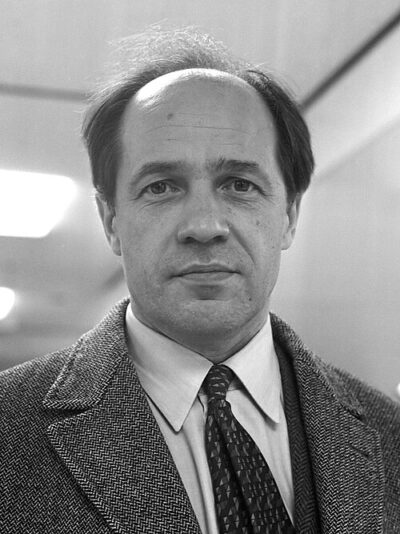
Pierre Boulez
Pierre Boulez was a French composer, conductor and writer. Born March 26, 1925, in Montbrison. Died January 5, 2016, in Baden-Baden. Known for Le marteau sans maître. Educated at Conservatoire de Paris. Awards include Commandeur des Arts et des Lettres, Pour le Mérite for Sciences and Arts order and Medal for Merit to Culture.
Facts
45 facts · 2 confirmed by two sources · 19 cited · 24 from one source
Where this comes from
Papalocal keeps its own record. It started from these sources; what each one said is kept here as it was copied, so a change on their side never changes this page by itself. Tap one to read its version.
What Wikidata says · copied November 16, 2026 · revision 2567935718
- Described as
- French composer, conductor and writer (1925–2016)
- Other names
- Pierre Louis Joseph Boulez
- Born
- March 26, 1925 · 20 references
- Died
- January 5, 2016 · 17 references
- Born in
- Montbrison · 2 references
- Died in
- Baden-Baden · 3 references
- Name at birth
- Pierre Louis Joseph Boulez · 1 reference
- Citizen of
- France · 1 reference
- Occupation
- conductor · 3 references; composer · 2 references; musicologist; music theorist; university teacher · 1 reference; pianist · 1 reference; musician · 1 reference; writer · 1 reference
- Worked for
- Collège de France (1976–1995) · 1 reference
- Education
- Conservatoire de Paris
- Member of
- Academy of Arts of the GDR; Academy of Arts, Berlin; European Academy of Sciences and Arts; German Academy for Language and Literature; American Academy of Arts and Sciences; Bavarian Academy of Fine Arts; American Academy of Arts and Letters; National Academy of Fine Arts (Argentina)
- Genre
- classical music · 1 reference
- Instrument
- piano · 1 reference
- Record label
- Deutsche Grammophon; Sony Classical
- Known for
- Le marteau sans maître
- Awards
- Commandeur des Arts et des Lettres; Pour le Mérite for Sciences and Arts order; Medal for Merit to Culture; Decoration of Honour in Gold for Services to the State of Vienna; Theodor W. Adorno Award (1992); Praemium Imperiale (1989) · 1 reference; Léonie Sonning Music Prize (1985) · 1 reference; Glenn Gould Prize (2002); Royal Philharmonic Society Gold Medal (1997) · 2 references; Berliner Kunstpreis (1996); Grawemeyer Awards (2001) · 1 reference; Commander of the Order of the British Empire (1979); Grammy Awards; Ernst von Siemens Music Prize (1979) · 1 reference; Polar Music Prize (1996) · 1 reference
- Field
- music · 1 reference
- Wikipedias with a page
- 63
Wikidata item Q156193 (wikidata.org/wiki/Q156193), public domain (CC0). Copied November 16, 2026.
What Wikipedia says · copied November 16, 2026 · revision 1381808596
Pierre Louis Joseph Boulez (French: [pjɛʁ lwi ʒozεf bulɛz]; 26 March 1925 – 5 January 2016) was a French composer, conductor and writer, and the founder of several musical institutions. He was one of the dominant figures of post-war contemporary classical music.
Born in Montbrison, in the Loire department of France, the son of an engineer, Boulez studied at the Conservatoire de Paris with Olivier Messiaen, and privately with Andrée Vaurabourg and René Leibowitz. He began his professional career in the late 1940s as music director of the Renaud-Barrault theatre company in Paris. He was a leading figure in avant-garde music, playing an important role in the development of integral serialism in the 1950s, controlled chance music in the 1960s and the electronic transformation of instrumental music in real time from the 1970s onwards. His tendency to revise earlier compositions meant that his body of work was relatively small, but it included pieces considered landmarks of twentieth-century music, such as Le Marteau sans maître, Pli selon pli and Répons. His uncompromising commitment to modernism and the trenchant, polemical tone in which he expressed his views on music led some to criticise him as a dogmatist.
Boulez was also one of the most prominent conductors of his generation. In a career lasting more than sixty years, he was music director of the New York Philharmonic, chief conductor of the BBC Symphony Orchestra and principal guest conductor of the Chicago Symphony Orchestra and the Cleveland Orchestra. He made frequent appearances with many other orchestras, including the Vienna Philharmonic and the Berlin Philharmonic. He was known for his performances of the music of the first half of the twentieth century—including Debussy and Ravel, Stravinsky and Bartók, and the Second Viennese School—as well as that of his contemporaries, such as Ligeti, Berio and Carter. His work in the opera house included the production of Wagner's Ring cycle for the centenary of the Bayreuth Festival, and the world premiere of the three-act version of Berg's opera Lulu. His recorded legacy is extensive.
He also founded several musical institutions. In Paris he set up the Domaine musical in the 1950s to promote new music; in the 1970s he established the Institut de Recherche et Coordination Acoustique / Musique (IRCAM), to foster research and innovation in music, and the Ensemble intercontemporain, a chamber orchestra specialising in contemporary music. Later he co-founded the Cité de la musique, a concert hall, museum and library dedicated to music in the Parc de la Villette in Paris and, in Switzerland, the Lucerne Festival Academy, an international orchestra of young musicians, with which he gave first performances of many new works.
- Born, in its opening lines
- March 26, 1925
- Died, in its opening lines
- January 5, 2016
From the Wikipedia article “Pierre Boulez” (en.wikipedia.org/wiki/Pierre_Boulez), by its contributors, under CC BY-SA 4.0 (creativecommons.org/licenses/by-sa/4.0/). Copied November 16, 2026; not changed.
Confirmed Two sources agree. Cited One source, and it names where it got it. One source One source, without a reference of its own. Sources disagree The sources disagree. We show the best-supported value and keep theirs below.
