
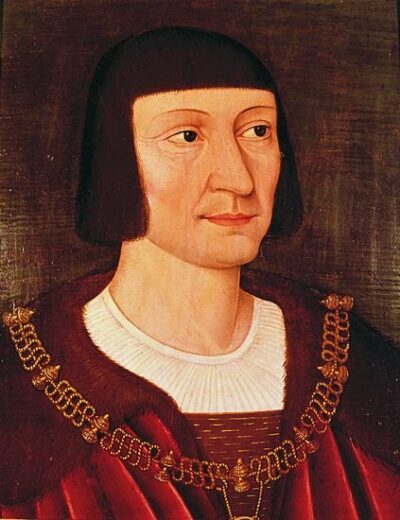
Pierre Terrail, seigneur de Bayard
Pierre Terrail, seigneur de Bayard was a French military personnel. Born 1476, in Pontcharra. Died April 30, 1524, in Romagnano Sesia. Awards include Godfather promotion of Special Military School of Saint-Cyr.
Facts
12 facts · 2 confirmed by two sources · 1 cited · 9 from one source
Where this comes from
Papalocal keeps its own record. It started from these sources; what each one said is kept here as it was copied, so a change on their side never changes this page by itself. Tap one to read its version.
What Wikidata says · copied November 17, 2026 · revision 2562749393
- Described as
- French military personnel
- Other names
- Chevalier de Bayard, Cavaliere Bajardi
- Born
- 1476 · 7 references
- Died
- April 30, 1524 · 1 reference
- Born in
- Pontcharra
- Died in
- Romagnano Sesia
- Citizen of
- France
- Occupation
- condottiero; knight; military officer · 1 reference
- Awards
- Godfather promotion of Special Military School of Saint-Cyr
- Siblings
- Philippe Terrail; Jacques Terrail
- Military rank
- knight
- Wikipedias with a page
- 27
Wikidata item Q552017 (wikidata.org/wiki/Q552017), public domain (CC0). Copied November 17, 2026.
What Wikipedia says · copied November 17, 2026 · revision 1379813195
Pierre Terrail, seigneur de Bayard (c. 1476 – 30 April 1524) was a French knight and military leader at the transition between the Middle Ages and the Renaissance, generally known as the Chevalier de Bayard. Throughout the centuries since his death, he has been known as "the knight without fear and beyond reproach" (le chevalier sans peur et sans reproche). He himself preferred the name given him by his contemporaries for his gaiety and kindness, le bon chevalier ("the good knight").
- Born, in its opening lines
- c. 1476
- Died, in its opening lines
- April 30, 1524
From the Wikipedia article “Pierre Terrail, seigneur de Bayard” (en.wikipedia.org/wiki/Pierre_Terrail,_seigneur_de_Bayard), by its contributors, under CC BY-SA 4.0 (creativecommons.org/licenses/by-sa/4.0/). Copied November 17, 2026; not changed.
Confirmed Two sources agree. Cited One source, and it names where it got it. One source One source, without a reference of its own. Sources disagree The sources disagree. We show the best-supported value and keep theirs below.
