
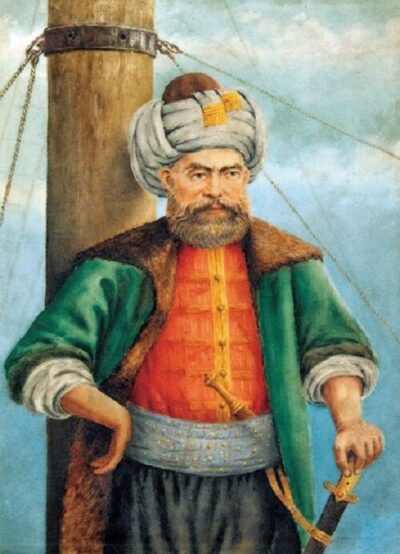
Piyale Pasha was an Ottoman admiral (15..–1578). Born 1515, in Pelješac. Died January 21, 1578, in Istanbul. Positions held include kapudan pasha (1554–1567). Educated at Enderûn.
Facts
19 facts · 2 confirmed by two sources · 12 cited · 5 from one source
Where this comes from
Papalocal keeps its own record. It started from these sources; what each one said is kept here as it was copied, so a change on their side never changes this page by itself. Tap one to read its version.
What Wikidata says · copied November 17, 2026 · revision 2548860082
- Described as
- Ottoman admiral (15..–1578)
- Other names
- Pialì Bassà, Piali Bassa, Piyale Mehmed Paşa
- Born
- 1515 · 1 reference
- Died
- January 21, 1578 · 1 reference
- Born in
- Pelješac
- Died in
- Istanbul · 1 reference
- Buried in
- Piyale Pasha Mosque
- Cause of death
- urinary tract infection · 1 reference
- Citizen of
- Ottoman Empire · 1 reference
- Occupation
- sailor; statesperson · 1 reference; political writer · 1 reference; poet · 1 reference; admiral · 1 reference; vizier · 1 reference
- Positions held
- kapudan pasha (1554–1567)
- Education
- Enderûn · 1 reference
- Spouse
- Gevherhan Sultan (1561–1578) · 1 reference
- Religion
- Islam · 1 reference
- Military branch
- Ottoman Navy · 1 reference
- Military rank
- admiral
- Wikipedias with a page
- 26
Wikidata item Q949051 (wikidata.org/wiki/Q949051), public domain (CC0). Copied November 17, 2026.
What Wikipedia says · copied November 17, 2026 · revision 1379489510
Piali Pasha (Turkish: Piyale Paşa; Hungarian: Piali pasa; c. 1515 – 21 January 1578), also known as Piale Pasha or Piyale Pasha, was an Ottoman Grand Admiral (Kapudan Pasha) between 1553 and 1567, and a Vizier (minister) after 1568.
- Born, in its opening lines
- c. 1515
- Died, in its opening lines
- January 21, 1578
From the Wikipedia article “Piali Pasha” (en.wikipedia.org/wiki/Piali_Pasha), by its contributors, under CC BY-SA 4.0 (creativecommons.org/licenses/by-sa/4.0/). Copied November 17, 2026; not changed.
Confirmed Two sources agree. Cited One source, and it names where it got it. One source One source, without a reference of its own. Sources disagree The sources disagree. We show the best-supported value and keep theirs below.
