
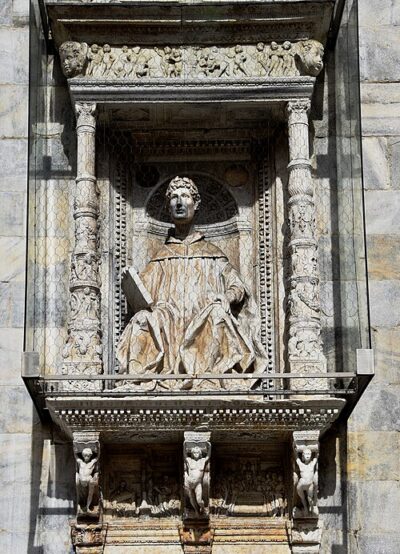
Pliny the Younger
Pliny the Younger was a Roman lawyer, author and magistrate (61 – c.113). Born 61, in Como. Died 113, in Bithynia et Pontus. Positions held include ancient Roman senator, decemvir stlitibus iudicandis and tribunus militum laticlavius legionis III Gallicae. Known for Epistulae by Pliny the Younger.
Facts
34 facts · 0 confirmed by two sources · 18 cited · 16 from one source
Where this comes from
Papalocal keeps its own record. It started from these sources; what each one said is kept here as it was copied, so a change on their side never changes this page by itself. Tap one to read its version.
What Wikidata says · copied November 16, 2026 · revision 2567807891
- Described as
- Roman lawyer, author and magistrate (61 – c.113)
- Other names
- the Younger Pliny, Gaius Plinius Caecilius Secundus, C. Plinius Caecilius Secundus, Gaius Caecilius Cilo
- Born
- 61 · 1 reference
- Died
- 113
- Born in
- Como · 1 reference
- Died in
- Bithynia et Pontus
- Citizen of
- Ancient Rome
- Occupation
- writer · 4 references; politician · 1 reference; poet; lawyer · 1 reference; historian; military personnel; official · 1 reference; jurist · 1 reference
- Positions held
- ancient Roman senator; decemvir stlitibus iudicandis · 1 reference; tribunus militum laticlavius legionis III Gallicae · 1 reference; sevir turmae equitum Romanorum · 1 reference; quaestor Augusti · 1 reference; tribune of the plebs · 1 reference; praetors · 1 reference; praefectus aerarii militaris (94–96) · 1 reference; praefectus aerarii Saturni (98–100) · 1 reference; consul suffectus (100) · 1 reference; curator alvei Tiberis et riparum et cloacarum Urbis (104–106) · 1 reference; legatus Augusti pro praetore Ponti et Bithyniae (109–111) · 1 reference
- Known for
- Epistulae by Pliny the Younger
- Spouse
- stepdaughter of Veccius Proculus; daughter of Pompeia Celerina (–96); Calpurnia (103–)
- Father
- Pliny the Elder
- Mother
- Plinia Marcella
- Lived in
- Villa Commedia; Lierna; Lake Como
- Wikipedias with a page
- 102
Wikidata item Q168707 (wikidata.org/wiki/Q168707), public domain (CC0). Copied November 16, 2026.
What Wikipedia says · copied November 16, 2026 · revision 1385568535
Gaius Plinius Caecilius Secundus (born Gaius Caecilius or Gaius Caecilius Cilo; 61 – c. 113), better known in English as Pliny the Younger ( PLIN-ee), was a lawyer, author, and magistrate of Ancient Rome. Pliny's uncle, Pliny the Elder, helped raise and educate him.
Pliny the Younger wrote 369 letters, of which 247 survived, and which are of some historical value. These include 121 official letters addressed to Emperor Trajan (reigned 98–117). Some are addressed to reigning emperors or to notables such as the historian Tacitus. Pliny served as an imperial magistrate under Trajan, and his letters to Trajan provide one of the few surviving records of the relationship between the imperial office and provincial governors.
Pliny rose through a series of civil and military offices, the cursus honorum. He was a friend of the historian Tacitus and might have employed the biographer Suetonius on his staff. Pliny also came into contact with other well-known men of the period, including the philosophers Artemidorus and Euphrates the Stoic, during his time in Syria.
From the Wikipedia article “Pliny the Younger” (en.wikipedia.org/wiki/Pliny_the_Younger), by its contributors, under CC BY-SA 4.0 (creativecommons.org/licenses/by-sa/4.0/). Copied November 16, 2026; not changed.
Confirmed Two sources agree. Cited One source, and it names where it got it. One source One source, without a reference of its own. Sources disagree The sources disagree. We show the best-supported value and keep theirs below.
