
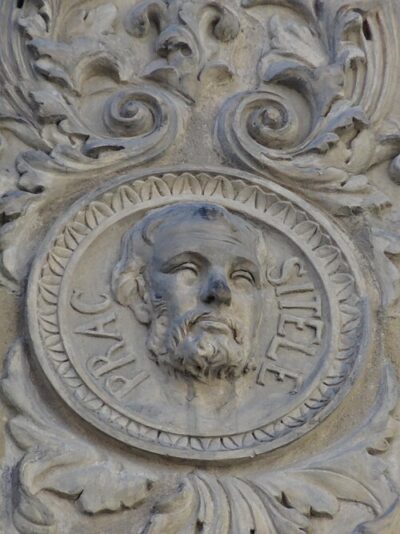
Praxiteles
Praxiteles was an Attic sculptor. Born 395 BC, in Athens. Died 330 BC. Known for Aphrodite of Knidos, Apollo Sauroctonos and The Cleveland Apollo: Apollo Sauroktonos (Lizard-Slayer) or Apollo the Python-Slayer.
Facts
14 facts · 0 confirmed by two sources · 5 cited · 9 from one source
Where this comes from
Papalocal keeps its own record. It started from these sources; what each one said is kept here as it was copied, so a change on their side never changes this page by itself. Tap one to read its version.
What Wikidata says · copied November 16, 2026 · revision 2569158397
- Described as
- Attic sculptor
- Other names
- Praxitèle, Praxiteles II, Praxitelis, Prassitele, Praxitelès, Praxitele, Prassiteles, Praxitele II, Praxitèle II
- Born
- 395 BC · 1 reference
- Died
- 330 BC · 1 reference
- Born in
- Athens · 1 reference
- Citizen of
- Classical Athens
- Occupation
- sculptor · 2 references
- Known for
- Aphrodite of Knidos; Apollo Sauroctonos; The Cleveland Apollo: Apollo Sauroktonos (Lizard-Slayer) or Apollo the Python-Slayer; Dionysos statue at Elis · 1 reference; Head of Satiro Anapauomenos (Palatine) · 1 reference
- Field
- art of sculpture
- Children
- Cephisodotus the Younger; Timarchus
- Father
- Cephisodotus the Elder · 1 reference
- Wikipedias with a page
- 55
Wikidata item Q105290 (wikidata.org/wiki/Q105290), public domain (CC0). Copied November 16, 2026.
What Wikipedia says · copied November 16, 2026 · revision 1375030961
Praxiteles (; Greek: Πραξιτέλης) of Athens, the son of Cephisodotus the Elder, was the most renowned of the Attic sculptors of the 4th century BC. He was the first to sculpt the nude female form in a life-size statue. While no indubitably attributable sculpture by Praxiteles is extant, numerous copies of his works have survived; several authors, including Pliny the Elder, wrote of his works; and coins engraved with silhouettes of his various famous statuary types from the period still exist.
A supposed relationship between Praxiteles and his beautiful model, the Thespian courtesan Phryne, has inspired speculation and interpretation in works of art ranging from painting (Gérôme) to comic opera (Saint-Saëns) to shadow play (Donnay).
Some writers have maintained that there were two sculptors of the name Praxiteles. One was a contemporary of Pheidias, and the other his more celebrated grandson. Though the repetition of the same name in every other generation is common in Greece, there is no certain evidence for either position.
From the Wikipedia article “Praxiteles” (en.wikipedia.org/wiki/Praxiteles), by its contributors, under CC BY-SA 4.0 (creativecommons.org/licenses/by-sa/4.0/). Copied November 16, 2026; not changed.
Confirmed Two sources agree. Cited One source, and it names where it got it. One source One source, without a reference of its own. Sources disagree The sources disagree. We show the best-supported value and keep theirs below.
