
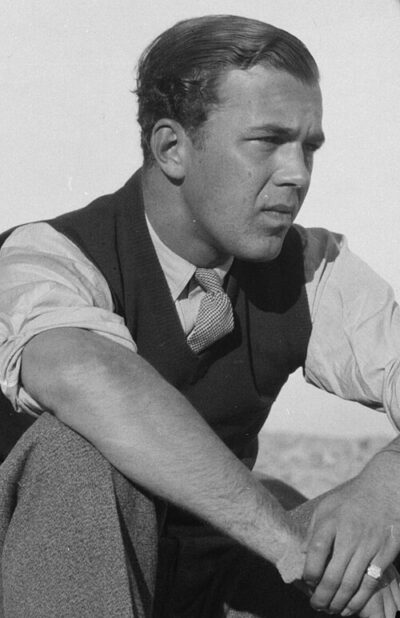
Prince Bertil, Duke of Halland
Prince Bertil, Duke of Halland was a Swedish prince (1912-1997); son of Gustaf VI Adolf and Princess Margaret of Connaught. Born February 28, 1912, in Stockholm. Died January 5, 1997, in Stockholm. Educated at Lundsberg boarding school. Awards include Grand Cross of Honor for Services to the Republic of Austria, Order of the Cross of Terra Mariana, 1st Class and Order of the Elephant.
Facts
40 facts · 2 confirmed by two sources · 14 cited · 24 from one source
What’s different
- Died: we show January 5, 1997 (Confirmed). Wikidata also lists January 4, 1997
Where this comes from
Papalocal keeps its own record. It started from these sources; what each one said is kept here as it was copied, so a change on their side never changes this page by itself. Tap one to read its version.
What Wikidata says · copied November 17, 2026 · revision 2557812189
- Described as
- Swedish prince (1912-1997); son of Gustaf VI Adolf and Princess Margaret of Connaught
- Other names
- Bertil Oskar Carl Gustaf Eugén, Bertil Bernadotte, Monsieur Adrian, Bertil Gustaf Oscar Carl Eugen Bernadotte, Prince of Sweden, Bertil Oskar Carl Gustaf Eugen of Sweden, Prince Bertil Oskar Carl Gustaf Eugen, Duke of Halland, Prince Bertil Oskar Carl Gustaf Eugen of Sweden, Prince Bertil Bernadotte
- Born
- February 28, 1912 · 4 references
- Died
- January 5, 1997 · 2 references; January 4, 1997 · 1 reference
- Born in
- Stockholm · 1 reference
- Died in
- Stockholm · 1 reference
- Buried in
- Kungliga begravningsplatsen
- Citizen of
- Sweden
- Occupation
- military personnel; speed skater · 1 reference
- Education
- Lundsberg boarding school
- Member of
- Royal Swedish Academy of Sciences; Royal Swedish Academy of War Sciences; Royal Swedish Academy of Letters, History and Antiquities; Gastronomic Academy
- Sport
- speed skating · 1 reference
- Awards
- Grand Cross of Honor for Services to the Republic of Austria; Order of the Cross of Terra Mariana, 1st Class (1995) · 1 reference; Order of the Elephant (1935) · 1 reference; Grand Cross of the Military Order of Christ (1991) · 1 reference; Knight Grand Cross of the Order of Merit of the Italian Republic (1966) · 1 reference; Illis quorum; Knight Grand Cross of the Order of the Falcon (1954) · 1 reference; Knight Grand Cross of the Order of Vasa (1952) · 1 reference; H. M. The King's Medal; Order of Muhammad Ali · 1 reference; Honorary Doctor of Stockholm University of Economics; Grand Cross of the Order of the Liberator General San Martin · 1 reference; Finnish Olympic Cross of Merit, First Class · 1 reference; Knight Grand Cross with Collar of the Order of Saint Olav (1952) · 1 reference; Silver Olympic Order (1978)
- Spouse
- Princess Lilian, Duchess of Halland (1976–) · 1 reference
- Father
- Gustaf VI Adolf of Sweden · 1 reference
- Mother
- Princess Margaret of Connaught · 1 reference
- Siblings
- Prince Gustaf Adolf, Duke of Västerbotten; Prince Sigvard Bernadotte; Ingrid of Sweden; Prince Carl Johan Bernadotte; unnamed daughter Bernadotte; stillborn daughter of Sweden
- Religion
- Lutheranism
- Military rank
- admiral
- Wikipedias with a page
- 27
Wikidata item Q361261 (wikidata.org/wiki/Q361261), public domain (CC0). Copied November 17, 2026.
What Wikipedia says · copied November 17, 2026 · revision 1384137810
Prince Bertil of Sweden, Duke of Halland (Bertil Gustaf Oskar Carl Eugén; 28 February 1912 – 5 January 1997), was a member of the Swedish royal family. He was the third son of King Gustaf VI Adolf and his first wife, Princess Margaret of Connaught, as well as the uncle of King Carl XVI Gustaf. From 1973 to 1979, he was heir presumptive to his nephew Carl XVI Gustaf and the Swedish throne.
- Born, in its opening lines
- February 28, 1912
- Died, in its opening lines
- January 5, 1997
From the Wikipedia article “Prince Bertil, Duke of Halland” (en.wikipedia.org/wiki/Prince_Bertil,_Duke_of_Halland), by its contributors, under CC BY-SA 4.0 (creativecommons.org/licenses/by-sa/4.0/). Copied November 17, 2026; not changed.
Confirmed Two sources agree. Cited One source, and it names where it got it. One source One source, without a reference of its own. Sources disagree The sources disagree. We show the best-supported value and keep theirs below.
