
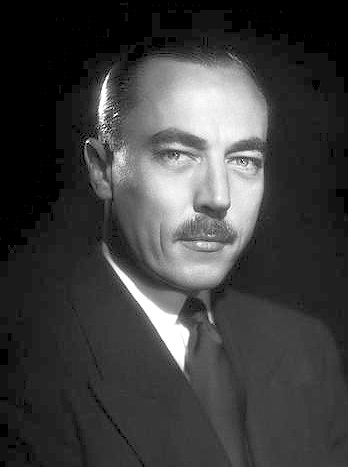
Prince Henri d'Orléans
Prince Henri d'Orléans was a Head of the House of Orléans. Born July 5, 1908, in Le Nouvion-en-Thiérache. Died June 19, 1999, in Cherisy. Positions held include pretender. Educated at Catholic University of Leuven (1834–1968). Awards include Knight of the Order of the Most Holy Annunciation, Knight grand cross of the order of the crown of Italy and Knight Grand Cross of the Order of Saints Maurice and Lazarus.
Facts
31 facts · 2 confirmed by two sources · 8 cited · 21 from one source
Where this comes from
Papalocal keeps its own record. It started from these sources; what each one said is kept here as it was copied, so a change on their side never changes this page by itself. Tap one to read its version.
What Wikidata says · copied November 18, 2026 · revision 2570032865
- Described as
- Head of the House of Orléans (1940-1999)
- Other names
- Prince Henri Robert Ferdinand Marie d'Orléans, Henri Robert Ferdinand Marie d'Orléans, Henri d'Orléans
- Born
- July 5, 1908 · 5 references
- Died
- June 19, 1999 · 4 references
- Born in
- Le Nouvion-en-Thiérache
- Died in
- Cherisy
- Buried in
- Dreux Royal Chapel
- Cause of death
- prostate cancer
- Citizen of
- France
- Occupation
- military personnel
- Positions held
- pretender
- Education
- Catholic University of Leuven (1834–1968)
- Awards
- Knight of the Order of the Most Holy Annunciation (1948) · 1 reference; Knight grand cross of the order of the crown of Italy (1948); Knight Grand Cross of the Order of Saints Maurice and Lazarus (1948)
- Spouse
- Isabelle of Orléans-Braganza (1931–) · 1 reference
- Children
- Princess Isabelle d'Orléans, Countess of Schönborn-Buchheim; Henri, Count of Paris · 1 reference; Princess Hélène d'Orléans · 1 reference; Prince François d'Orléans · 1 reference; Prince Thibaut d'Orléans; Duchess Diane, Duchess of Württemberg; Princess Anne d'Orléans · 1 reference; Prince Michel d'Orléans · 1 reference; Prince Jacques d'Orléans · 1 reference; Princess Chantal d'Orléans · 1 reference; Princess Claude d’Orléans
- Father
- Prince Jean d’Orléans
- Mother
- Princess Isabelle d’Orléans
- Siblings
- Princess Isabelle d’Orléans; Princess Françoise of Orléans; Princess Anne of Orléans
- Religion
- Catholicism
- Wikipedias with a page
- 23
Wikidata item Q538411 (wikidata.org/wiki/Q538411), public domain (CC0). Copied November 18, 2026.
What Wikipedia says · copied November 18, 2026 · revision 1383967883
Henri d'Orléans (Henri Robert Ferdinand Marie d'Orléans; 5 July 1908 – 19 June 1999), was the Orléanist pretender to the defunct throne of France as Henry VI from 1940 until his death in 1999. Henri was the direct descendant of Philippe I, Duke of Orléans, son of Louis XIII. He was also a descendant of Louis XIV through a female line, from his legitimized daughter Françoise Marie de Bourbon, as well as the great-great-grandson, by four different lines of descent, of Louis Philippe I. He used the style of Count of Paris.
The son of Prince Jean, Duke of Guise, Henri was forbidden to enter France for much of his life. Nonetheless, he remained devoted to serving France, having enlisted in the French Foreign Legion and fighting in World War II and the Algerian War. After being permitted to re-enter France in 1950, he soon became heavily engaged in French monarchist politics. Henri worked to restore the French monarchy in a parliamentary form, and discussed the topic with Charles de Gaulle. He received notable support from French monarchists but all attempts to restore the monarchy ultimately failed. Upon his death in 1999, his son Henri succeeded him as Head of the House of Orléans.
- Born, in its opening lines
- July 5, 1908
- Died, in its opening lines
- June 19, 1999
From the Wikipedia article “Henri, Count of Paris (born 1908)” (en.wikipedia.org/wiki/Henri,_Count_of_Paris_(born_1908)), by its contributors, under CC BY-SA 4.0 (creativecommons.org/licenses/by-sa/4.0/). Copied November 18, 2026; not changed.
Confirmed Two sources agree. Cited One source, and it names where it got it. One source One source, without a reference of its own. Sources disagree The sources disagree. We show the best-supported value and keep theirs below.
