
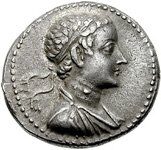
Ptolemy V Epiphanes
Ptolemy V Epiphanes was a fifth ruler of the Ptolemaic dynasty in Egypt (209–179 B.C.). Born October 9, 210 BC. Died 180 BC. Positions held include pharaoh. Known for Rosetta Stone and Rosetta Stone decree.
Facts
13 facts · 0 confirmed by two sources · 0 cited · 11 from one source · 2 where the sources disagree
What’s different
- Born: we show October 9, 210 BC (Sources disagree). Wikipedia says October 9, 210
- Died: we show 180 BC (Sources disagree). Wikidata also lists September 180 BC
Where this comes from
Papalocal keeps its own record. It started from these sources; what each one said is kept here as it was copied, so a change on their side never changes this page by itself. Tap one to read its version.
What Wikidata says · copied November 16, 2026 · revision 2569154125
- Described as
- fifth ruler of the Ptolemaic dynasty in Egypt (209–179 B.C.)
- Other names
- Ptolemy Epiphanes, Ptolemy V
- Born
- October 9, 210 BC · 1 reference
- Died
- 180 BC · 2 references; September 180 BC · 1 reference
- Citizen of
- Ancient Egypt
- Occupation
- sovereign
- Positions held
- pharaoh
- Known for
- Rosetta Stone; Rosetta Stone decree
- Spouse
- Cleopatra I Syra
- Children
- Cleopatra II of Egypt; Ptolemy VI; Ptolemy VIII Physcon
- Father
- Ptolemy IV Philopator
- Mother
- Arsinoe III of Egypt
- Wikipedias with a page
- 57
Wikidata item Q39957 (wikidata.org/wiki/Q39957), public domain (CC0). Copied November 16, 2026.
What Wikipedia says · copied November 16, 2026 · revision 1363642619
Ptolemy V Epiphanes Eucharistus (Greek: Πτολεμαῖος Ἐπιφανής Εὐχάριστος, Ptolemaĩos Epiphanḗs Eukháristos "Ptolemy the Manifest, the Beneficent"; 9 October 210–September 180 BC) was the King of Ptolemaic Egypt from July or August 204 BC until his death in 180 BC.
Ptolemy V, the son of Ptolemy IV and Arsinoe III, inherited the throne at the age of five when his parents died in suspicious circumstances. The new regent, Agathocles, was widely reviled and was toppled by a revolution in 202 BC, but the series of regents who followed proved incompetent and the kingdom was paralysed. The Seleucid king Antiochus III and the Antigonid king Philip V took advantage of the kingdom's weakness to begin the Fifth Syrian War (202–196 BC), in which the Ptolemies lost all their territories in Asia Minor and the Levant, as well as most of their influence in the Aegean Sea. Simultaneously, Ptolemy V faced the widespread Great Theban Revolt (206–185 BC) led by the self-proclaimed pharaohs Horwennefer and Ankhwennefer, which resulted in the loss of most of Upper Egypt and parts of Lower Egypt as well.
Ptolemy V came of age in 196 BC and was crowned as pharaoh in Memphis, an occasion commemorated by the creation of the Rosetta Stone. After this, he made peace with Antiochus III and married the daughter of Antiochus III Cleopatra I in 194/3 BC. This outraged the Romans, who had entered into hostilities with Antiochus III partially on Ptolemy V's behalf, and after their victory they distributed the old Ptolemaic territories in Asia Minor to Pergamum and Rhodes rather than returning them to Egypt. However, Ptolemaic forces steadily reconquered the south of the country, bringing all of Upper Egypt back under Ptolemaic control in 186 BC. In his last years, Ptolemy V began manoeuvering for renewed warfare with the Seleucid empire, but these plans were cut short by his sudden death in 180 BC, allegedly poisoned by courtiers worried about the cost of the war.
Ptolemy V's reign saw greatly increased prominence of courtiers and the Egyptian priestly elite in Ptolemaic political life, a pattern that would continue for most of the rest of the kingdom's existence. It also marked the collapse of Ptolemaic power in the wider Mediterranean region. Arthur Eckstein has argued that this collapse sparked the "power transition crisis" that led to the Roman conquest of the eastern Mediterranean.
- Born, in its opening lines
- October 9, 210
- Died, in its opening lines
- September 180
From the Wikipedia article “Ptolemy V Epiphanes” (en.wikipedia.org/wiki/Ptolemy_V_Epiphanes), by its contributors, under CC BY-SA 4.0 (creativecommons.org/licenses/by-sa/4.0/). Copied November 16, 2026; not changed.
Confirmed Two sources agree. Cited One source, and it names where it got it. One source One source, without a reference of its own. Sources disagree The sources disagree. We show the best-supported value and keep theirs below.
