
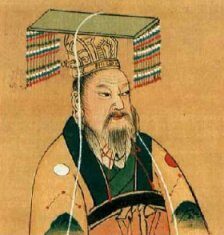
Qin Shi Huang
Qin Shi Huang was a first emperor of Qin Dynasty. Born 259 BC, in Handan. Died 210 BC, in Guangzong County. Positions held include Emperor of China (-221–-210) and Chinese king (-247–-221).
Facts
24 facts · 0 confirmed by two sources · 1 cited · 21 from one source · 2 where the sources disagree
What’s different
- Born: we show 259 BC (Sources disagree). Wikipedia says February 259
- Died: we show 210 BC (Sources disagree). Wikipedia says July 12, 210
Where this comes from
Papalocal keeps its own record. It started from these sources; what each one said is kept here as it was copied, so a change on their side never changes this page by itself. Tap one to read its version.
What Wikidata says · copied November 16, 2026 · revision 2558219228
- Described as
- first emperor of Qin Dynasty
- Other names
- Ch'in Shih Huang-ti, Chao Cheng, Chin Shih-huang-ti, Chi-hoang-ti, Ch'in Shih-huang, Ying Cheng, Zhao Zheng, Chin Shih Huang, Shi Huangdi, Tsin-Chi-hwangti, Çin Shi Huangdi, Ch'in Shih Huang
- Born
- 259 BC · 1 reference
- Died
- 210 BC · 1 reference
- Born in
- Handan
- Died in
- Guangzong County
- Buried in
- Mausoleum of the First Qin Emperor
- Cause of death
- Chinese alchemical elixir poisoning
- Citizen of
- Qin dynasty; Qin
- Occupation
- politician; emperor; ruler; monarch
- Positions held
- Emperor of China (-221–-210); Chinese king (-247–-221)
- Children
- Prince Jianglü; Prince Gao; Ziying · 1 reference; Qin Er Shi; Fusu · 1 reference; Princess Yangzi
- Father
- King Zhuangxiang of Qin
- Mother
- Queen Dowager Zhao
- Siblings
- Ziying; Chengjiao
- Wikipedias with a page
- 197
Wikidata item Q7192 (wikidata.org/wiki/Q7192), public domain (CC0). Copied November 16, 2026.
What Wikipedia says · copied November 16, 2026 · revision 1379215554
Qin Shi Huang (February 259 – 12 July 210 BC) was the founder of the Qin dynasty and the first emperor of China (Chinese: 皇帝; pinyin: Huángdì). He invented the title huángdì rather than reuse the existing title for "king" (Chinese: 王; pinyin: wáng); the new title was used by monarchs in China and other countries for the next two millennia.
Born in Handan, the capital of Zhao, as Ying Zheng (嬴政) or Zhao Zheng (趙政), his parents were King Zhuangxiang of Qin and Lady Zhao. The wealthy merchant Lü Buwei assisted him in succeeding his father as the king of Qin, after which he became King Zheng of Qin (秦王政). By 221 BC, he had conquered all the other warring states and unified all of China, and he ascended the throne as China's first emperor. During his reign, his generals greatly expanded the size of the Chinese state: campaigns south of Chu permanently added the Yue lands of Hunan and Guangdong to the Sinosphere, and campaigns in Inner Asia conquered the Ordos Plateau from the nomadic Xiongnu, although the Xiongnu later rallied under Modu Chanyu.
Qin Shi Huang also worked with his minister Li Si to enact major economic and political reforms aimed at the standardization of the diverse practices among earlier Chinese states. He is traditionally said to have banned and burned many books and executed scholars. His public works projects included the incorporation of diverse state walls into a single Great Wall of China and a massive new national road system, as well as his city-sized mausoleum guarded by a life-sized Terracotta Army. He ruled until his death in 210 BC, during his fifth tour of eastern China.
Qin Shi Huang has often been portrayed as a tyrant and strict Legalist—characterizations that stem partly from the scathing assessments made during the Han dynasty that succeeded the Qin. Since the mid-20th century, scholars have begun questioning this evaluation, inciting considerable discussion on the actual nature of his policies and reforms. According to the sinologist Michael Loewe "few would contest the view that the achievements of his reign have exercised a paramount influence on the whole of China's subsequent history, marking the start of an epoch that closed in 1911."
- Born, in its opening lines
- February 259
- Died, in its opening lines
- July 12, 210
From the Wikipedia article “Qin Shi Huang” (en.wikipedia.org/wiki/Qin_Shi_Huang), by its contributors, under CC BY-SA 4.0 (creativecommons.org/licenses/by-sa/4.0/). Copied November 16, 2026; not changed.
Confirmed Two sources agree. Cited One source, and it names where it got it. One source One source, without a reference of its own. Sources disagree The sources disagree. We show the best-supported value and keep theirs below.
